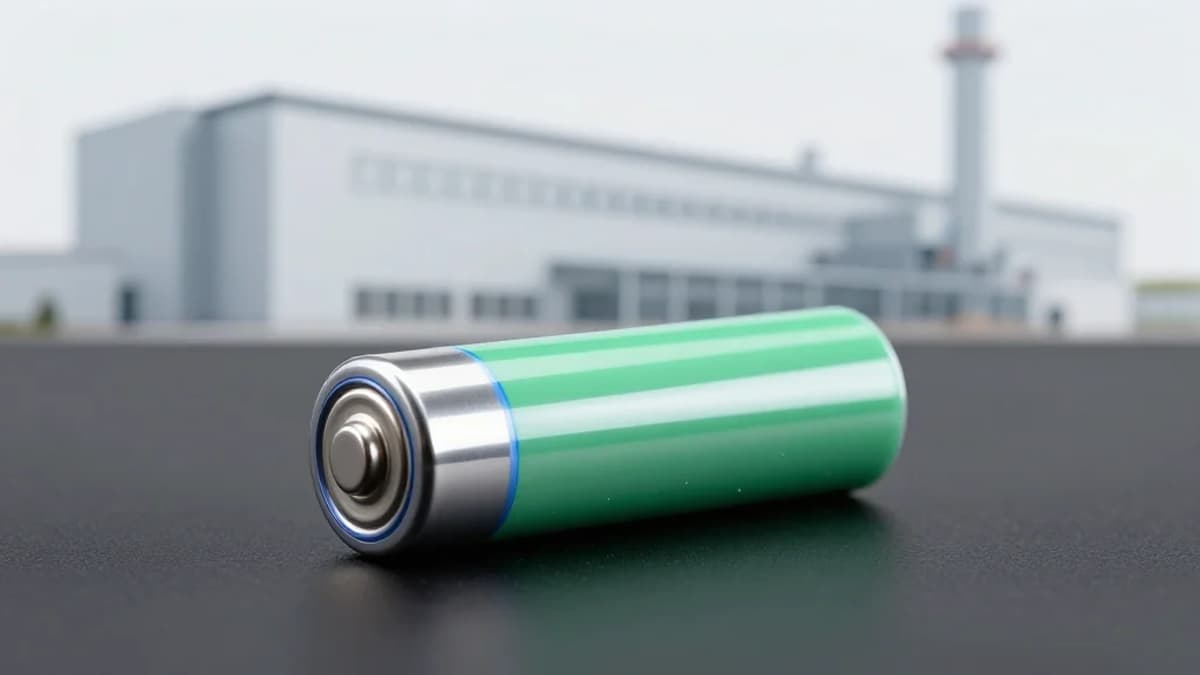
Brisbane Battery Innovator Gets First Chunk of Funds Towards Giga-Scale Production Plans
•February 19, 2026
0
Why It Matters
The grant accelerates commercialization of high‑energy, safer lithium‑sulfur batteries, positioning Australia as a potential leader in next‑generation battery manufacturing and supporting the transition to electric mobility and renewable grid storage.
Key Takeaways
- •ARENA provides $1.9M initial tranche of $7.86M total
- •Factory aims 1 GWh annual capacity, 500× current output
- •Li‑S Energy partners with Hatch for FEED feasibility study
- •GEN3 semi‑solid lithium‑sulfur cells deliver 456 Wh/kg
- •Technology promises safer, higher‑energy alternative to lithium‑ion
Pulse Analysis
Lithium‑sulfur chemistry is emerging as a compelling alternative to traditional lithium‑ion batteries, offering markedly higher energy density and intrinsic safety benefits. By embedding nanomaterials into a semi‑solid‑state architecture, Li‑S Energy’s GEN3 cells achieve 456 Wh/kg—approximately 45% more than competing chemistries—while mitigating thermal runaway risks. This performance edge addresses two critical market pressures: extending electric‑vehicle range and providing reliable, high‑capacity storage for intermittent renewable generation.
The Australian Renewable Energy Agency’s $7.86 million commitment, with an initial $1.9 million tranche, underscores government confidence in scaling domestic battery production. Partnering with Hatch, a global engineering consultancy, equips Li‑S Energy with the expertise needed to navigate front‑end loading and feasibility assessments for a gigawatt‑scale plant. Such a facility would represent a quantum leap from the company’s modest Geelong pilot line, positioning the nation to meet growing demand for locally sourced, high‑performance cells and reducing reliance on imported lithium‑ion modules.
If successful, the gigafactory could reshape Australia’s renewable energy landscape by supplying batteries for electric vehicles, grid‑scale storage, and offshore wind projects. The combination of superior energy density, safety, and local manufacturing aligns with national decarbonisation targets and could attract further private investment. Moreover, establishing a domestic supply chain for lithium‑sulfur technology may give Australian firms a competitive edge in the global race to develop next‑generation energy storage solutions.
Brisbane battery innovator gets first chunk of funds towards giga-scale production plans
0
Comments
Want to join the conversation?
Loading comments...