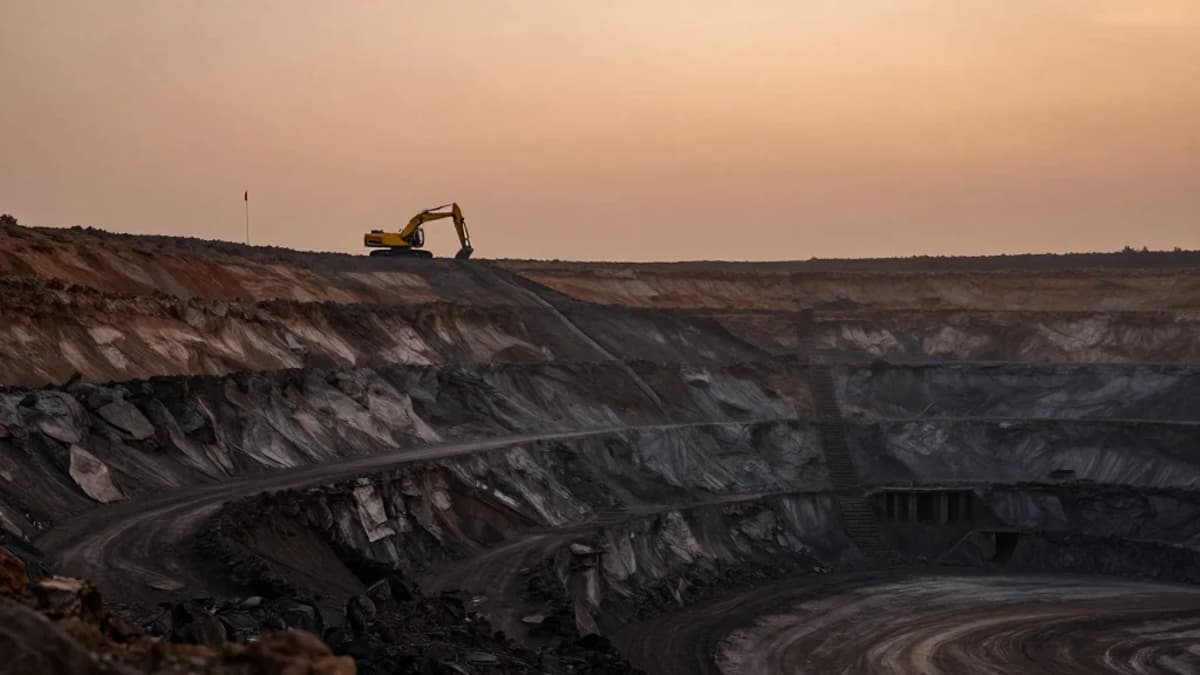
CAG Flags NLC India for Operating Neyveli Mine-II without Valid Environmental Clearance
Why It Matters
The findings expose critical compliance and resource‑management failures that threaten NLC India's profitability and India's lignite‑based power supply, prompting tighter regulatory scrutiny.
Key Takeaways
- •Mine-II operated without valid environmental clearance.
- •Land shortage leaves only 46.19 ha for active mining.
- •Potential revenue loss of ₹338.62 crore from lignite shortfall.
- •Additional ₹364.80 crore spent on dumped-soil mining.
- •Plant outages caused ₹2,353.99 crore capacity charge loss.
Pulse Analysis
NLC India, a state‑owned lignite miner and power producer, has come under intense scrutiny after the CAG disclosed that its Mine‑II at Neyveli ran without a current environmental clearance. The lapse traces back to poor coordination between the company’s environment cell and mining planners, violating Supreme Court and Ministry of Environment directives from 2017‑2018. Such regulatory breaches not only risk legal penalties but also erode stakeholder confidence, especially as India’s energy mix leans heavily on domestic coal and lignite to meet growing demand.
The audit highlights a stark land‑availability crisis: out of 12,835 hectares earmarked for mining, only 46.19 hectares remain viable for extraction, yet this tiny parcel holds enough lignite for just 20 months of supply. The shortfall forced a 2.77‑million‑tonne deficit in FY23, translating into an estimated ₹338.62 crore revenue loss. Compounding the issue, the company resorted to mining over dumped‑soil zones, incurring an extra ₹364.80 crore expense. Simultaneously, repeated failures at thermal power stations—fluidised‑bed heat exchangers, fires, turbine bearings—sapped capacity, costing roughly ₹2,353.99 crore in lost capacity charges. These figures underscore how operational inefficiencies can quickly cascade into massive financial setbacks.
For the broader Indian mining and power sectors, the CAG report serves as a cautionary tale about the cost of regulatory non‑compliance and inadequate resource planning. It signals that auditors and regulators are intensifying oversight, especially for legacy assets with aging infrastructure. Companies will need to bolster internal coordination, expedite environmental clearances, and invest in modernising plant equipment to safeguard both revenue streams and energy security. Failure to act could invite stricter penalties, tighter licensing norms, and heightened investor wariness across the sector.
CAG flags NLC India for operating Neyveli Mine-II without valid environmental clearance


Comments
Want to join the conversation?
Loading comments...