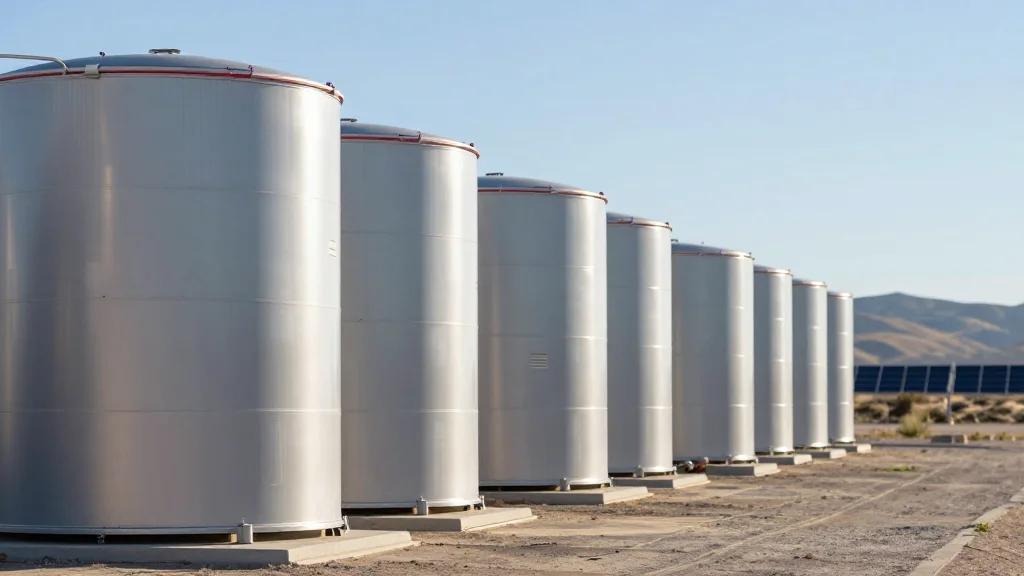
California Discharges 12,000 MW Battery Array, Matching 12 Nuclear Plants

Why It Matters
The California battery discharge demonstrates that large‑scale storage can reliably meet a sizable share of peak demand, challenging the long‑held notion that only baseload generators like nuclear can provide such capacity. By proving that batteries can deliver over 12,000 MW in a single event, the state sets a benchmark for other jurisdictions grappling with the need to retire fossil‑fuel peakers while maintaining grid stability. The development also underscores the interplay between technology and policy. While storage growth is accelerating, the recent curtailment of federal tax credits for wind and solar could slow the pipeline of new renewable projects needed to charge these batteries. The outcome will influence how quickly the United States can achieve its broader decarbonization goals and could reshape investment strategies across the energy sector.
Key Takeaways
- •California discharged >12,000 MW from batteries, matching the output of 12 nuclear plants.
- •Battery output covered >40% of the state's peak electricity demand during the event.
- •Ed Smeloff highlighted that batteries now provide up to 40% of peak‑capacity needs.
- •Federal tax credits for wind and solar projects ending after 2030 were eliminated, affecting future renewable financing.
- •State aims for 100% clean electricity by 2045, requiring significant additional battery and renewable capacity.
Pulse Analysis
California’s battery milestone arrives at a moment when storage costs have fallen to below $150 per kilowatt‑hour, making large‑scale deployments financially viable without heavy subsidies. The ability to dispatch 12,000 MW in a single evening shows that storage can act as a virtual peaker plant, reducing reliance on natural‑gas units that have traditionally filled the evening gap. This shift not only cuts emissions but also mitigates fuel price volatility, a factor that utilities and regulators are increasingly weighing.
However, the policy backdrop introduces uncertainty. The phase‑out of the Investment Tax Credit for wind and solar projects after 2030 removes a key financial lever that has driven the rapid build‑out of renewable capacity in the past decade. Without comparable incentives for storage, developers may face tighter capital constraints, potentially slowing the pace needed to meet the 2045 clean‑energy target. States like California may need to craft targeted storage incentives or adjust procurement rules to keep the pipeline robust.
Looking forward, the integration of upcoming transmission projects such as TransWest Express will broaden the geographic diversity of renewable resources feeding California’s grid, enhancing the reliability of battery charging sources. If the state can sustain the current trajectory—adding several gigawatts of battery capacity by 2027 while securing new renewable generation—it could set a national precedent for replacing baseload fossil plants with a hybrid of storage and renewables, reshaping the U.S. energy mix for the next generation.
California Discharges 12,000 MW Battery Array, Matching 12 Nuclear Plants
Comments
Want to join the conversation?
Loading comments...