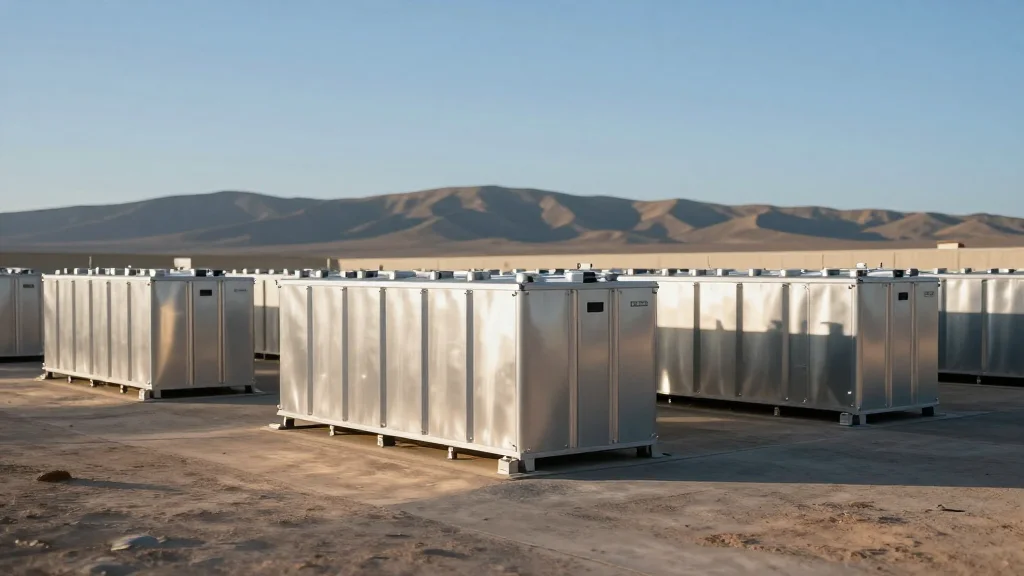
California Discharges Record 12,000 MW From Battery Array, Matching 12 Nuclear Plants

Why It Matters
The 12,000 MW battery discharge proves that storage can replace a substantial share of conventional peaker capacity, reducing emissions and improving grid resilience. As other states grapple with similar peak‑demand challenges, California’s experience offers a template for integrating batteries at scale. However, the episode also underscores how federal tax‑credit structures and regulatory certainty can accelerate or stall the transition, making policy design a critical lever for nationwide decarbonization. If California can sustain and expand this storage‑driven model, it could accelerate the United States’ overall shift toward a grid that relies less on fossil fuels and more on flexible, clean resources. The outcome will influence investment decisions, technology roadmaps, and the political calculus surrounding renewable incentives.
Key Takeaways
- •California discharged >12,000 MW from batteries, matching 12 nuclear plants
- •Battery output covered >40 % of evening peak demand
- •Ed Smeloff (GridLab) said batteries now provide up to 40 % of peak capacity
- •Federal tax‑credit phase‑out could cut up to 30 % of wind/solar capital costs after 2030
- •TransWest Express line to bring Wyoming wind to California by 2030
Pulse Analysis
California’s battery milestone is more than a headline; it reflects a structural shift in how the state balances supply and demand. Historically, California relied on natural‑gas peaker plants to meet evening spikes, but the rapid deployment of utility‑scale lithium‑ion storage has turned the grid into a more flexible system. This flexibility reduces the need for fossil‑fuel generators, cuts operating emissions, and provides a buffer against supply volatility from intermittent renewables.
The policy environment, however, remains a double‑edged sword. The 30 % tax‑credit reduction for projects completed after 2030 creates a race against time for developers, potentially accelerating project pipelines but also risking a post‑deadline slowdown. Offshore wind, which could supply a sizable share of the state’s future generation, is especially at risk because it depends on federal subsidies and port upgrades. If Congress does not restore or extend incentives, California may see a gap between battery capacity and clean generation needed to recharge those batteries.
Looking forward, the integration of the TransWest Express line will diversify California’s renewable mix, adding high‑capacity wind from the Plains. Coupled with continued battery expansion, this could enable the state to meet its 2045 clean‑energy target without over‑reliance on any single technology. Investors and policymakers should monitor the 2026‑2032 window closely; it will likely determine whether California’s storage surge becomes a permanent fixture or a temporary bridge.
California Discharges Record 12,000 MW from Battery Array, Matching 12 Nuclear Plants
Comments
Want to join the conversation?
Loading comments...