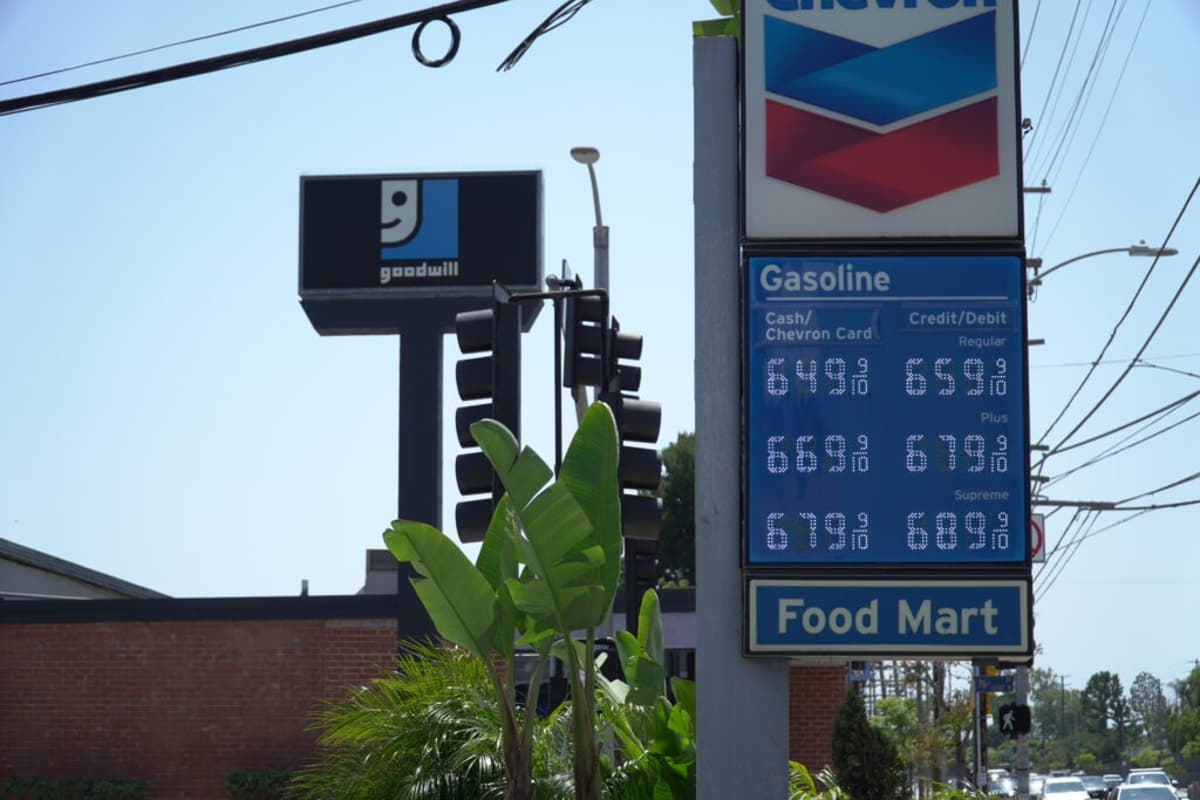
California Drivers Are Paying a More Than $6-a-Gallon Price for the War in Iran
Companies Mentioned
Why It Matters
Sky‑high fuel costs strain household budgets and highlight the vulnerability of U.S. energy security to geopolitical shocks, prompting renewed debate over domestic production and clean‑energy transition.
Key Takeaways
- •California gas prices topped $6 per gallon amid Iran war
- •Strait of Hormuz blockage cut 20% of global oil flow
- •War-driven oil surge adds $29 billion to U.S. energy costs
- •State taxes and cap‑and‑trade amplify California’s pump prices
Pulse Analysis
The escalation of the U.S.-Iran conflict has reverberated through global oil markets, primarily because the Strait of Hormuz—through which about one‑fifth of the world’s petroleum passes—has been partially blocked. This supply pinch drives crude prices upward, and each $1 rise in a barrel translates into roughly 2.5 cents per gallon at the pump. Analysts estimate that the war has already cost American consumers more than $29 billion in higher fuel expenditures, a figure that will climb as the standoff persists.
California, already the nation’s most expensive fuel market, feels the squeeze acutely. Local taxes, a robust cap‑and‑trade program, and a mysterious gasoline surcharge introduced in 2015 combine with the global oil shock to push retail prices past $6 per gallon, with some stations hitting $8.71. For commuters like dialysis worker Alfred Estrella, the added $70‑$80 weekly fuel bill erodes disposable income, while low‑income households face tougher choices between mobility and essentials.
The price surge fuels a broader policy conversation about energy independence and climate goals. Labor unions and state officials argue that reliance on overseas oil makes the economy vulnerable to geopolitical turbulence, urging investment in domestic production and accelerated adoption of electric vehicles and offshore wind. Meanwhile, environmental groups warn that higher gasoline costs alone will not shift the market without affordable clean‑energy alternatives, underscoring the need for coordinated federal and state action to decouple the U.S. from volatile oil supplies.
California Drivers Are Paying a More Than $6-a-Gallon Price for the War in Iran
Comments
Want to join the conversation?
Loading comments...