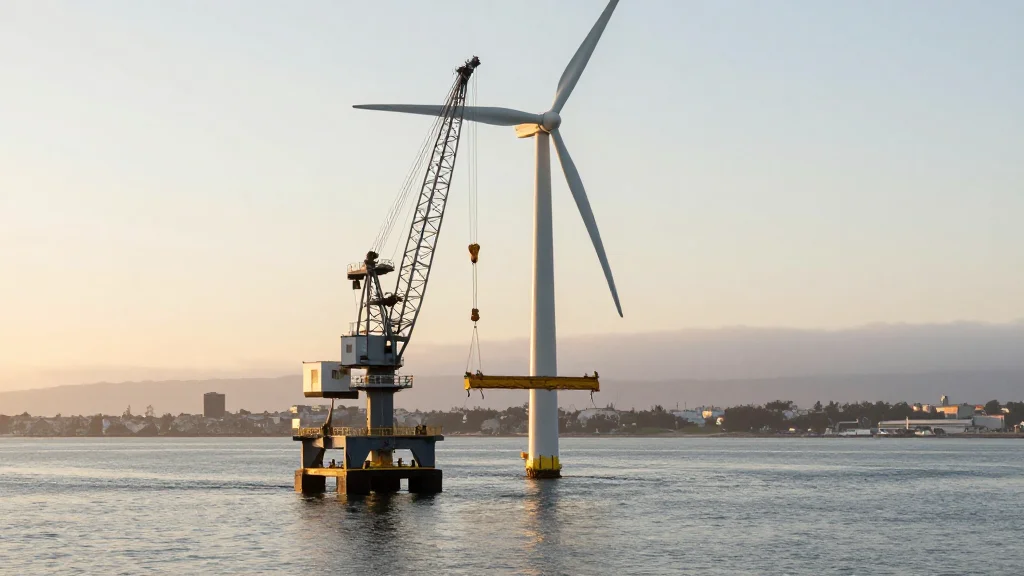
California Presses Forward on Offshore Wind
Why It Matters
The project secures a critical supply chain foothold for U.S. offshore wind, signaling state‑level commitment that can attract private capital and accelerate the nation’s renewable transition.
Key Takeaways
- •Pier Wind project costs $4.7 billion, creating a 400‑acre terminal.
- •California targets 25 GW offshore wind by 2045, using floating turbines.
- •Port of Long Beach to assemble world’s largest offshore wind turbines.
- •Federal wind lease cancellations push state to focus on port infrastructure.
- •Floating turbine tech addresses Pacific depth, reducing seabed installation costs.
Pulse Analysis
California’s offshore wind push reflects a strategic pivot as the federal government scales back support for renewable energy permits. While the Trump administration has cancelled several offshore leases, the state’s aggressive 25‑gigawatt target by 2045 keeps momentum alive. By focusing on floating turbine technology—necessary for the Pacific’s deep waters—California sidesteps traditional seabed‑mounted solutions, positioning itself as a testbed for next‑generation wind farms that could be replicated along the West Coast.
The Pier Wind project at the Port of Long Beach is the centerpiece of this effort. With a $4.7 billion price tag, the 400‑acre terminal will serve as a staging ground for assembling and storing the world’s largest floating turbines before they are towed to lease sites off Morro and Humboldt bays. This infrastructure not only creates high‑skill construction jobs but also establishes a domestic supply chain that reduces reliance on overseas components. The project’s scale signals confidence to investors, potentially unlocking billions in private financing for ancillary services such as grid upgrades and vessel operations.
Beyond California, the initiative could reshape the U.S. offshore wind market. By demonstrating that state‑level actions can compensate for federal inertia, the project may inspire other coastal states to develop similar port‑centric hubs. Successful deployment of floating turbines would also lower cost barriers for deeper‑water sites nationwide, expanding the viable offshore wind resource base. In a broader sense, California’s commitment underscores the growing importance of sub‑national leadership in meeting climate goals and accelerating the clean‑energy transition across the United States.
California presses forward on offshore wind
Comments
Want to join the conversation?
Loading comments...