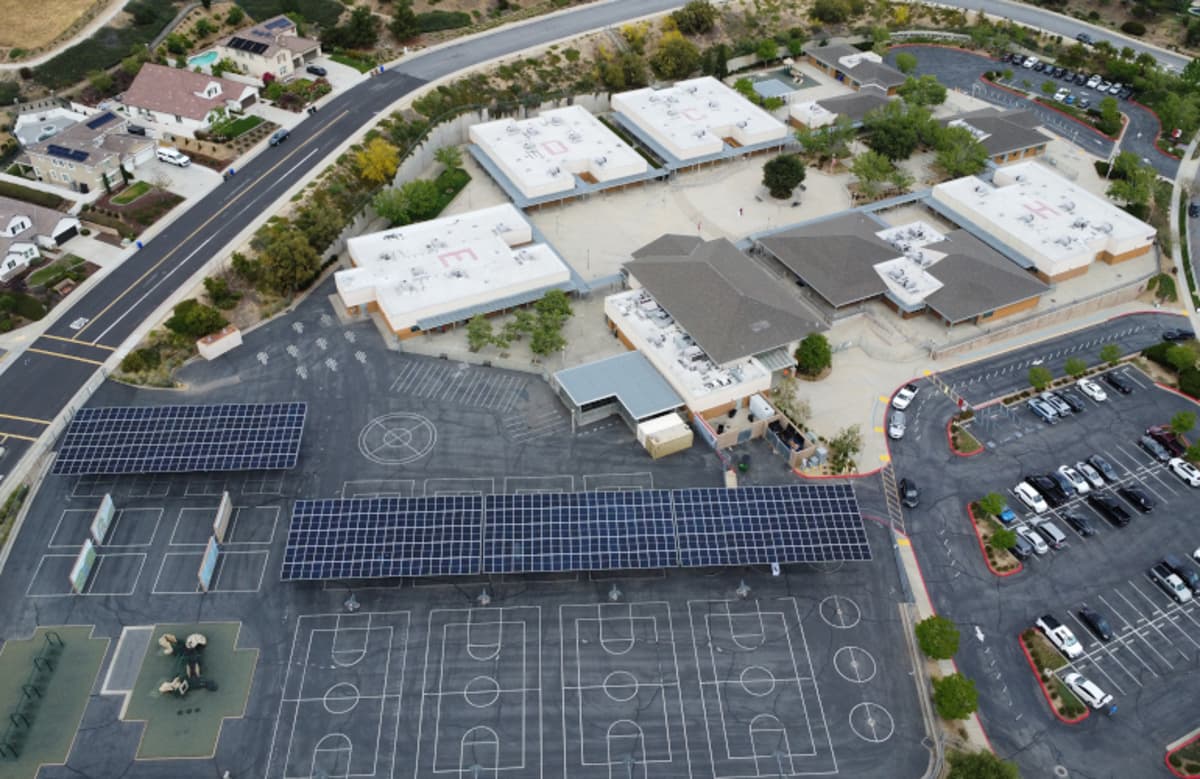
California School District Installs 3.1 MW of Solar Across 12 Campuses
Why It Matters
The project demonstrates how K‑12 districts can leverage federal incentives to cut operating costs, lower carbon footprints, and enrich curricula, setting a replicable model for sustainable school infrastructure.
Key Takeaways
- •YCJUSD installed 3.1 MW solar across 12 campuses
- •Project cost $33 million, funded partly by $5 million IRA grant
- •Expected net savings exceed $42 million over 20 years
- •Student internships and STEAM kits integrate energy education district‑wide
- •Upgraded lighting and HVAC improve campus efficiency and comfort
Pulse Analysis
California’s push toward greener public facilities gained a concrete example this spring as Opterra Energy Services wrapped up a $33 million modernization for the Yucaipa‑Calimesa Joint Unified School District. The centerpiece—a 3.1 megawatt solar array spread over twelve school sites—was financed in part by a $5 million grant from the Inflation Reduction Act, illustrating how federal climate funding can de‑risk capital‑intensive projects for local governments. By bundling solar with lighting and HVAC upgrades, the district not only meets state renewable targets but also creates a robust energy‑management platform that can be scaled to similar districts nationwide.
Financially, the initiative promises more than $42 million in net savings over a 20‑year horizon, translating to roughly $2.1 million per year in reduced utility expenses. Those savings free up budgetary room for instructional priorities while delivering measurable emissions cuts. The grant’s low‑interest structure and the long‑term payback underscore a growing business case: schools can become profit‑centered assets rather than cost centers, especially when they tap into the IRA’s clean‑energy incentives and utility‑scale procurement models.
Beyond the balance sheet, YCJUSD paired the infrastructure rollout with a customized student‑engagement program that includes energy‑focused internships and STEAM learning kits aligned to the district’s curriculum. This dual approach cultivates a pipeline of future energy professionals and embeds sustainability concepts directly into classrooms. As districts across the United States grapple with aging facilities and climate mandates, the YCJUSD model showcases how integrated design, financing, and education can transform schools into resilient, low‑carbon learning environments, delivering both fiscal and societal returns.
California school district installs 3.1 MW of solar across 12 campuses
Comments
Want to join the conversation?
Loading comments...