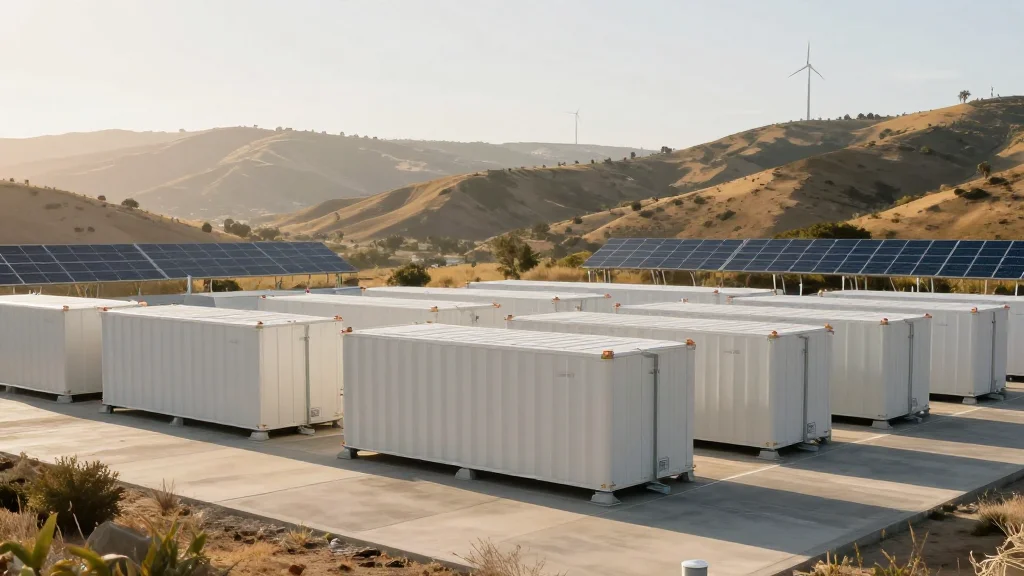
California’s Battery Array Is as Powerful as 12 Nuclear Power Plants. Here’s What’s on the Horizon.
Why It Matters
California’s battery surge demonstrates storage’s ability to replace traditional peaking plants, accelerating the state’s clean‑energy transition. However, policy uncertainty and looming transmission constraints could jeopardize the 2045 zero‑carbon target.
Key Takeaways
- •California discharged 12,000 MW from batteries, matching 12 nuclear plants.
- •Batteries supplied over 40% of peak demand during evening hours.
- •State targets 100% clean energy by 2045, requiring more storage.
- •Wind/solar tax credits end 2030; battery credits continue through 2032.
- •AI data centers may add up to 4,000 MW load by 2035.
Pulse Analysis
California’s recent discharge of more than 12,000 MW from grid‑connected batteries marks a watershed moment for U.S. energy storage. That output rivals the combined capacity of twelve large nuclear reactors and supplied roughly 40 percent of the state’s evening peak demand, a feat achieved in just a few years of rapid battery deployment. The surge reflects a broader industry shift as utilities replace aging natural‑gas peakers with modular lithium‑ion farms that can be sited close to load centers. Analysts see storage as a critical bridge to the state’s ambitious decarbonization roadmap.
The policy backdrop, however, adds complexity to California’s clean‑energy calculus. The Inflation Reduction Act’s wind and solar production tax credits phase out for projects not completed by the end of 2030, potentially shaving up to 30 percent off capital costs for new renewables. By contrast, the investment tax credit for battery systems has been extended through 2032, giving storage developers a more stable incentive environment. Offshore‑wind projects remain the most exposed to federal uncertainty, while solar continues to benefit from falling module prices and robust market momentum.
Looking ahead, electrification of transportation, heat‑pump adoption in buildings, and the rapid expansion of AI‑driven data centers will push California’s load well beyond current forecasts—potentially 4,000 MW by 2035, with some interconnection queues showing up to 16,000 MW of interest. This surge will demand extensive transmission upgrades and additional clean‑energy resources to charge the growing battery fleet. Large‑scale initiatives such as the 21‑GW Valley Clean Infrastructure Project illustrate the scale of investment required to double solar capacity while preserving community values. Successful navigation of these technical and policy challenges will be pivotal for achieving the 2045 zero‑carbon goal.
California’s Battery Array Is as Powerful as 12 Nuclear Power Plants. Here’s What’s on the Horizon.
Comments
Want to join the conversation?
Loading comments...