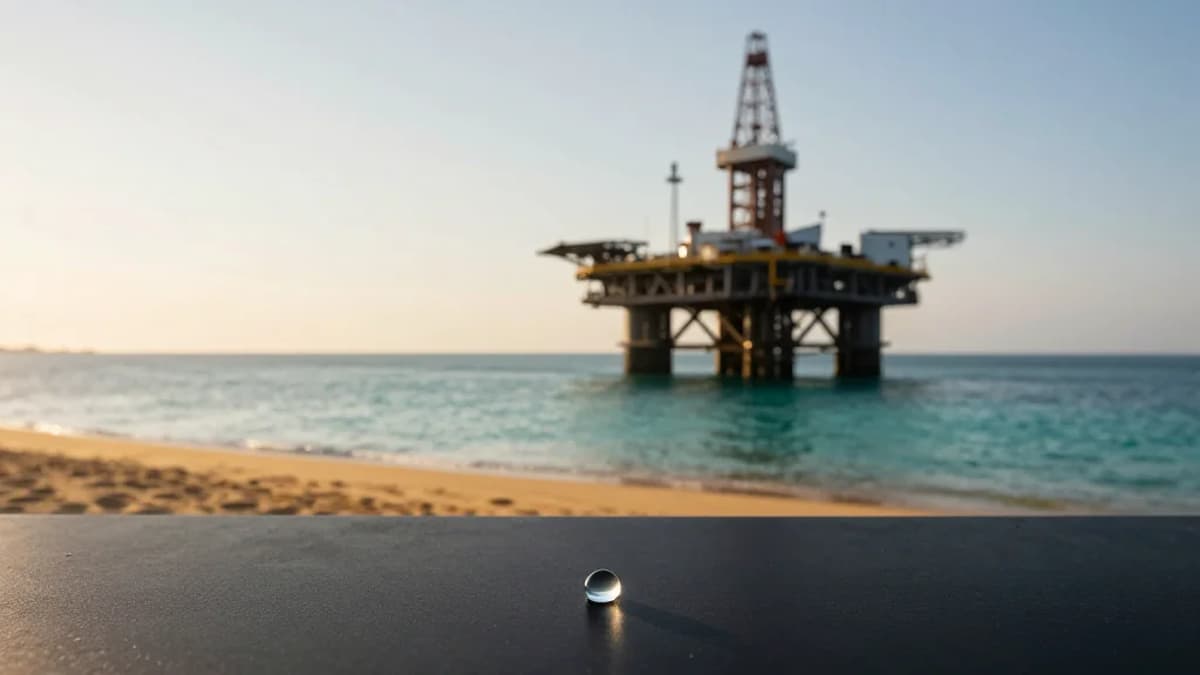
The influx of major IOCs could lift Libya’s output, bolstering global oil supply and giving Western governments a non‑military lever in a volatile Middle‑East landscape.
Libya’s renewed licensing round marks a pivotal moment for the country’s energy sector. After more than a decade of stagnation, the National Oil Corporation opened 22 blocks, inviting a mix of legacy super‑majors and regional players. Chevron’s award of Contract Area 106 in the prolific Sirte Basin underscores the commercial appeal of Libya’s untapped reserves, while partners such as ENI, Repsol, MOL and QatarEnergy broaden the consortium landscape. This diversified investor base not only aims to hit the 2 million‑bpd goal but also introduces modern drilling technology and financing structures that were previously absent.
Beyond the economics, the licensing wave reflects a broader geopolitical recalibration. Western powers, constrained by diplomatic setbacks like the U.S. exit from the JCPOA, are leveraging oil companies as quasi‑diplomatic outposts, echoing the historical model of the British East India Company. By embedding corporate assets on the ground, governments gain indirect influence over resource‑rich states while sidestepping direct political entanglements. The post‑Ukraine realignment, which curtailed Russian gas flows to Europe, further amplifies the strategic value of securing alternative supply corridors, positioning Libya as a potential counterbalance to Eastern energy dominance.
Nevertheless, the upside is tempered by Libya’s persistent civil conflict and fragmented authority. Security concerns raise operational costs and deter long‑term capital commitments, while the lack of a unified regulatory framework can lead to contract disputes. Investors must weigh the high‑reward prospect of accessing low‑cost crude against the volatility of a nation still grappling with governance challenges. If stability improves, Libya could emerge as a cornerstone of Western energy strategy; if not, the recent licensing surge may prove another short‑lived optimism in a turbulent market.
By Simon Watkins · Feb 17, 2026, 7:00 PM CST
Libya’s first oil field licensing round since the removal of Muammar Gaddafi as leader in 2011 has seen a slew of major Western international oil companies (IOCs) choose to either re‑enter the country after a long absence or bolster their existing operations in a stunning success for Tripoli. As part of the National Oil Corporation’s (NOC) target of lifting oil production to 2 million barrels per day (bpd) by 2028, it announced last year that 22 offshore and onshore blocks would be licensed in the initial bidding round.
Perhaps the standout winner of a contract award was U.S. super‑major Chevron, designated as the winning bidder for Contract Area 106 in the country’s oil‑rich Sirte Basin, marking its return to the country after a 16‑year hiatus. Other Western majors that secured new fields were Italy’s ENI, Spain’s Repsol, and Hungary’s MOL, with Middle‑East heavyweight QatarEnergy also gaining an award.
So, does all this herald a brave new era for Libya, or will it turn out to be just another false dawn?
What augurs well is not just the breadth of Western firms choosing to expand their presence in Libya, but which firms they are. The oil and gas sector holds a unique position in the global business world in that companies operating in foreign locations are afforded an enormous degree of autonomy on the ground, similar in legal terms to embassies being treated as being on native soil wherever they are located. In practical terms, under international law, foreign oil and gas firms are allowed to deploy whatever security personnel and related infrastructure developments they see as being necessary to safeguard their investments on the ground, provided that these meet with the approval of the indigenous government, but this is virtually always the case.
Consequently, perhaps the best way for any government to quietly build up its influence in a foreign country is to gradually expand the presence of its major oil and gas firms on the ground. The most successful early template of this model of building political influence through business expansion was the British East India Company. Established in 1600, the huge firm functioned extremely successfully for nearly 300 years using trade and investment as the means to gain control over large swathes of Asia, including India and Hong Kong, with all such projects safeguarded by a British security force at one stage as large as 260,000 men. The additional benefit for the British East India Company and its home country was that its colonising activities more than paid for themselves in the profits from the business it transacted, and the West is hoping its efforts in Syria will do the same.
Several major Western oil and gas firms have been at the forefront of the ongoing attempt by the U.S. and Europe to rebuild their influence in the world’s key oil‑and‑gas region, the Middle East, in recent years, particularly since the U.S.’s unilateral withdrawal from the Joint Comprehensive Plan of Action (JCPOA) with Iran in 2018. This inadvertently opened the door for China and Russia to use Iran as a lever to expand their presence across the rest of the “Shia Crescent of Power,” which includes Iraq, Syria, and Lebanon, and then to push further into former Western allies—most notably Saudi Arabia and the UAE—from that operational base, analysed in my latest book on the new global oil market order.
U.S. President Donald Trump’s second term in office has seen a major pushback on Iran in that configuration, and consequently on China and Russia too, with a further reason for greater oil‑and‑gas exploration and development opportunities in the Middle East arising from the loss of Russian oil and gas supplies to Europe after the Kremlin‑ordered invasion of Ukraine in 2022. Several major Western firms have been at the forefront of this broader move to rebuild Western influence in strategically crucial areas of the Middle East—most recently incorporating Iraq—including the U.S.’s Chevron, ConocoPhillips, and ExxonMobil, Great Britain’s BP and Shell, France’s TotalEnergies, Italy’s ENI, and Spain’s Repsol. QatarEnergy’s presence in a consortium with ENI in Libya also recognises the Arab country’s pivotal importance in the new post‑Ukraine‑War world order, as a key supplier of liquefied natural gas to Europe instead of Russian gas supplies, as part of its broader designation as a “major non‑NATO ally.”
That said, there is still much oil and gas potential for them to work with in Libya, despite the ongoing civil war.
Comments
Want to join the conversation?
Loading comments...