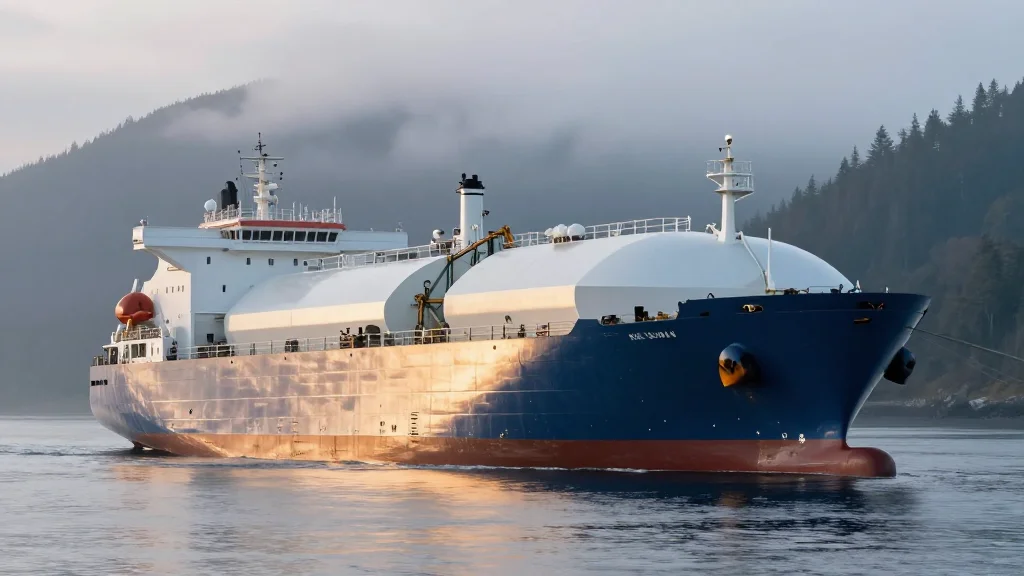
Canada Clinches $10 Bn German LNG Offtake for Pacific Coast Terminal

Companies Mentioned
Why It Matters
The German offtake agreement marks a pivotal shift in Canada’s LNG export strategy, opening a new market in Europe that could offset declining Asian demand and enhance energy security for the EU amid ongoing geopolitical tensions. By anchoring a $10 bn export terminal, the deal promises substantial job creation, provincial revenue, and a boost to Canada’s trade balance. However, the project also spotlights the clash between fossil‑fuel expansion and climate policy, as well as the legal and moral imperative of securing First Nations consent. How Canada navigates these competing pressures will influence its credibility in meeting net‑zero targets and its ability to attract future investment in both traditional and clean‑energy sectors. Furthermore, the agreement underscores the broader re‑configuration of global gas flows triggered by the Middle East conflict and the war in Ukraine. Europe’s scramble for reliable LNG supplies has elevated the strategic importance of North American projects, potentially reshaping long‑term trade patterns and reinforcing Canada’s position as a key supplier in a decarbonizing world.
Key Takeaways
- •Canadian consortium secures supply contract with Germany's SEFE for Ksi Lisims LNG project
- •Deal supports $10 bn West‑Coast export terminal, moving project toward final investment decision
- •Premier David Eby hailed the agreement as a milestone for British Columbia’s energy sector
- •Environmental groups and First Nations raise legal and climate concerns over the project
- •European LNG demand surge creates new market opportunity for Canadian exporters
Pulse Analysis
The German offtake is more than a commercial win; it is a strategic pivot that could redefine Canada’s LNG export geography. Historically, Canadian LNG has been marketed almost exclusively to Asian buyers, leveraging shorter Pacific routes. Europe’s current energy crunch, driven by the war in Ukraine and the curtailment of Russian gas, has opened a lucrative niche for North American suppliers. By locking in a European buyer now, Canada mitigates the risk of over‑reliance on Asia and diversifies its revenue streams, which could stabilize cash flows for capital‑intensive projects like Ksi Lisims.
Nevertheless, the deal also amplifies the friction between economic ambition and climate policy. While the federal government touts the project as a driver of jobs and GDP, the lack of full Indigenous consent and the heightened climate scrutiny could delay or derail the venture. The precedent set by the German contract may pressure other provinces to fast‑track similar projects, potentially sparking a cascade of legal challenges. Investors will be watching how the Canadian government balances expedited approvals with the growing demand for transparent, rights‑based project governance.
In the longer term, the success—or failure—of Ksi Lisims will influence Canada’s credibility in the global energy transition. If the project proceeds with robust environmental safeguards and Indigenous partnership, it could serve as a model for responsibly scaling fossil‑fuel infrastructure while investing in carbon‑capture and green‑hydrogen off‑takes. Conversely, a stalled or cancelled project would reinforce the narrative that new fossil‑fuel investments are increasingly untenable in a world moving toward net‑zero, prompting a shift toward renewable and low‑carbon export opportunities.
Canada clinches $10 bn German LNG offtake for Pacific Coast terminal
Comments
Want to join the conversation?
Loading comments...