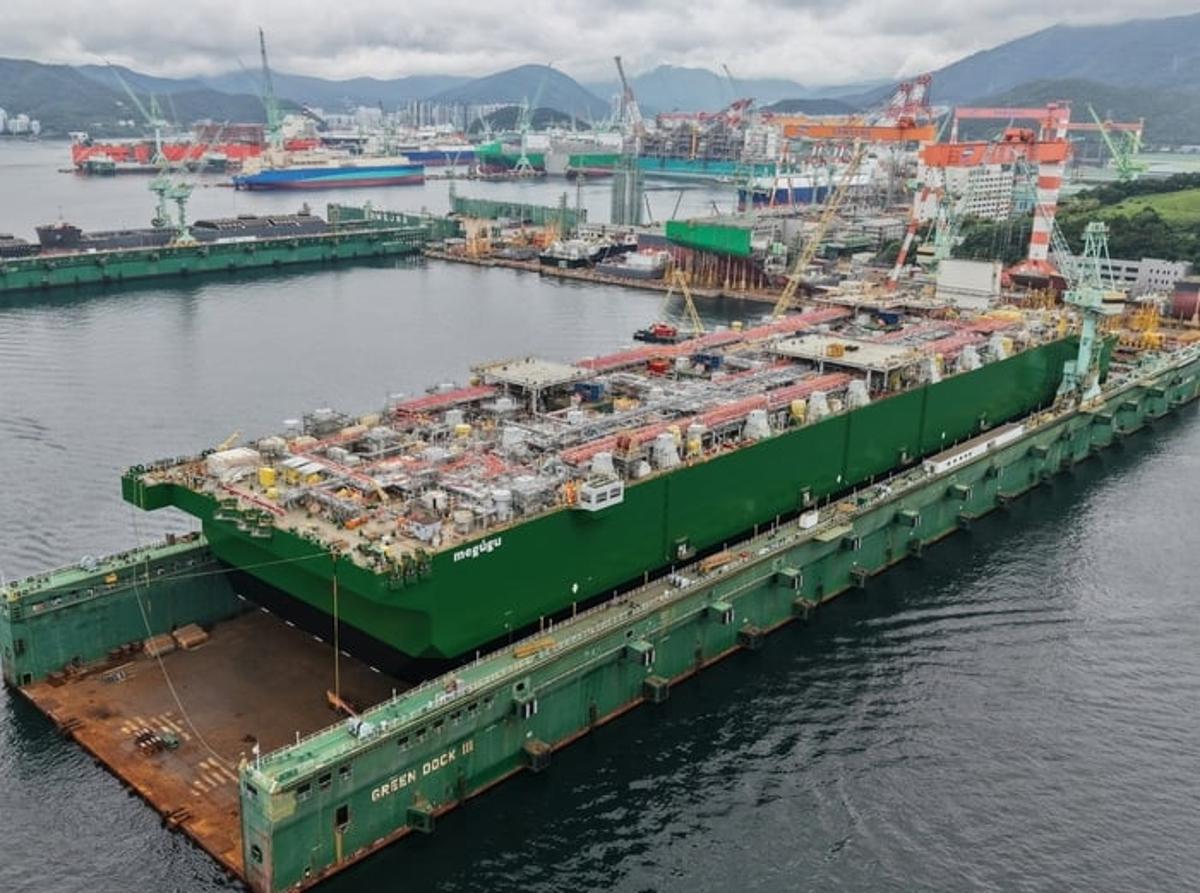
Canada’s $4B Hydro-Powered LNG Project Advances with FLNG Launch at Samsung Heavy Industries
Companies Mentioned
Why It Matters
The low‑carbon, Indigenous‑led Cedar project showcases how renewable power and FLNG technology can meet growing Asian LNG demand while advancing decarbonisation and community ownership in the energy sector.
Key Takeaways
- •Cedar FLNG unit launched, targeting 2028 delivery.
- •$4 billion project powered by British Columbia hydro electricity.
- •Majority‑owned by Haisla Nation, first Indigenous‑majority LNG facility.
- •Samsung builds three FLNG units simultaneously, showcasing smart shipyard.
- •Ultra‑low‑carbon LNG aims to replace higher‑emitting Asian fuels.
Pulse Analysis
The Cedar LNG project marks a milestone in the evolution of floating liquefied natural gas (FLNG) technology. By launching the 50,000‑ton Megúgu unit at Samsung Heavy Industries’ Geoje yard, the venture demonstrates that large‑scale, offshore LNG production can be paired with clean energy sources. Powered entirely by hydroelectricity from British Columbia’s grid, the facility is positioned to generate ultra‑low‑carbon LNG, a commodity that could displace more polluting fuels in energy‑intensive Asian markets. Completion is slated for the first half of 2028, aligning with global decarbonisation timelines.
The project’s ownership structure is equally groundbreaking. With the Haisla Nation holding a majority stake alongside Pembina Pipeline, Cedar becomes the world’s first Indigenous‑majority LNG facility. This partnership not only provides economic benefits and job creation for the Haisla community but also sets a precedent for Indigenous participation in high‑value energy infrastructure. By coupling sovereign ownership with renewable power, the initiative addresses longstanding concerns about environmental impact and social license, offering a template for future resource developments on traditional territories.
Samsung Heavy Industries’ simultaneous construction of three FLNG units—Cedar, Petronas’s ZLNG, and Eni’s Coral North—highlights a shift toward mass‑production techniques in the offshore sector. The company’s smart‑shipyard approach, emphasizing modular topside fabrication and integrated cargo‑tank installation, aims to reduce build times and costs while maintaining quality. Securing an additional order for Delfin Midstream’s FLNG in Louisiana further expands Samsung’s footprint in North America. If successful, this production model could accelerate the rollout of low‑carbon FLNG projects worldwide, reshaping the LNG supply chain.
Canada’s $4B hydro-powered LNG project advances with FLNG launch at Samsung Heavy Industries
Comments
Want to join the conversation?
Loading comments...