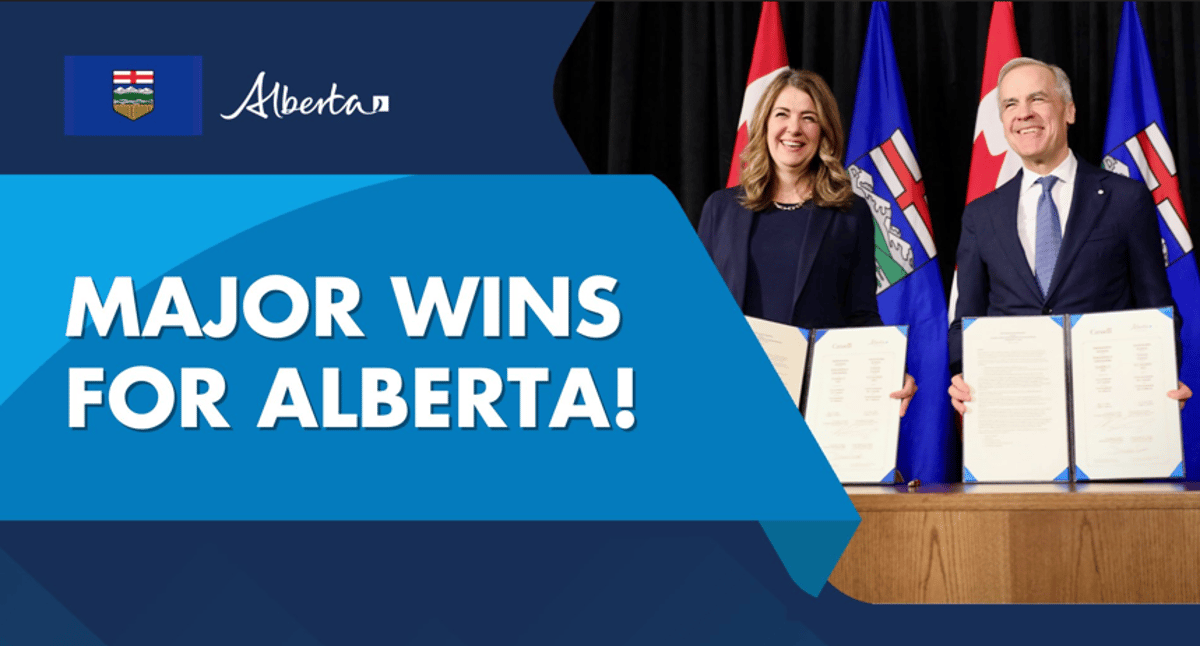
Carney, Smith Sign Carbon Price Deal, Suggest Fall 2027 Pipeline Approval
Why It Matters
The pact signals a rare alignment between Ottawa and Alberta on energy expansion and carbon pricing, directly influencing the viability of the contested pipeline and Canada’s competitive stance in global oil markets.
Key Takeaways
- •Fall 2027 targeted start for new Alberta‑to‑West Coast bitumen pipeline
- •Effective carbon price reaches $130 CAD (~$96 USD) per tonne by 2040
- •Headline price $140 CAD (~$104 USD) per tonne, under federal $170 CAD
- •Pipeline approval hinges on Pathways carbon‑capture project and Indigenous consultations
- •Deal may calm separatist sentiment, yet faces B.C. and environmental opposition
Pulse Analysis
Canada’s latest energy accord between Prime Minister Justin Carney and Alberta Premier Danielle Smith attempts to reconcile two traditionally opposing forces: aggressive carbon pricing and the push for new oil‑sand infrastructure. By establishing an effective carbon price of $130 CAD per tonne (about $96 USD) and a headline price of $140 CAD ($104 USD) by 2040, Alberta aligns its market with federal expectations while still lagging behind the national backstop of $170 CAD ($126 USD). The tiered pricing, including a minimum credit price that climbs from $60 CAD to $110 CAD, aims to curb the current flood of cheap credits that have depressed market values to as low as $17 CAD per tonne, thereby restoring some incentive for emissions reductions.
The pipeline component of the deal is equally pivotal. A fall 2027 construction start hinges on the completion of the Pathways carbon‑capture project, which promises to offset emissions equivalent to 90 percent of Alberta’s vehicle fleet. Simultaneously, the governments have pledged to honor Indigenous consultation requirements and to explore co‑ownership opportunities, a move designed to mitigate longstanding opposition from First Nations and the province of British Columbia. While Alberta continues to act as the project proponent, an initial proposal is expected before July, with oil flow projected for 2033‑34 if approvals proceed smoothly.
Beyond the immediate project, the agreement carries broader market implications. Industry leaders argue that a softer provincial carbon price could preserve competitiveness against jurisdictions without such levies, while environmental groups warn it may dilute Canada’s net‑zero ambitions. Politically, the pact seeks to temper separatist sentiment in Alberta by demonstrating tangible federal‑provincial cooperation, yet it also fuels criticism from opposition parties and B.C. Premier David Eby, who view the pipeline as a concession to oil interests. Ultimately, the deal will test Canada’s ability to balance climate policy with energy security in a rapidly shifting global market.
Carney, Smith sign carbon price deal, suggest fall 2027 pipeline approval
Comments
Want to join the conversation?
Loading comments...