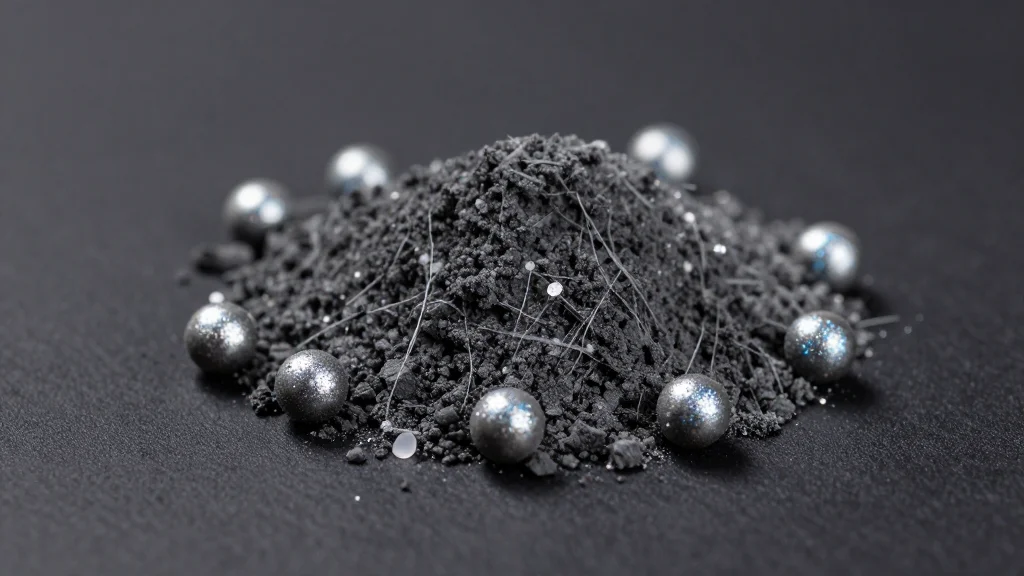
Catalysis‐Derived Robust Solid Electrolyte Interphase for Stable SiO Anode
Why It Matters
A stable, high‑capacity SiO anode could replace graphite, boosting energy density of lithium‑ion batteries for EVs and portable electronics. The catalytic SEI strategy resolves volume expansion and SEI degradation, accelerating the path to market‑ready next‑gen batteries.
Key Takeaways
- •Ni nanoparticles catalyze fluorinated electrolyte to form LiF‑rich SEI
- •Dense SEI tolerates SiO volume expansion during cycling
- •Conductive Ni/N‑doped carbon network enhances electron and Li⁺ transport
- •Initial Coulombic efficiency reaches 82.4% with 833 mAh g⁻¹ capacity
- •Rate capability holds 421 mAh g⁻¹ at 5 A g⁻¹
Pulse Analysis
Silicon monoxide (SiO) has long been eyed as a high‑capacity alternative to graphite for lithium‑ion batteries, but its commercial adoption stalls due to dramatic volume expansion and an unstable solid electrolyte interphase (SEI). These issues cause rapid capacity fade and low Coulombic efficiency, limiting practical energy density gains. Researchers are therefore exploring material‑level innovations that can simultaneously manage mechanical stress and maintain a protective, ion‑conductive surface layer.
The breakthrough reported involves embedding nickel nanoparticles within a nitrogen‑doped carbon matrix on SiO particles. Nickel acts as an electrocatalyst, preferentially decomposing fluorine‑containing electrolyte additives to generate a LiF‑rich SEI. LiF offers high mechanical rigidity and excellent ionic conductivity, creating a dense, self‑healing film that accommodates SiO’s expansion while suppressing continual electrolyte breakdown. Meanwhile, the conductive carbon network and metallic Ni form an integrated electron pathway, accelerating Li⁺ diffusion and reducing internal resistance. This dual‑function design yields an initial Coulombic efficiency above 80% and sustains over 800 mAh g⁻¹ after 100 cycles, even at high current rates.
For the battery industry, such a catalytic SEI strategy could unlock the next leap in energy density without sacrificing cycle life, a critical requirement for electric vehicles and high‑end consumer electronics. By addressing both mechanical and interfacial degradation, the approach narrows the performance gap between SiO anodes and mature graphite technology. Scaling the Ni‑decorated SiO synthesis will be the next hurdle, but the underlying principle—using interfacial electrocatalysis to engineer robust SEI chemistries—offers a versatile template for other high‑capacity anode materials, potentially reshaping the roadmap for next‑generation lithium‑ion batteries.
Catalysis‐Derived Robust Solid Electrolyte Interphase for Stable SiO Anode
Comments
Want to join the conversation?
Loading comments...