Catalyst Layer Pore Design Based on Oxygen Mean Free Path for Low‐Pt HT‐PEMFCs
Why It Matters
By dramatically lowering platinum demand while boosting power output, the approach accelerates the economic viability of high‑temperature PEM fuel cells for transport and stationary power markets.
Key Takeaways
- •Optimal pore size ~200 nm matches oxygen mean free path
- •Macroporous CL cuts oxygen resistance by 61.2 %
- •Peak power reaches 634 mW cm⁻² at 0.14 mg Pt cm⁻²
- •Rated power density hits 4.53 W mg Pt⁻¹, 5.8× higher
- •Strategy enables lower Pt loading for HT‑PEMFC commercialization
Pulse Analysis
High‑temperature proton exchange membrane fuel cells (HT‑PEMFCs) promise efficient, low‑emission power but have been hampered by costly platinum catalysts and sluggish oxygen transport within the catalyst layer. At operating temperatures of 100 °C to 200 °C, the mean free path of oxygen molecules is on the order of a few hundred nanometers. Conventional catalyst layers, with pore sizes far smaller than this, force oxygen to diffuse via the Knudsen regime, where collisions with pore walls dominate and energy losses rise sharply. Aligning pore dimensions with the oxygen mean free path therefore becomes a critical design lever for improving mass transport.
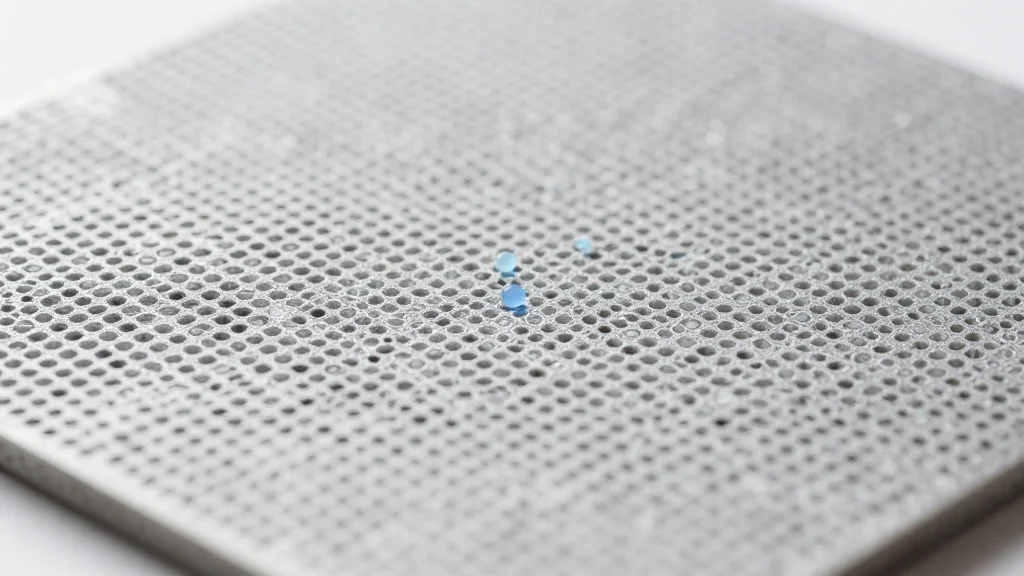
In the new study, engineers employed a sacrificial templating technique to introduce a network of macropores roughly 200 nm in diameter into the catalyst layer. This geometry enables molecular diffusion, reducing the oxygen transport resistance by 61.2 % even at a platinum loading of just 0.14 mg cm⁻². The performance jump is evident: peak power densities climb to 634 mW cm⁻² at the low loading and reach 920 mW cm⁻² when platinum is increased to 0.43 mg cm⁻². More strikingly, the electrode delivers 4.53 W per milligram of platinum, a 5.8‑fold improvement over commercial counterparts, underscoring the efficiency gains from pore‑size optimization.
The implications extend beyond laboratory metrics. Platinum accounts for a substantial portion of fuel‑cell cost; reducing its usage without sacrificing power directly improves the business case for HT‑PEMFC deployment in automotive, aerospace, and stationary applications. Moreover, the templating approach is compatible with existing manufacturing pipelines, facilitating scale‑up. As the industry seeks to meet tightening emissions standards, such mean‑free‑path‑guided designs could accelerate commercialization, lower total cost of ownership, and spur further research into nanostructured catalyst architectures.
Catalyst Layer Pore Design Based on Oxygen Mean Free Path for Low‐Pt HT‐PEMFCs
Comments
Want to join the conversation?
Loading comments...