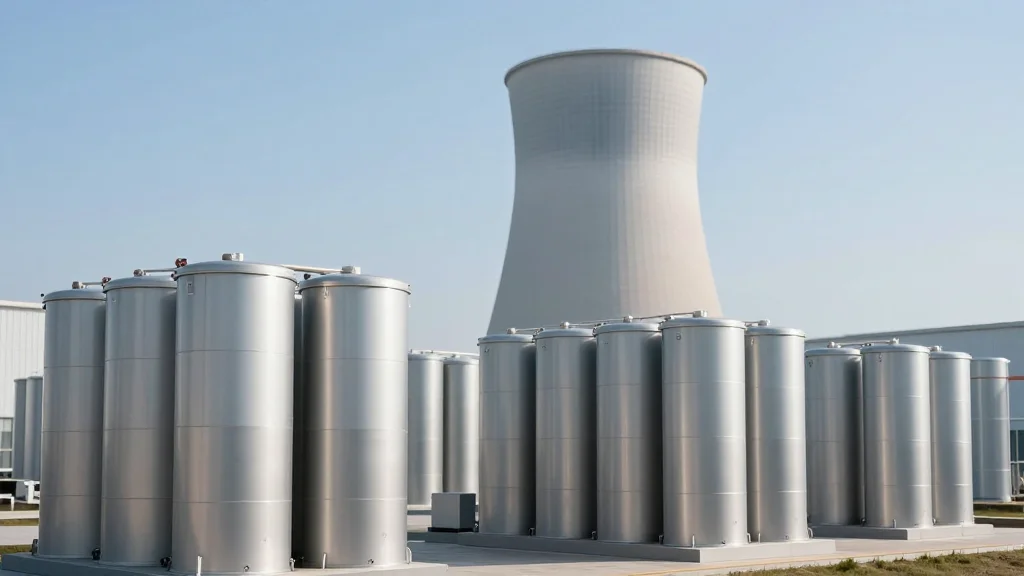
Centre Urges States to Accelerate Nuclear Power Plants and Green Energy Storage
Companies Mentioned
Why It Matters
Accelerating nuclear and storage approvals will help India meet soaring AI‑driven power needs while reducing reliance on fossil fuels, positioning the country as a leader in clean, high‑capacity energy infrastructure. The move also unlocks investment opportunities for domestic and foreign technology partners.
Key Takeaways
- •Centre asks 15 states to fast‑track nuclear and storage clearances.
- •32 NTPC‑identified nuclear sites await land and water approvals.
- •Data‑center power demand could jump to 18 GW by 2032.
- •India targets 100 GW nuclear capacity, up from 8.78 GW today.
- •13.85 GW BESS projects pending, backed by 40% viability gap funding.
Pulse Analysis
India’s energy strategy is undergoing a rapid transformation as the central government presses states to clear hurdles for nuclear power and battery storage projects. The urgency stems from a looming data‑center and AI boom that could push electricity demand ten‑fold by 2032. By fast‑tracking land allocation, water rights, and regulatory approvals for 32 NTPC‑identified nuclear sites, policymakers aim to diversify the grid and reduce carbon intensity, complementing the country’s broader non‑fossil target of 53 % by 2029.
The nuclear roadmap is especially ambitious: from a current 8.78 GW, the nation plans to reach 100 GW of nuclear capacity within the next decade, with NPCIL targeting 22 GW by 2032 and NTPC eyeing 30 GW by 2047. Strategic joint ventures with global vendors—EDF’s pressurised reactors, Holtec’s small modular reactors, and Rosatom’s water‑cooled designs—are set to bring advanced technology to Indian sites. Parallelly, the development of a 250 MW Bharat Small Modular Reactor underscores a focus on flexible, captive‑power solutions for industry.
Renewable integration hinges on scaling Battery Energy Storage Systems, currently slated for 13.85 GW with a 40 % viability gap funding boost. Completed projects, including a 2.1 GW BESS and a 7.2 GW pumped‑storage plant, illustrate progress, yet many states lag behind. As AI‑driven workloads demand reliable, low‑carbon power, the combined nuclear‑RE‑BESS mix promises to secure supply, attract private capital, and cement India’s role in the emerging clean‑energy economy.
Centre urges states to accelerate nuclear power plants and green energy storage
Comments
Want to join the conversation?
Loading comments...