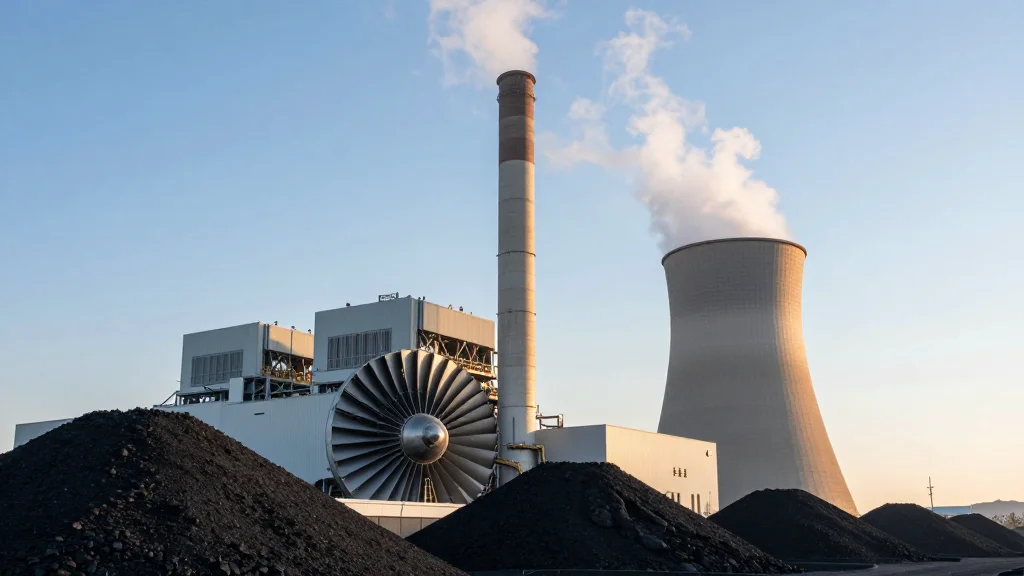
Chandrapur Plant Ready to Handle Power Demand Spike
Why It Matters
Ensuring uninterrupted power during peak summer protects Maharashtra’s industrial output and consumer reliability, while the shift toward ultra‑supercritical technology signals a move to cleaner, more efficient coal generation.
Key Takeaways
- •Chandrapur plant supplies ~25% of Maharashtra’s electricity.
- •Holds 5 million metric tonnes of coal for peak summer demand.
- •Units 1‑2 decommissioned; Units 3‑4 operating pending upgrades.
- •Proposed 800 MW ultra‑supercritical unit could be India’s first.
Pulse Analysis
Maharashtra’s electricity grid faces its toughest test each year as temperatures climb above 40 °C, driving air‑conditioner usage and industrial cooling loads. The Chandrapur Super Thermal Power Station, situated in the state’s coal‑rich Vidarbha region, has become a critical anchor, delivering close to 25 % of the state’s power. By amassing roughly 5 million metric tonnes of coal on‑site, the plant can sustain generation for weeks without additional deliveries, a buffer that mitigates supply‑chain disruptions and curbs the risk of load‑shedding during the peak summer window.
Environmental scrutiny has forced Indian utilities to retire the most polluting assets, and Chandrapur is no exception. Units 1 and 2, long identified as high‑emission sources, have already been shut down, while units 3 and 4 remain operational under upgraded emission controls. The proposed 800 MW addition could employ ultra‑supercritical (USC) technology, which operates at temperatures above 600 °C and pressures exceeding 30 MPa, delivering efficiency gains of 5‑7 % over traditional supercritical plants. Those gains translate into lower coal consumption per megawatt‑hour and a measurable cut in CO₂ and SO₂ outputs, aligning the plant with India’s 2030 emissions‑intensity targets.
Looking ahead, the USC project could position Chandrapur as a showcase for next‑generation coal power in a market increasingly dominated by renewables. If approved, the 800 MW unit would not only augment capacity but also provide a smoother transition for the workforce and local economy that depend on coal mining. Policymakers may view the upgrade as a pragmatic bridge, preserving grid stability while the state expands solar and wind installations. Investors are likely to monitor the venture closely, as successful deployment could unlock financing incentives for similar retrofits across the country.
Chandrapur plant ready to handle power demand spike
Comments
Want to join the conversation?
Loading comments...