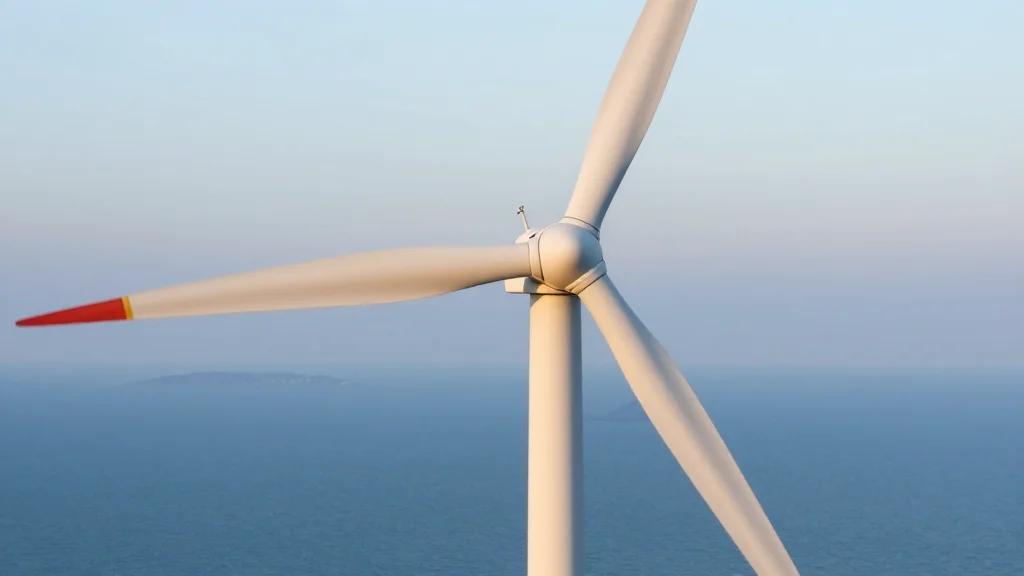
China Accelerates Wind Power Build‑Out with Massive Desert Turbines and Deep‑Water Offshore Project

Companies Mentioned
Why It Matters
China’s wind‑power surge reshapes global energy geopolitics by reducing its dependence on volatile oil imports and positioning Chinese manufacturers at the forefront of renewable technology. The rapid capacity growth and deep‑water offshore breakthroughs could accelerate cost reductions worldwide, pressuring competitors to innovate or risk losing market share. For the United States, the slowdown in offshore wind approvals risks widening the technology gap and ceding export opportunities to Chinese firms, with implications for jobs, climate commitments, and energy security. The expansion also highlights the strategic use of renewables as a tool for national security. By diversifying its energy mix, China mitigates risks from geopolitical disruptions such as the Iran‑related oil supply threats, while showcasing how state‑driven planning can outpace market‑led approaches in achieving large‑scale infrastructure goals.
Key Takeaways
- •China installed three times more wind capacity last year than the rest of the world combined.
- •All six of the world’s largest wind‑turbine manufacturers are now Chinese firms.
- •China Huaneng Group completed the deepest offshore wind farm, 45 miles off Yantai in 180‑foot‑deep water.
- •U.S. has spent nearly $2 billion reimbursing firms that abandoned offshore wind projects, stalling over 150 projects.
- •President Xi Jinping linked wind expansion to national security amid the Iran conflict.
Pulse Analysis
China’s wind‑power push illustrates how a centrally coordinated energy strategy can outpace market‑driven development. By coupling massive grid upgrades with long‑term project pipelines, Beijing sidesteps the typical financing and permitting delays that plague Western renewables. The deep‑water offshore milestone signals a maturation of Chinese engineering capabilities that were once limited to shallow, near‑shore sites. This technical leap could lower the levelized cost of electricity (LCOE) for offshore wind, making it competitive with natural‑gas peaker plants and accelerating global decarbonization.
In contrast, the United States’ recent policy reversals underscore the fragility of a fragmented regulatory environment. The $2 billion reimbursement program, while politically expedient, signals a lack of confidence in the sector’s long‑term viability and may deter private investment. As Chinese turbine manufacturers capture a larger share of the global export market, U.S. firms risk losing not only domestic contracts but also overseas opportunities in emerging markets that look to China for affordable, proven technology.
Looking forward, the key question is whether the U.S. can recalibrate its permitting process and align federal policy with state‑level renewable ambitions. If it fails, China’s wind dominance could translate into broader geopolitical leverage, from influencing global supply chains to shaping climate‑policy negotiations. For investors and policymakers, the takeaway is clear: the next wave of renewable growth will be defined by who can marry strategic vision with execution speed, and China currently holds that advantage.
China Accelerates Wind Power Build‑Out with Massive Desert Turbines and Deep‑Water Offshore Project
Comments
Want to join the conversation?
Loading comments...