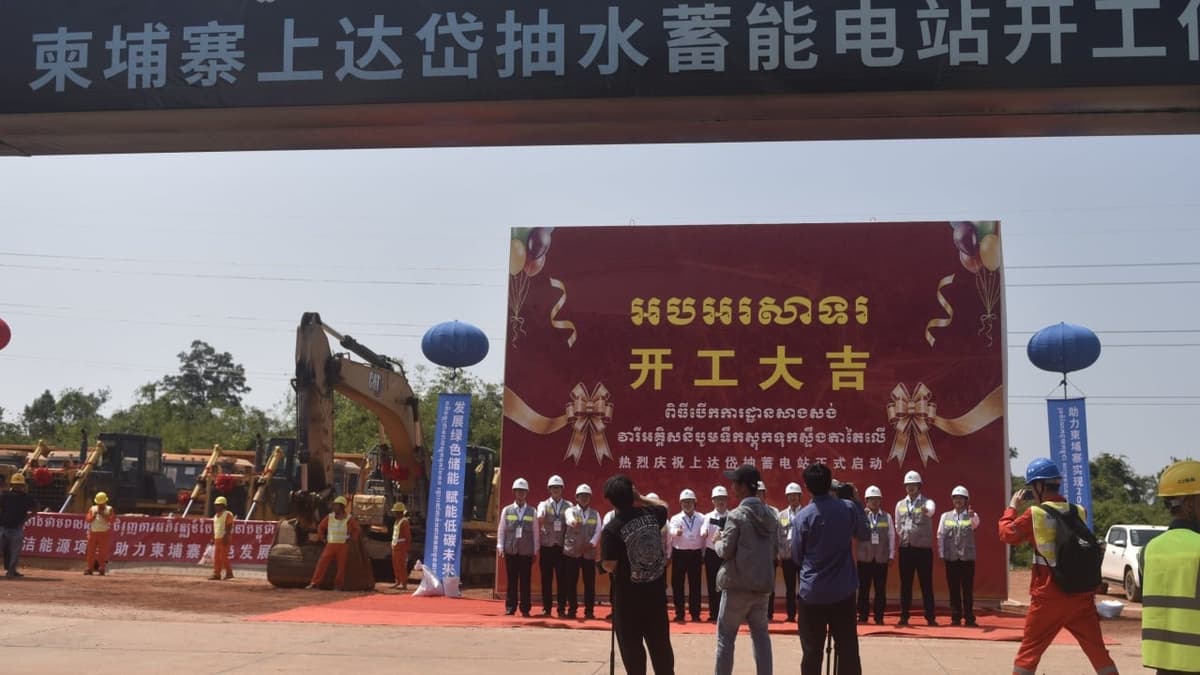
China Begins Building US$1 Billion Hydropower Station in Cambodia Amid Energy Crisis
Why It Matters
The project bolsters Cambodia’s energy security and accelerates its renewable transition, while giving Chinese state‑owned firms a foothold in Southeast Asian infrastructure markets.
Key Takeaways
- •$1 bn Upper Tatay project adds 1 GW storage capacity.
- •Pumped‑storage will balance solar, wind, and peak demand.
- •Boosts Cambodia’s electricity access toward 96% national coverage.
- •Reduces reliance on imported fossil fuels amid Middle‑East crisis.
- •Strengthens Chinese state‑owned enterprise presence in Southeast Asia.
Pulse Analysis
Cambodia’s energy landscape is at a crossroads. With imported fuel prices soaring due to Middle‑East bottlenecks, the nation has turned to large‑scale renewable projects to safeguard its grid. The Upper Tatay pumped‑storage plant, financed by China, represents a strategic shift from reliance on diesel generators toward a diversified mix that includes solar, wind, and hydro. By converting surplus renewable output into stored water potential, the facility promises to smooth out daily demand spikes and lower the cost of electricity for households and industry alike.
Technically, pumped‑storage works like a giant rechargeable battery. During low‑demand periods, excess power lifts water to an upper reservoir; when demand peaks, the water descends through turbines, generating electricity on demand. With a 1‑gigawatt capacity, Upper Tatay will become one of the region’s largest energy‑storage assets, supporting Cambodia’s ambition to reach 70% clean‑energy generation by 2030. The project also complements recent solar installations in Laos and Indonesia, creating a regional network of flexible, low‑carbon power sources that can absorb intermittent generation without resorting to fossil fuels.
Beyond the grid, the development signals China’s broader geopolitical strategy. As domestic growth slows, Chinese state‑owned enterprises are seeking overseas projects that deliver both revenue and diplomatic goodwill. Cambodia, a long‑standing ally, offers a stable investment climate and a platform for China to showcase its green‑technology capabilities. While environmental groups monitor potential impacts, the project’s alignment with global energy‑storage trends suggests it could serve as a model for other emerging economies navigating the twin challenges of energy security and climate commitments.
China begins building US$1 billion hydropower station in Cambodia amid energy crisis
Comments
Want to join the conversation?
Loading comments...