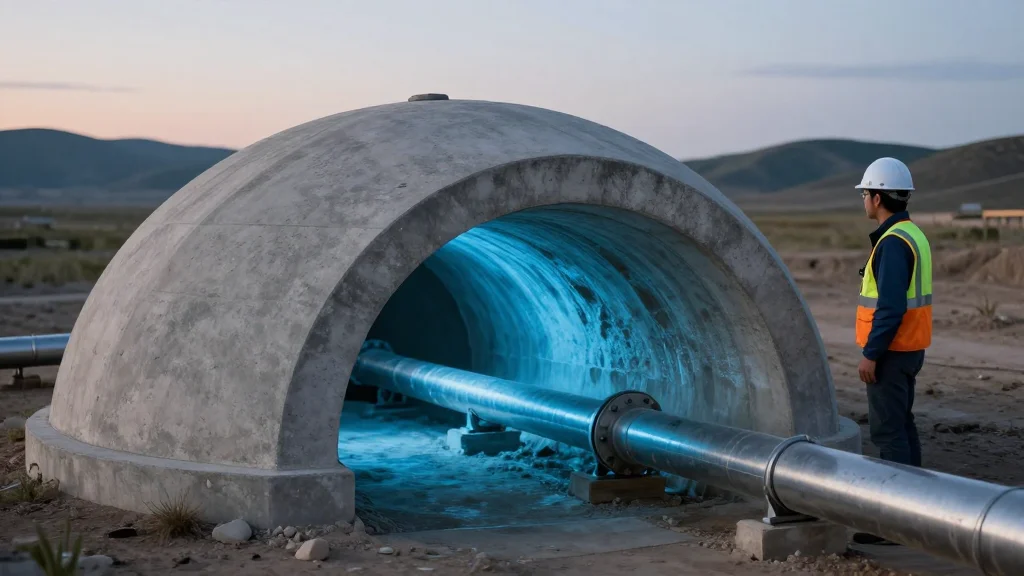
China Commissions Salt Cavern Hydrogen Storage Project
Why It Matters
The facility proves China can store hydrogen at scale, reducing reliance on imported storage tech and enabling greater renewable integration. It marks a pivotal step toward meeting the country’s ambitious hydrogen‑energy targets.
Key Takeaways
- •1.5 million standard cubic meters hydrogen stored in 30,000 m³ cavern
- •First large‑scale salt‑cavern storage project commissioned in China
- •Project uses fully domestic equipment, achieving technology localization
- •Anti‑embrittlement casings and high‑integrity seals address corrosion risks
- •Supports renewable grid balancing during China’s 15th Five‑Year Plan
Pulse Analysis
Salt‑cavern storage has emerged as a leading method for large‑volume hydrogen containment because of its low permeability and cost efficiency. While Europe and the United States have operated similar facilities for years, China’s new 1.5 million m³ project signals the nation’s entry into this mature technology. By situating the cavern at a depth of 1,418 m, engineers exploit the natural sealing properties of layered salt formations, creating a virtually leak‑proof reservoir that can absorb excess renewable output and release it when demand spikes.
The technical breakthroughs underpinning the Henan demonstration are noteworthy. Researchers devised a fine‑scale site‑selection framework to evaluate sealing performance across complex geological layers, and they introduced anti‑hydrogen embrittlement casings to mitigate material degradation. Crucially, every core component—from compressors to monitoring systems—was sourced domestically, achieving full localization of a supply chain that has historically depended on foreign expertise. This self‑reliance not only lowers costs but also safeguards strategic assets as China scales its hydrogen economy.
Strategically, the project dovetails with China’s 15th Five‑Year Plan, which prioritizes clean‑energy transition and aims to expand hydrogen production to several million tonnes annually. The cavern’s ability to store surplus wind and solar power provides a vital grid‑balancing tool, smoothing intermittency and enhancing system stability. As the nation rolls out additional storage sites, the model established in Henan could become a blueprint for nationwide deployment, accelerating the shift toward a low‑carbon, hydrogen‑fueled future.
China commissions salt cavern hydrogen storage project
Comments
Want to join the conversation?
Loading comments...