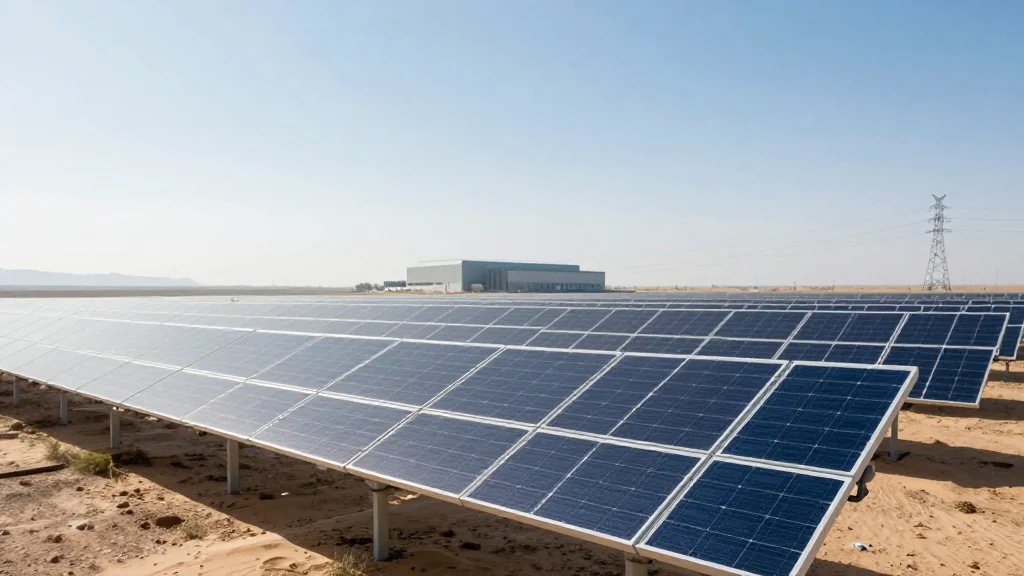
China Datang Brings Online 500 MW Solar Farm for Direct Data Center Supply
Why It Matters
By linking renewable generation directly to high‑intensity digital loads, the project demonstrates a scalable path to decarbonize China’s rapidly expanding data‑center sector while potentially cutting operating costs. Its success could become a template for future green‑power‑for‑computing projects worldwide.
Key Takeaways
- •500 MW solar farm supplies half of Zhongwei cloud’s power needs
- •Dual-track model blends direct lines with market trading for data centers
- •Phase 1 will generate 4.3 TWh, exceeding cloud demand of 2.29 TWh
- •Project supports China’s “East Data, West Computing” renewable shift
- •Success could lower carbon intensity and operating costs for data centers
Pulse Analysis
China’s data‑center boom has traditionally relied on coal‑heavy grids, but the 500 MW solar farm launched by China Datang Corp signals a turning point. Situated in the desert‑rich Ningxia region, the plant is part of a broader 2 GW renewable complex that pairs solar output with a 1.5 GW wind farm and battery storage. By delivering power through four dedicated 110 kV transmission lines, the project sidesteps the public grid for baseline loads, while surplus demand is met via bilateral market contracts. This hybrid approach ensures that daytime computing tasks draw clean solar energy, and wind plus storage fill the gap after sunset.
The dual‑track supply structure is a practical test of “computing‑electricity coordination,” a concept gaining traction as AI workloads become more power‑hungry. With an expected annual generation of 970 GWh from the solar unit alone—enough for half of the Zhongwei Cloud Base’s consumption—the model demonstrates that renewable resources can be matched directly to digital demand without relying solely on carbon‑offset certificates. When the wind component comes online in 2026, the combined output will surpass the cloud’s projected 2.29 TWh usage, providing a buffer that can be sold back to the market or stored for peak periods.
If replicated, this infrastructure‑first strategy could reshape how data centers source electricity globally. By co‑locating renewables, storage, and high‑capacity transmission, operators can reduce reliance on fossil‑fuel grids, lower carbon footprints, and achieve cost savings from avoided grid tariffs. The initiative also dovetails with China’s “East Data, West Computing” policy, encouraging high‑tech workloads to migrate to regions where wind and solar are abundant. Success here may prompt other nations to adopt similar models, accelerating the transition to greener, more resilient digital economies.
China Datang brings online 500 MW solar farm for direct data center supply
Comments
Want to join the conversation?
Loading comments...