Energy News and Headlines
  • All Technology
  • AI
  • Autonomy
  • B2B Growth
  • Big Data
  • BioTech
  • ClimateTech
  • Consumer Tech
  • Crypto
  • Cybersecurity
  • DevOps
  • Digital Marketing
  • Ecommerce
  • EdTech
  • Enterprise
  • FinTech
  • GovTech
  • Hardware
  • HealthTech
  • HRTech
  • LegalTech
  • Nanotech
  • PropTech
  • Quantum
  • Robotics
  • SaaS
  • SpaceTech
AllNewsDealsSocialBlogsVideosPodcastsDigests

Energy Pulse

EMAIL DIGESTS

Daily

Every morning

Weekly

Sunday recap

NewsDealsSocialBlogsVideosPodcasts
EnergyNewsChina Hits Renewable Milestone, But Coal Isn’t Going Anywhere
China Hits Renewable Milestone, But Coal Isn’t Going Anywhere
Global EconomyEnergy

China Hits Renewable Milestone, But Coal Isn’t Going Anywhere

•February 17, 2026
0
OilPrice.com – Main
OilPrice.com – Main•Feb 17, 2026

Companies Mentioned

BloombergNEF

BloombergNEF

Why It Matters

The split signals that China can lead the renewable transition while still expanding coal, complicating global climate targets and shaping future policy and investment decisions.

Key Takeaways

  • •Non‑fossil capacity now 52% of China's power mix.
  • •Coal additions hit 78 GW in 2025, decade high.
  • •China holds 71% of global coal capacity under development.
  • •Solar under construction 234 GW, exceeds rest of world combined.

Pulse Analysis

China’s renewable milestone marks a watershed moment for the world’s biggest electricity consumer. By February 2026, more than half of its operating capacity came from solar, wind, nuclear and hydropower, a shift driven by massive domestic manufacturing of panels and batteries. This clean‑energy surge has helped meet rising demand without expanding fossil‑fuel generation proportionally, positioning China as the leading investor in the global energy transition and setting a benchmark for other emerging economies.

Despite the progress, coal remains a cornerstone of China’s power strategy. In 2025 the nation added 78 GW of coal capacity—the strongest annual increase in a decade—to ensure baseload stability and prevent blackouts during peak demand or low‑hydropower periods. Developers rushed to file 161 GW of new coal proposals, fearing tighter emissions rules, and the country now accounts for 71 % of worldwide coal‑power projects under development. This dual approach reflects deep concerns over energy security and the need for flexible, dispatchable power as the grid integrates intermittent renewables.

The coexistence of rapid renewable growth and aggressive coal expansion has profound implications for global climate goals and capital flows. While China contributed $800 billion to the $2.3 trillion energy‑transition market in 2025, its continued coal build‑out could lock in emissions for decades, challenging the feasibility of the Paris Agreement pathways. Investors and policymakers worldwide are watching China’s policy signals closely; any shift toward stricter coal constraints could accelerate global clean‑energy adoption, whereas a prolonged coal push may reinforce the need for carbon‑capture technologies and reinforce supply‑chain dependencies on Chinese manufacturing.

China Hits Renewable Milestone, But Coal Isn’t Going Anywhere

By Tsvetana Paraskova · Feb 16 2026, 6:00 PM CST

  • China's operating power capacity from non‑fossil fuel sources, including solar, wind, nuclear, and hydropower, has surpassed its fossil‑fuel‑based capacity for the first time, reaching 52 % of the total as of February 2026.

  • Despite leading global investment in the energy transition and having a massive clean‑energy build‑out, China commissioned 78 GW of new coal power in 2025, the highest annual total in a decade, to ensure energy security and stable grids during peak demand.

  • Concerns over energy security and a rush to advance projects before potential policy constraints mean China continues to have the world’s largest coal‑power fleet and accounts for 71 % of total global coal‑power capacity under development.

![Coal]

For the first time ever, China now has more operating power capacity from clean‑energy sources than capacity running on fossil fuels, thanks to a decade of booming solar and wind installations.

China, the undisputed global leader in clean‑energy investment, has 52 % of operating power capacity coming from non‑fossil fuel sources as of February 2026, while 48 % of installed capacity is fossil‑fuel‑based, according to data tracked by Global Energy Monitor.

For years, China, the world’s biggest greenhouse‑gas polluter, has accounted for a large part of total global clean‑energy investment and has installed more solar and wind power capacity than the rest of the world combined.

China’s clean‑energy capacity, including nuclear and hydropower, is soaring to record highs as the world’s second‑largest economy looks to have domestic energy sources – with the help of a massive supply chain of panels and batteries – meet an increasingly larger share of rising electricity demand.

But Beijing continues to rely on coal, too, and its coal‑power capacity additions hit in 2025 their highest level in a decade. China has the world’s largest coal‑power fleet and accounts for a massive 71 % of total global coal‑power capacity under development, per Global Energy Monitor data.

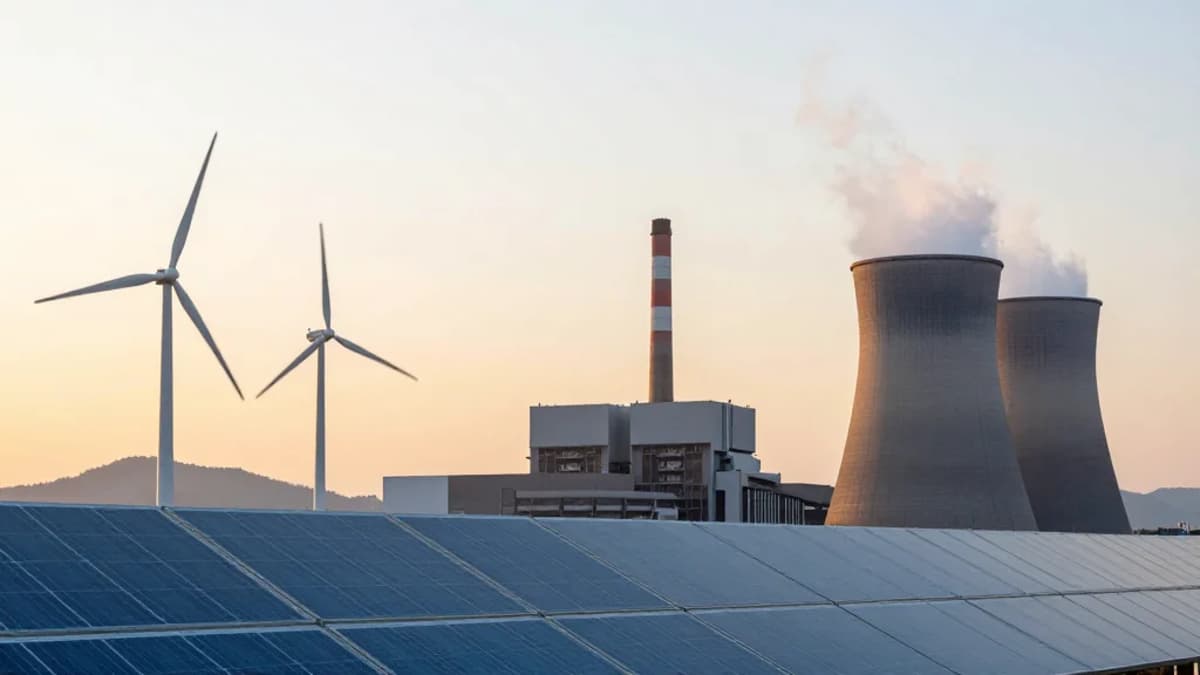
China leads in both renewables and coal expansion to meet growing electricity demand. The clean‑energy boom has in no way made its coal‑power sector irrelevant.

Concerns about energy security prompt China to continue building coal‑fired power plants, while coal‑capacity developers are rushing to install more gigawatts before more stringent emissions regulation potentially limits the growth.

China has as much as 674 GW of non‑fossil power capacity under construction and 237 GW of fossil‑fuel capacity under construction, according to Global Energy Monitor.

Of the non‑fossil‑fuel capacity under construction, China’s 234 GW of utility‑scale solar capacity is greater than the same figure for the rest of the world combined, the tracker showed.

Solar leads China’s current power capacity in development, which includes construction, pre‑construction, and announced capacity. Solar is closely followed by wind, hydropower ranks third, and fourth comes coal capacity expansion.

Coal is still very much alive in China despite the huge milestone of non‑fossil sources now outpacing fossil‑fuel installed capacity.

China continues to rely on coal for power generation to avoid blackouts and industry shutdowns during peak demand and periods of faltering hydropower when rainfall is scarce.

As of January 2026, China had 1,243 GW of operating coal power capacity, Global Energy Monitor data showed. A total of 501 GW of coal power capacity was under development, although not all of this is expected to move to construction.

Over the past decade, China has added 362 GW of operating coal power capacity.

Last year, China’s current coal‑power build‑out cycle reached a new high, according to a report by the Centre for Research on Energy and Clean Air (CREA) and Global Energy Monitor (GEM) from earlier this month.

China commissioned 78 GW of coal power capacity in 2025, the highest annual total in a decade, even as coal‑power generation declined, and clean energy met all net growth in power demand, the report found.

New and reactivated coal‑power project proposals surged to a record high of 161 GW, which accounts for 13 % of the current operational capacity, the study showed.

“If built, the projects proposed in just this one year would commit China to years of coal expansion beyond power‑demand growth and climate requirements, reflecting a rush by the coal‑industry stakeholders to advance projects ahead of tighter policy constraints,” analysts at CREA and Global Energy Monitor wrote in the report.

China presses on with massive build‑out and record new proposals in coal‑power capacity despite leading the global investment in energy‑transition solutions and technologies.

China, the largest market, made up $800 billion of all $2.3 trillion energy‑transition investments in 2025, a BloombergNEF report showed last month.

Moreover, “China continues to account for a clear majority of global supply‑chain investment, and BNEF expects this situation to continue for at least the next three years,” the report said.

China isn’t ditching one source for another; it uses its domestic manufacturing chain to expand renewables while still relying on coal for baseload capacity and stable grids.

Read Original Article
0

Comments

Want to join the conversation?

Loading comments...