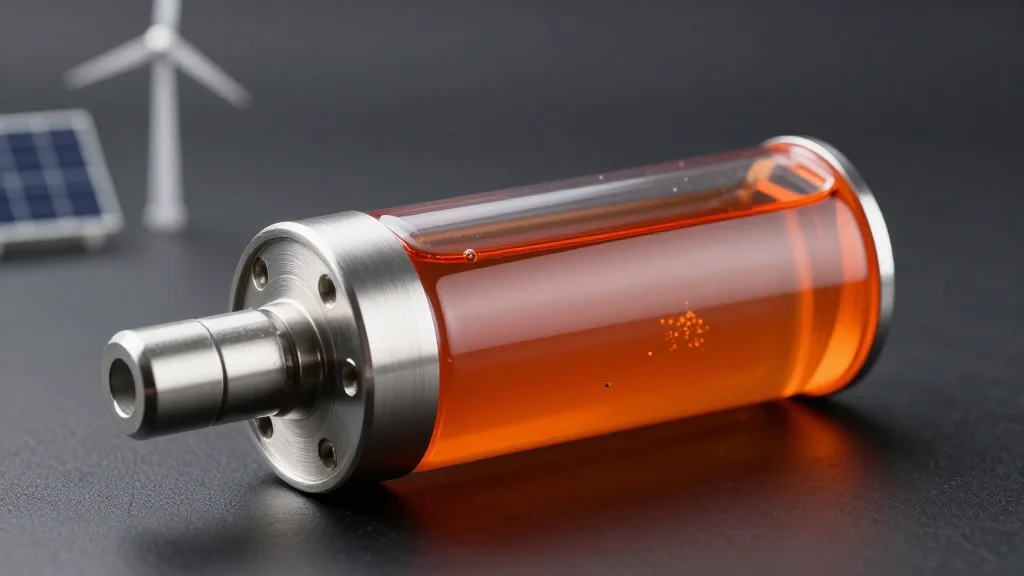
China Unveils All‑Iron Flow Battery Promising Cheaper Renewable Storage

Companies Mentioned
Why It Matters
Affordable, long‑duration storage is the missing piece in many renewable‑energy strategies. By replacing expensive lithium or vanadium chemistries with iron, the new battery could lower the levelized cost of storage, making it easier for utilities and developers to meet decarbonisation targets. The technology also offers a domestic supply chain for China, reducing dependence on imported critical minerals and enhancing energy security. Beyond cost, the battery’s durability—thousands of cycles with minimal degradation—means lower operating expenses and longer asset lifespans. This could shift investment decisions toward larger, grid‑scale projects that were previously deemed uneconomical, accelerating the transition to a low‑carbon electricity system worldwide.
Key Takeaways
- •All‑iron flow battery developed by Institute of Metal Research, Chinese Academy of Sciences
- •Stable electrolyte endures >5,000 cycles with almost no capacity loss
- •Iron raw‑material cost is >80× cheaper than lithium, promising major cost reductions
- •Potential to enable multi‑hour and seasonal storage for solar and wind farms
- •Pilot modules planned for late 2026 at an Inner Mongolia solar farm
Pulse Analysis
The iron‑flow breakthrough arrives at a moment when the energy sector is scrambling for cost‑effective, long‑duration storage. Historically, flow batteries have struggled to compete because of expensive electrolytes and complex system designs. By leveraging iron—a commodity metal with a well‑established global supply chain—the IMR team sidesteps the material‑price volatility that has hampered vanadium‑based systems. This could democratise access to large‑scale storage, especially for emerging markets that lack the capital to invest in high‑priced lithium solutions.
From a competitive standpoint, the technology challenges incumbents like Tesla and LG Energy Solution, whose business models hinge on lithium‑ion dominance. While those firms are already exploring solid‑state and sodium‑ion chemistries, an iron‑based flow system offers a fundamentally different value proposition: low upfront cost and ultra‑long cycle life. If the pilot projects confirm laboratory performance, we may see a bifurcation in the storage market—high‑energy‑density lithium for short‑duration, high‑power applications, and iron‑flow for bulk, multi‑hour needs.
Looking ahead, the key risk lies in scaling. Electrolyte formulation, membrane durability, and system integration must be proven at commercial scale. Moreover, policy incentives that currently favour lithium‑ion storage could slow adoption unless regulators recognise the broader system benefits of low‑cost, long‑duration solutions. Nonetheless, the announcement injects fresh optimism into the storage arena and could catalyse a wave of investment that finally bridges the gap between renewable generation and reliable, affordable grid supply.
China Unveils All‑Iron Flow Battery Promising Cheaper Renewable Storage
Comments
Want to join the conversation?
Loading comments...