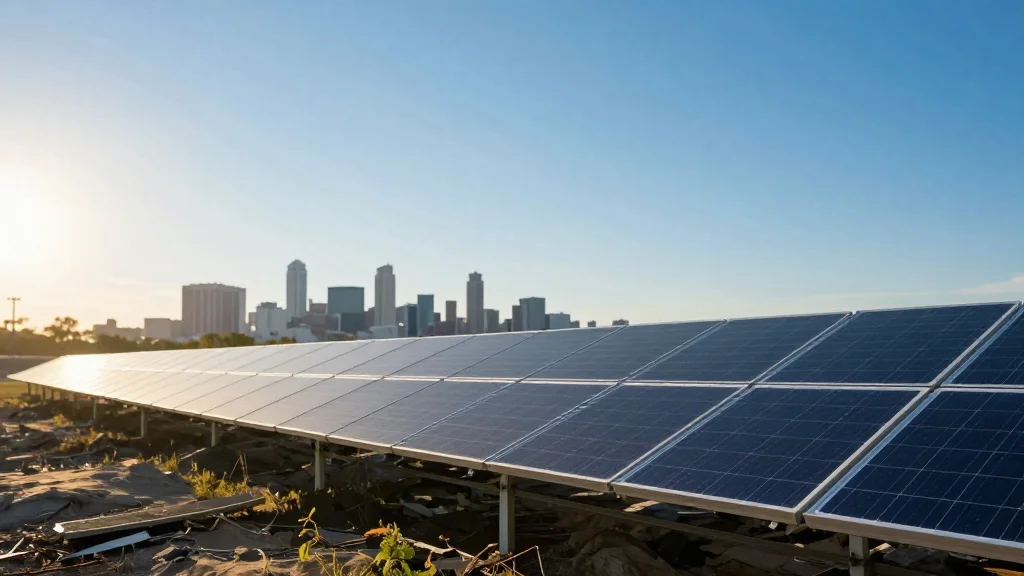
Cincinnati Is Turning a Blighted Former Landfill Into a Solar Energy Hub
Why It Matters
The project gives Cincinnati direct control over a clean‑energy source, stabilizing municipal electricity costs and advancing its carbon‑neutrality targets while revitalizing an environmental‑justice site.
Key Takeaways
- •$24 M Center Hill Solar Array will power ~1,700 homes.
- •10 MW of solar on former landfill reduces emissions by 16,000 t/year.
- •City owns 4.9 MW; UPower finances the rest via PPA.
- •Federal Investment Tax Credit covers ~50% of project cost.
- •Repurposed brownfield adds pollinator habitats and revitalizes blighted area.
Pulse Analysis
Municipalities across the United States are increasingly looking to brownfield sites for renewable‑energy development, and Cincinnati’s Center Hill Solar Array exemplifies that shift. Enabled by the 2022 Inflation Reduction Act, which offers tax incentives for clean‑energy projects on contaminated lands, the city leveraged a $24 million investment to install 10 megawatts of solar capacity on a 64‑acre former landfill. By pairing city ownership of 4.9 MW with a private‑sector partner, UPower Energy, the initiative balances public control with private capital, ensuring the project aligns with local climate objectives while remaining financially viable.
The financing model blends a Solar for All grant, a federal Investment Tax Credit covering roughly half the costs, and a power‑purchase agreement that funds the private‑sector share. This hybrid approach reduces upfront municipal outlays and locks in predictable electricity pricing for city facilities, shielding taxpayers from volatile utility rates. As a result, Cincinnati anticipates millions of dollars in lifetime savings, reinforcing the fiscal case for expanding municipal solar portfolios, including a larger 100‑megawatt farm in Highland County.
Beyond the balance sheet, the Center Hill project delivers broader social and environmental benefits. Transforming an illegal‑dumping hotspot into a clean‑energy hub addresses environmental justice concerns, while adjacent pollinator‑friendly landscaping restores biodiversity. The low‑impact mounting system respects the landfill cap, showcasing a replicable design for other cities grappling with similar brownfield challenges. As more municipalities pursue such models, the convergence of climate ambition, cost containment, and community revitalization positions solar‑powered brownfields as a cornerstone of the next wave of urban sustainability initiatives.
Cincinnati is turning a blighted former landfill into a solar energy hub
Comments
Want to join the conversation?
Loading comments...