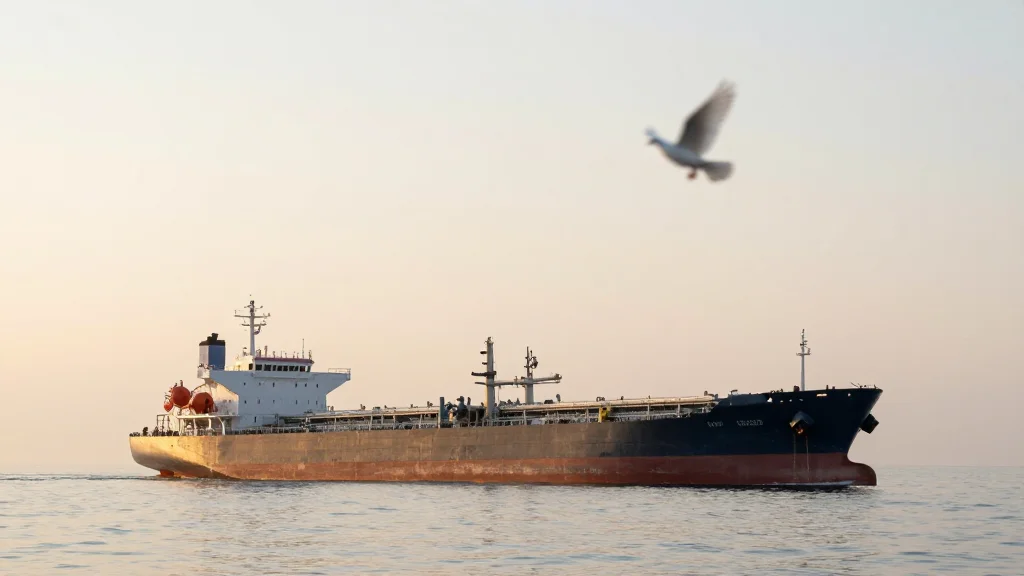
Clashes Near Strait of Hormuz Cast Doubt on Peace Deal, Revive LNG Supply Risks
Companies Mentioned
Why It Matters
The renewed supply risk threatens LNG price stability and could delay projects that rely on steady gas imports, while elevated oil prices squeeze margins for energy‑intensive industries. Investors and policymakers must monitor the Hormuz situation as it directly influences global energy security and commodity pricing.
Key Takeaways
- •Hormuz skirmishes raise doubts on US‑Iran nuclear pact
- •LNG supply risk resurges, prompting price volatility
- •ExxonMobil warns Qatar LNG repairs could extend months
- •Crude oil hovers near $100 per barrel amid geopolitical tension
- •Parallel conflicts in Ukraine and heat wave boost energy demand
Pulse Analysis
The Strait of Hormuz, a chokepoint through which roughly 20% of global oil and a significant share of LNG transit, has re‑emerged as a flashpoint after recent naval confrontations. While diplomatic channels continue to negotiate a U.S.-Iran framework, the immediate risk of vessel interdictions or missile strikes keeps market participants on edge. This uncertainty feeds into forward curves for LNG, where traders price in a premium for potential supply shortfalls, especially as Europe and Asia scramble to replace Russian gas.
Compounding the Hormuz tension, ExxonMobil’s latest outlook highlights a protracted repair timeline for Qatar’s LNG facilities, which were already under strain from earlier maintenance cycles. The company projects that extended outages could shave off several months of export capacity, tightening an already thin market. As a result, spot LNG prices have spiked, and long‑term contracts are being renegotiated to include force‑majeure clauses. Energy firms are accelerating investments in alternative supply routes, such as floating storage and regasification units, to hedge against future disruptions.
Beyond gas, the broader energy landscape is feeling the ripple effects. Crude oil has steadied near $100 per barrel, buoyed by the Hormuz risk premium and ongoing conflict in Ukraine, which continues to constrain Russian output. Simultaneously, an unprecedented heat wave across the U.S. Southwest is driving up electricity demand, further pressuring natural‑gas‑fired power plants. Together, these dynamics create a volatile pricing environment that challenges both producers and consumers, underscoring the need for diversified energy portfolios and agile risk‑management strategies.
Clashes Near Strait of Hormuz Cast Doubt on Peace Deal, Revive LNG Supply Risks
Comments
Want to join the conversation?
Loading comments...