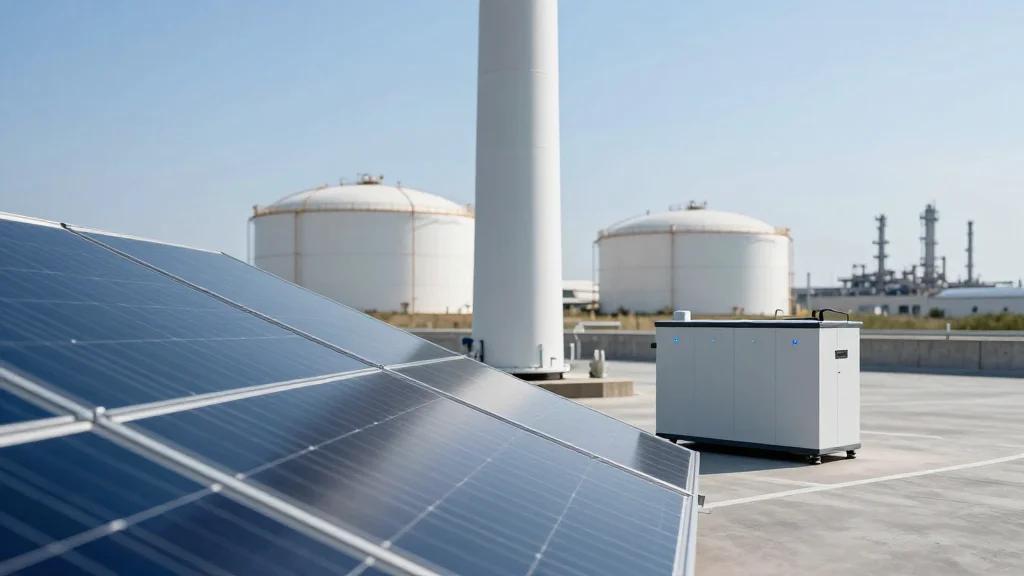
CleanMax Signs 30 MW Hybrid Renewable Power Deal with Shell India’s Gujarat and Karnataka Assets

Companies Mentioned
Why It Matters
The deal signals a tangible shift in how multinational oil majors are sourcing power for their high‑intensity operations, moving from fossil‑fuel‑based electricity to locally generated renewable mixes. By integrating solar, wind and storage, Shell can hedge against grid volatility while advancing its net‑zero commitments, setting a benchmark for peers in the sector. For India, the partnership showcases the scalability of hybrid projects within the group‑captive framework, offering a replicable pathway for other C&I consumers to secure reliable, low‑carbon power without relying solely on government‑mandated renewable purchase obligations. This could accelerate the country’s overall renewable capacity addition and help meet its 2030 emissions targets.
Key Takeaways
- •CleanMax will supply ~30 MW of hybrid solar‑wind‑storage power to Shell’s Gujarat LNG terminal and Karnataka technology centre
- •Projects will generate about 66,832 MWh of renewable electricity annually
- •Both parties will co‑invest under a group‑captive model, sharing capital and operational risk
- •CleanMax holds 5.7 GW of operational and contracted renewable capacity across its footprint as of March 2026
- •The partnership aligns with Shell’s net‑zero ambition and illustrates a growing corporate shift toward hybrid renewable procurement in India
Pulse Analysis
Shell’s move to secure hybrid renewable power marks a strategic pivot from traditional grid reliance toward self‑sourced, dispatchable clean energy. Historically, oil majors have faced criticism for lagging in renewable procurement, especially for energy‑intensive assets like LNG terminals. By locking in 30 MW of hybrid capacity, Shell not only reduces its Scope 2 emissions but also gains greater control over supply stability—a critical factor for continuous LNG operations.
The group‑captive model employed by CleanMax and Shell mitigates financing hurdles that often stall renewable projects in emerging markets. Co‑investment aligns incentives, accelerates capital deployment, and spreads risk, making it an attractive template for other corporates seeking to decarbonise without waiting for policy‑driven incentives. As India pushes for 450 GW of renewable capacity by 2030, such private‑sector collaborations could fill gaps left by public financing, especially in hybrid configurations that address intermittency.
Looking ahead, the success of this 30 MW pilot could catalyse larger-scale hybrid rollouts across Shell’s Indian portfolio and inspire peers in petrochemicals, steel and cement to adopt similar schemes. The partnership also underscores the growing market for renewable developers like CleanMax, whose 5.7 GW pipeline positions it to become a key supplier for corporate power‑purchase agreements, potentially reshaping the competitive dynamics of India’s renewable market.
CleanMax signs 30 MW hybrid renewable power deal with Shell India’s Gujarat and Karnataka assets
Comments
Want to join the conversation?
Loading comments...