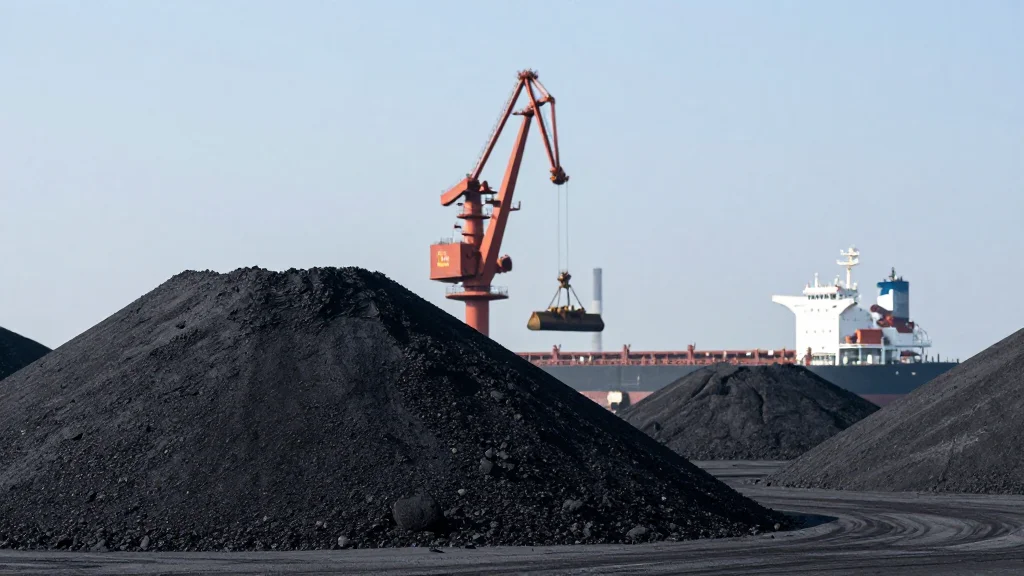
Coal Imports Fall 8.5% in February Amid High Stockpiles, Firm Global Prices
Why It Matters
Lower imports signal India’s progress toward coal self‑sufficiency, easing pressure on foreign supply chains and stabilizing domestic power costs.
Key Takeaways
- •February coal imports fell 8.5% to 16.55 MT
- •Non‑coking imports dropped to 9.80 MT, coking rose to 3.92 MT
- •Domestic production up 4.98% to 1,047.5 MT
- •Power‑plant stockpiles at 55 MT, covering 24 days
- •Self‑reliance drive reduces reliance on seaborne coal
Pulse Analysis
India’s February coal import slump reflects a broader shift toward domestic self‑reliance. Record stockpiles of locally mined coal, combined with steady international freight rates, have made imported thermal coal less attractive. The 8.5% decline to 16.55 million tonnes underscores how policy incentives and market dynamics are aligning to reduce dependence on overseas suppliers, a trend that could reshape regional trade flows for the next few years.
The composition of imports also reveals nuanced market signals. While non‑coking coal—a key feedstock for power generation—dropped sharply to 9.80 million tonnes, coking coal, essential for steelmaking, edged higher to 3.92 million tonnes. This divergence suggests that Indian steel producers remain vulnerable to global price volatility, whereas power generators are increasingly insulated by abundant domestic reserves. The comfortable inventory of 55 million tonnes at thermal plants, enough for nearly a month of operation, further cushions the grid against short‑term supply shocks.
From a strategic perspective, the self‑reliance initiative is beginning to bear fruit. Coal production rose nearly 5% year‑on‑year, outpacing consumption growth and allowing the Ministry of Coal to declare no immediate deficits. If this trajectory continues, India could lower its import bill, improve trade balance, and reduce exposure to geopolitical risks in key exporting nations. Stakeholders—from utilities to steel firms—should monitor policy adjustments and mining capacity expansions, as they will dictate the pace at which India can fully transition from a net importer to a more self‑sufficient energy economy.
Coal imports fall 8.5% in February amid high stockpiles, firm global prices
Comments
Want to join the conversation?
Loading comments...