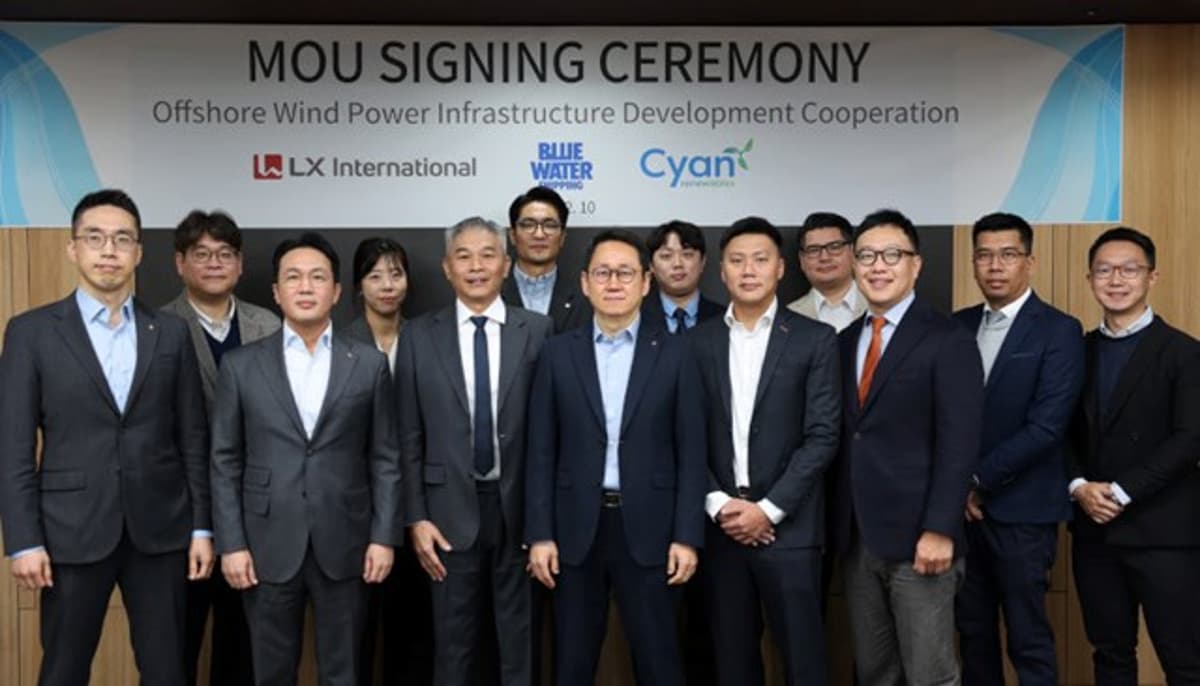
Consortium Targets Dangjin Offshore Wind Port
•February 23, 2026
0
Why It Matters
The port creates a dedicated logistics hub that accelerates South Korea’s offshore‑wind rollout and strengthens the regional supply chain for a fast‑growing renewable market.
Key Takeaways
- •200,000 sqm port dedicated to offshore wind.
- •480 m quay and 14 m deep berth for large vessels.
- •Ground bearing capacity up to 30 t/m² for heavy components.
- •Consortium combines renewable, infrastructure, and logistics expertise.
- •Supports South Korea’s 25 GW offshore wind ambition.
Pulse Analysis
South Korea’s offshore‑wind ambitions have surged, with a national target of 25 GW by 2035 driving demand for specialized infrastructure. Traditional ports struggle to accommodate the massive turbine blades, towers and foundations required for next‑generation farms, leading to costly delays and logistical bottlenecks. A purpose‑built marshalling hub in Dangjin addresses these challenges by providing deep‑water access and reinforced ground capacity, enabling seamless load‑out and storage of oversized components while reducing reliance on multiple handling sites.
The consortium behind the project blends complementary strengths: Cyan Renewables brings project development experience, LX International contributes heavy‑industry infrastructure capabilities, and Blue Water Shipping offers a proven offshore‑wind logistics model honed in Europe’s Esbjerg port. Their MOU includes a knowledge‑transfer program, with Blue Water’s seasoned crews training Korean staff on safety protocols, vessel coordination and full‑cycle logistics. This collaborative approach not only accelerates construction timelines but also embeds best‑practice standards into the local workforce, raising the overall competency of Korea’s offshore‑wind supply chain.
Beyond national benefits, the Dangjin port positions South Korea as a strategic gateway for Asian offshore‑wind projects. Proximity to emerging markets in Japan, Taiwan and Southeast Asia creates opportunities for cross‑border component shipments and shared vessel fleets, potentially lowering costs across the region. As more developers seek reliable, turn‑key logistics solutions, the port could evolve into a regional hub, attracting foreign investment and reinforcing Korea’s role in the global renewable‑energy transition.
Consortium targets Dangjin offshore wind port
0
Comments
Want to join the conversation?
Loading comments...