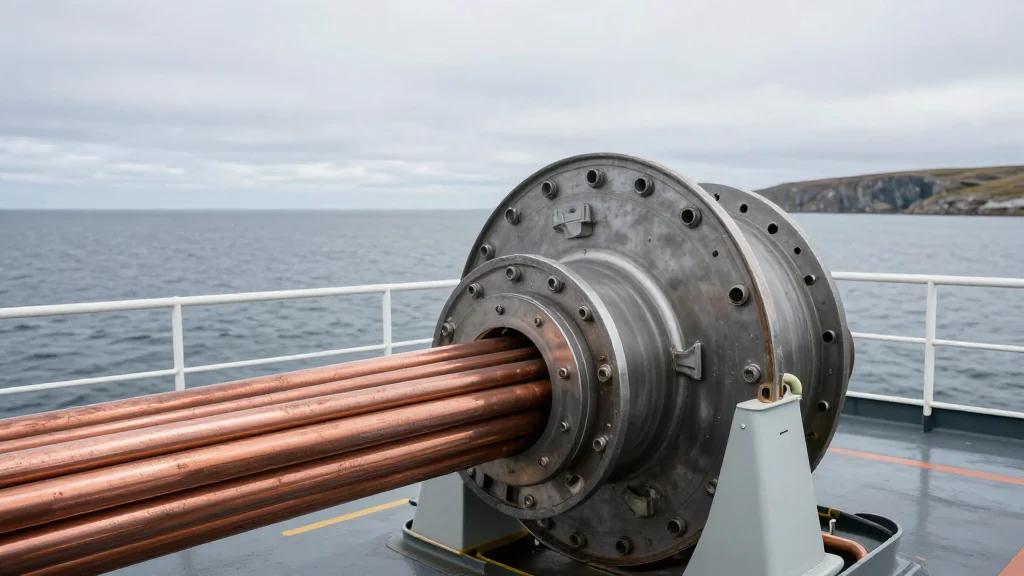
Construction Begins on Spittal-Peterhead Subsea Cable Link
Why It Matters
The HVDC connection bolsters the UK’s clean‑energy transition by delivering offshore wind power to demand centres, enhancing grid resilience and supporting national decarbonisation targets.
Key Takeaways
- •2 GW HVDC subsea cable linking Spittal and Peterhead begins construction
- •Local firms Nicol of Skene and John Gunn handle on‑shore works
- •Land‑fall horizontal directional drilling slated for summer to install marine cable
- •Project supports UK clean‑energy targets and grid reliability
- •Principal contractor NKT partners with Hitachi Energy on Eastern Green Link 3
Pulse Analysis
The Spittal‑to‑Peterhead project marks a significant upgrade to Britain’s transmission infrastructure, leveraging high‑voltage direct current technology to move large volumes of power over long distances with minimal loss. HVDC is increasingly favored for linking remote renewable generation, such as the wind farms in the North Sea, to the mainland grid, offering greater control and flexibility than traditional alternating current lines. By situating the cable beneath the North Sea, the route avoids surface congestion and reduces exposure to weather‑related disruptions, a critical factor for the reliability of the national network.
Construction is progressing on two fronts. In Caithness, John Gunn and Sons have cleared access routes and begun horizontal directional drilling (HDD) to create underground ducts for the on‑shore segment. At Rattray Head near Peterhead, Nicol of Skene is executing similar HDD and duct installation while erecting a main works compound to support field crews. The summer schedule targets land‑fall HDD, a precise technique that drills from shore into the seabed, allowing the marine cable to be pulled into place with minimal environmental impact. Coordination between SSEN Transmission, principal contractor NKT, and equipment supplier Hitachi Energy ensures that the project adheres to tight safety and quality standards.
Strategically, the 2 GW link dovetails with the UK’s ambition to achieve net‑zero emissions by 2050. By providing a high‑capacity conduit for renewable electricity, it helps balance supply and demand across regions, reducing reliance on fossil‑fuel peaking plants. The investment also signals confidence to investors and developers in the viability of large‑scale offshore wind projects, potentially accelerating future capacity additions. As the grid modernises, such interconnectors become essential assets, underpinning energy security while delivering economic benefits to the surrounding communities through job creation and infrastructure improvements.
Construction begins on Spittal-Peterhead subsea cable link
Comments
Want to join the conversation?
Loading comments...