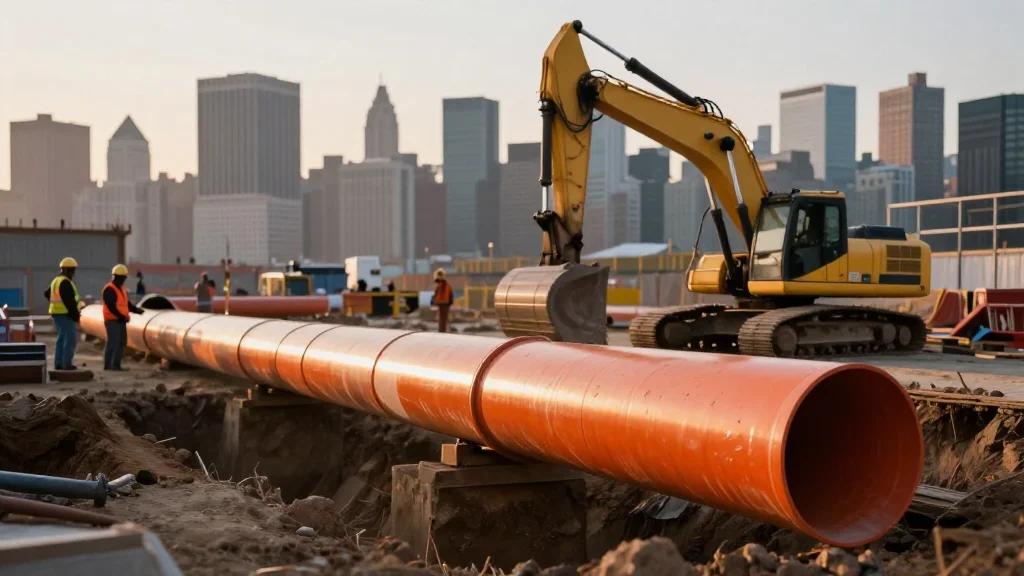
Contentious $1bn+ Northeast Supply Enhancement Gas Pipeline to Break Ground in New York City
Why It Matters
The pipeline promises to bolster regional energy reliability and lower consumer costs, but its fast‑tracked approval highlights the clash between federal energy policy and local environmental concerns.
Key Takeaways
- •Williams' NESE pipeline adds 400,000 dekatherms daily capacity.
- •Trump administration fast‑tracks permits, overriding prior state objections.
- •Project promises $1.8 bn economic boost and $6 bn consumer savings.
- •Environmental groups protest offshore construction and water‑quality risks.
- •Pipeline aims to secure winter grid reliability for NYC region.
Pulse Analysis
The NESE pipeline represents the most ambitious offshore natural‑gas expansion in the Northeast in decades. By tapping into Pennsylvania’s gas fields and extending through New Jersey to New York’s boroughs, the project adds 400,000 dekatherms per day—enough to offset peak winter demand spikes and provide a buffer against extreme weather events. Its strategic placement near the densely populated Brooklyn and Queens corridors addresses longstanding capacity constraints on the Transco network, positioning Williams Companies as a key player in the region’s mid‑term energy mix.
Beyond the engineering feat, the pipeline is framed as an economic catalyst. Officials estimate $1.8 billion in direct development spending and project $6 billion in cumulative consumer savings from lower electricity rates over the next 15 years. These figures align with the Trump administration’s broader agenda to revive domestic fossil‑fuel infrastructure, reduce perceived regulatory drag, and reinforce what officials call “American energy dominance.” The project also dovetails with national discussions about balancing grid reliability with the transition to renewables, offering a short‑term bridge that could influence future policy decisions on capacity markets and carbon pricing.
However, the project’s rapid permitting has ignited fierce opposition from environmental advocates concerned about offshore construction impacts, water‑quality degradation, and the broader climate implications of expanding gas supply. Legal challenges and potential litigation could delay construction, while heightened public scrutiny may pressure regulators to tighten oversight on similar projects. The outcome of NESE will likely serve as a bellwether for how quickly large‑scale fossil‑fuel projects can move forward in a market increasingly attentive to sustainability and community impact.
Contentious $1bn+ Northeast Supply Enhancement Gas Pipeline to Break Ground in New York City
Comments
Want to join the conversation?
Loading comments...