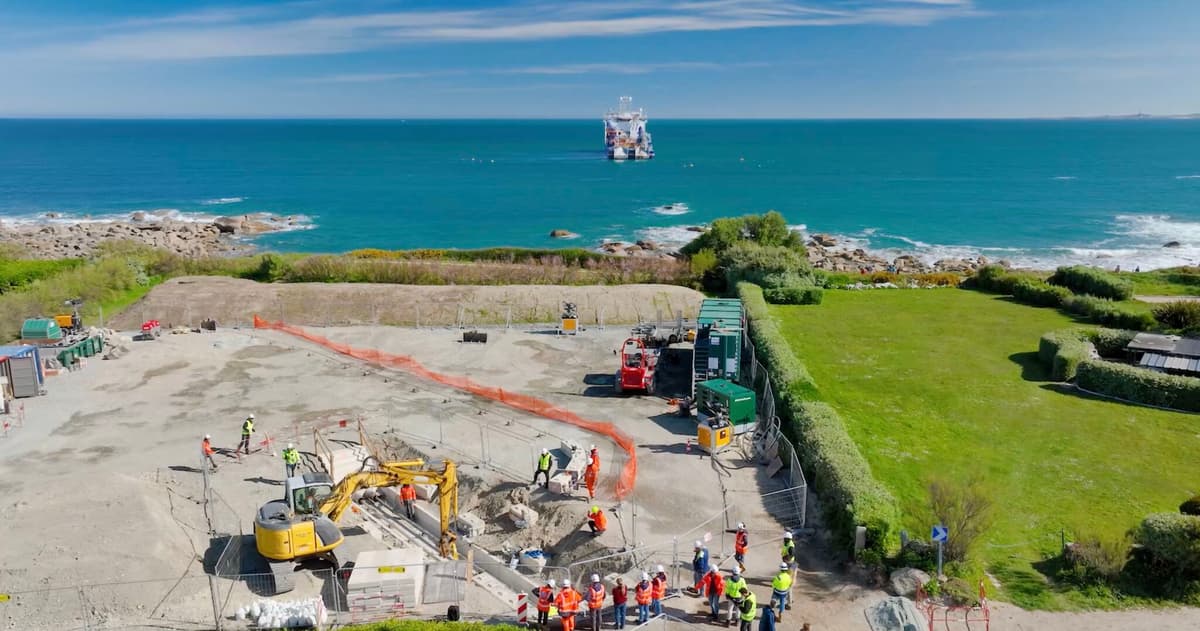
Converter Station Built, Offshore Cable Installation Underway in France for Interconnector to Ireland
Why It Matters
The interconnector bolsters Ireland’s energy security, deepens European grid integration, and accelerates renewable power sharing across the continent.
Key Takeaways
- •700 MW capacity powers ~450,000 homes
- •First direct electricity link between continental Europe and Ireland
- •Nexans handles full cable system, manufacturing across Norway, Belgium, Switzerland
- •Completion slated 2028; energisation expected June 2028
Pulse Analysis
The Celtic Interconnector marks a pivotal step in Europe’s drive toward a more resilient and interconnected power system. By linking the French and Irish transmission networks, the 575‑kilometre HVDC corridor provides a reliable back‑up for Ireland’s island grid while opening a conduit for surplus renewable generation from both sides. In an era where supply volatility and climate targets dominate policy agendas, such cross‑border links are essential for balancing intermittent wind and solar output and reducing reliance on fossil‑fuel peaking plants.
Technically, the project showcases cutting‑edge high‑voltage cable engineering. Nexans supplies the full cable suite, with 500 km of offshore HVDC cable manufactured in Norway using advanced XLPE extrusion, complemented by underground sections produced in Belgium and accessories from Switzerland. The Ar Merzher converter station, built by Siemens Energy and NGE, converts DC to AC at 320 kV, ensuring seamless integration with the existing 400 kV French grid. The coordinated pull‑in operation, aided by the CLV Calypso, underscores the logistical complexity of laying and securing such extensive subsea infrastructure.
From a market perspective, the interconnector is expected to unlock new trade flows, allowing Ireland to export excess wind power to continental markets and import electricity during low‑wind periods, thereby smoothing price spikes. The EU’s backing through CINEA highlights the strategic importance placed on energy sovereignty and decarbonisation. With commissioning slated for 2028, stakeholders anticipate a boost in renewable investment, enhanced grid stability, and a template for future inter‑European connections.
Converter station built, offshore cable installation underway in France for interconnector to Ireland
Comments
Want to join the conversation?
Loading comments...