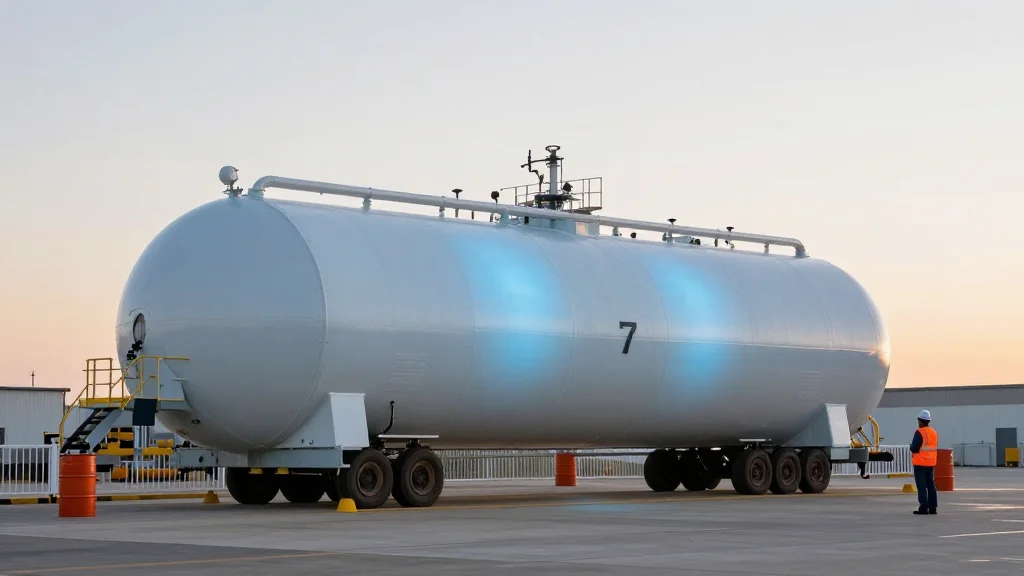
Corpus Christi LNG Train 7 Commissioning Signals More Gulf Coast Feedgas Demand
Companies Mentioned
Why It Matters
The commissioning boosts U.S. liquefaction capacity and fuels growing Gulf Coast gas demand, reinforcing America’s role as a leading LNG exporter in a tightening global market.
Key Takeaways
- •Train 7 commissioning adds 186 MMcf/d feed‑gas demand.
- •Corpus Christi LNG will reach 3.1 Bcf/d capacity, second only to Sabine Pass.
- •Gulf Coast feed‑gas demand sits near 18.9 Bcf/d this week.
- •US LNG exports forecast 2.74 Mt for week of June 22, near record.
- •Golden Pass flaring incident reduced nominations to 532,875 MMBtu/d.
Pulse Analysis
The launch of Train 7 at Corpus Christi LNG marks a critical milestone for Cheniere Energy and its partner Bechtel, who have historically moved from commissioning to first‑liquefaction in four to six weeks. With a name‑plate capacity of just over 10 Mt per year across the seven‑train Stage 3 complex, the new unit will inject an additional 186 MMcf/d of feed‑gas, pushing the terminal’s total to 3.1 Bcf/d. This expansion not only solidifies Corpus Christi as the second‑largest U.S. export hub but also underscores the rapid scaling of American liquefaction infrastructure to meet rising overseas demand.
Gulf Coast feed‑gas demand remains robust, hovering around 18.9 Bcf/d, driven by high nominations at Sabine Pass, Plaquemines, and the newly operational Golden Pass. While Golden Pass experienced a temporary dip to 532,875 MMBtu/d due to a four‑hour flare event, overall nominations have stayed within a narrow band of 18.2‑19.1 Bcf/d. The sustained intake highlights the region’s pivotal role as a gas supply corridor, where pipeline capacity and storage flexibility are increasingly vital for balancing domestic consumption with export commitments.
U.S. LNG export volumes illustrate the market’s volatility and resilience. After a 16% slide to 2.24 Mt in the week of June 15, analysts project a rebound to 2.74 Mt for the week of June 22, approaching the all‑time weekly high of 2.76 Mt set in February. This resurgence reflects both the newly added liquefaction capacity and strong demand from Europe and Asia, positioning the United States as a key arbitrage source in the global natural gas landscape. Continued commissioning progress and stable feed‑gas pipelines will be essential to sustain this export momentum amid evolving geopolitical and price dynamics.
Corpus Christi LNG Train 7 Commissioning Signals More Gulf Coast Feedgas Demand
Comments
Want to join the conversation?
Loading comments...