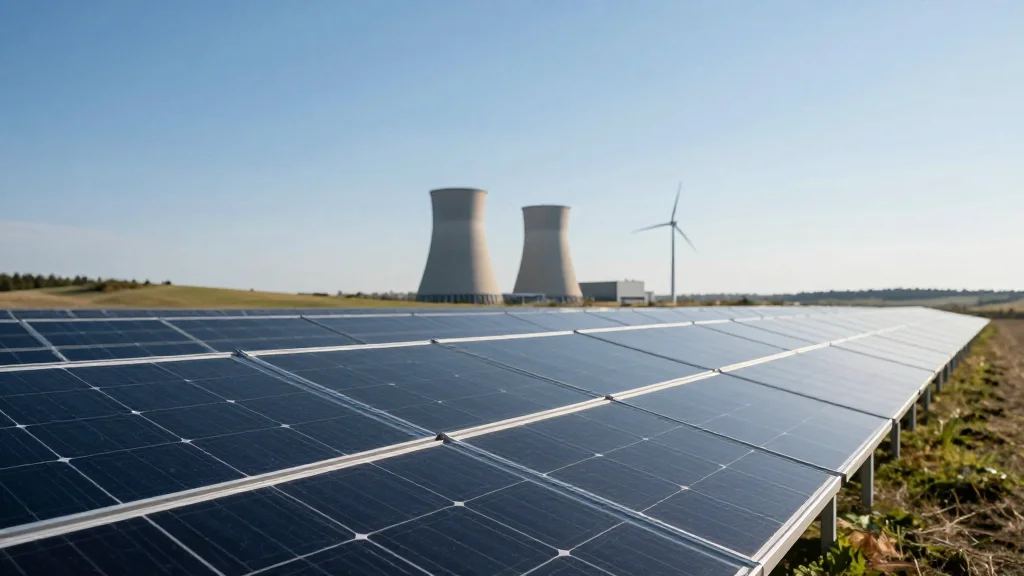
CORRECTION - CLEW Guide – Hungary Sees Solar Boom but Remains Dependent on Russian Energy, Fossil Fuels
Why It Matters
Hungary’s mixed energy trajectory affects EU climate targets and regional energy security, while its policy choices create significant investment opportunities and geopolitical risks.
Key Takeaways
- •Solar capacity targets 12 GW by 2030.
- •Russian gas supplies 74% of imports in 2024.
- •Paks II nuclear adds 2.4 GW, delayed and cost‑inflated.
- •Home storage program received 132 k applications instantly.
- •Wind capacity to triple to 1 GW after 2024 law change.
Pulse Analysis
Hungary’s renewable surge is anchored by an aggressive solar rollout that could lift the sector’s share of final energy consumption from 18 % in 2024 to the EU‑aligned goal of 30 % by 2030. Incentives such as the Home Energy Storage Programme have unlocked consumer‑level flexibility, encouraging battery adoption and smoothing intermittency. This grassroots momentum complements large‑scale projects, but the country’s overall energy mix remains skewed toward imported fossil fuels, underscoring a structural vulnerability that could hamper its carbon‑neutrality pledge for 2050.
Energy security dominates the policy debate as Russia continues to supply three‑quarters of Hungary’s gas and nearly half of its oil. The Paks II nuclear expansion, slated to add 2.4 GW, is intended to offset these imports, yet escalating costs and legal challenges have delayed commissioning. With the April parliamentary election looming, the opposition’s promise to eliminate Russian energy reliance by 2035 adds political pressure, potentially reshaping subsidy allocations and accelerating diversification efforts, including LNG imports and cross‑border pipeline upgrades.
Beyond solar, Hungary is unlocking previously dormant wind potential after relaxing restrictive siting rules, targeting a threefold increase to 1 GW by 2030. Simultaneously, the nation is positioning itself as a European battery hub, hosting over 30 EV‑battery factories, while geothermal projects aim to replace a billion cubic metres of gas by 2035. These complementary strategies could reduce import dependence, stimulate high‑tech manufacturing, and align Hungary more closely with EU climate objectives, provided regulatory certainty and financing are secured.
CORRECTION - CLEW Guide – Hungary sees solar boom but remains dependent on Russian energy, fossil fuels
Comments
Want to join the conversation?
Loading comments...