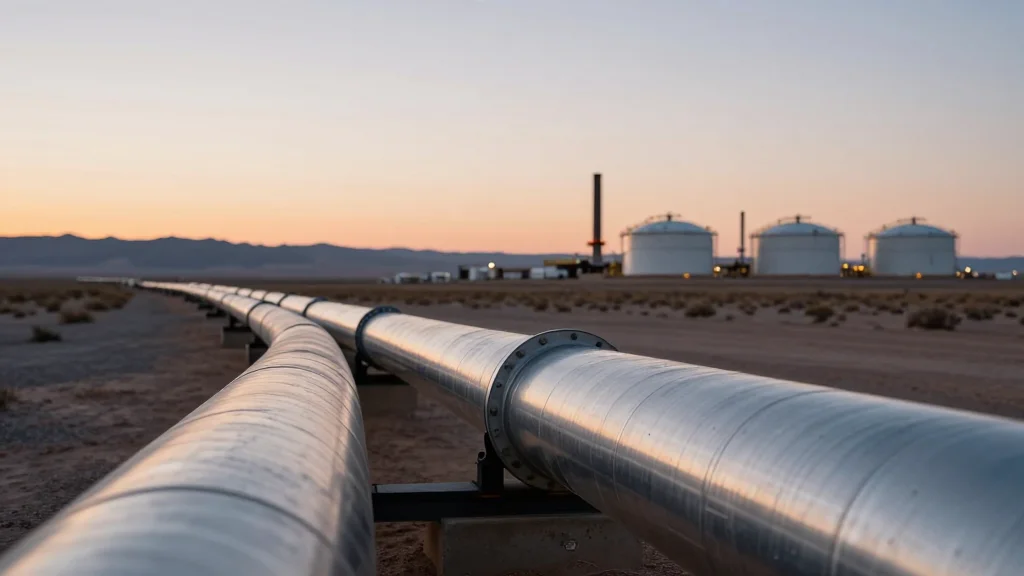
Could Permian’s High Nitrogen Natural Gas Pose Hurdle for Gulf Coast LNG Exporters?
Why It Matters
Higher nitrogen levels increase processing costs, potentially narrowing the cost advantage of U.S. LNG exports and influencing global supply dynamics.
Key Takeaways
- •Permian gas nitrogen up to 5% volume.
- •Nitrogen reduces liquefaction efficiency, raising energy use.
- •Waha hub prices remain deeply negative despite nitrogen penalty.
- •CP2 project installing large-scale nitrogen removal units.
- •Higher processing costs could erode US LNG margin advantage.
Pulse Analysis
The Permian Basin has become the primary source of feedgas for new Gulf Coast LNG projects, offering abundant, low‑priced natural gas. However, a distinctive characteristic of this supply is its relatively high nitrogen concentration, often exceeding 3‑5% by volume. Nitrogen is inert in the liquefaction process, acting as a diluent that reduces the calorific value of the gas stream and forces liquefaction trains to work harder, thereby increasing energy consumption and operational complexity.
LNG developers are responding by investing in nitrogen removal technologies, most notably the large‑scale nitrogen rejection units (NRUs) being added to Venture Global’s Corpus Christi Phase 2 (CP2) facility. These units employ cryogenic distillation or membrane separation to strip nitrogen, restoring the gas’s heating value and improving liquefaction efficiency. While effective, the capital and operating expenses of NRUs can add several hundred dollars per tonne of LNG to production costs, eroding the margin advantage that low Waha hub prices initially promised.
The broader market implication is a potential recalibration of the United States’ LNG cost competitiveness. If nitrogen removal costs rise significantly, U.S. exporters may lose price advantage to projects in Qatar, Canada, or Australia that feed on higher‑quality gas. Stakeholders are therefore monitoring feedgas specifications, exploring blending strategies with low‑nitrogen sources, and negotiating contracts that account for nitrogen penalties. The outcome will influence investment decisions, contract pricing, and the overall trajectory of U.S. LNG capacity expansion through the 2030 horizon.
Could Permian’s High Nitrogen Natural Gas Pose Hurdle for Gulf Coast LNG Exporters?
Comments
Want to join the conversation?
Loading comments...