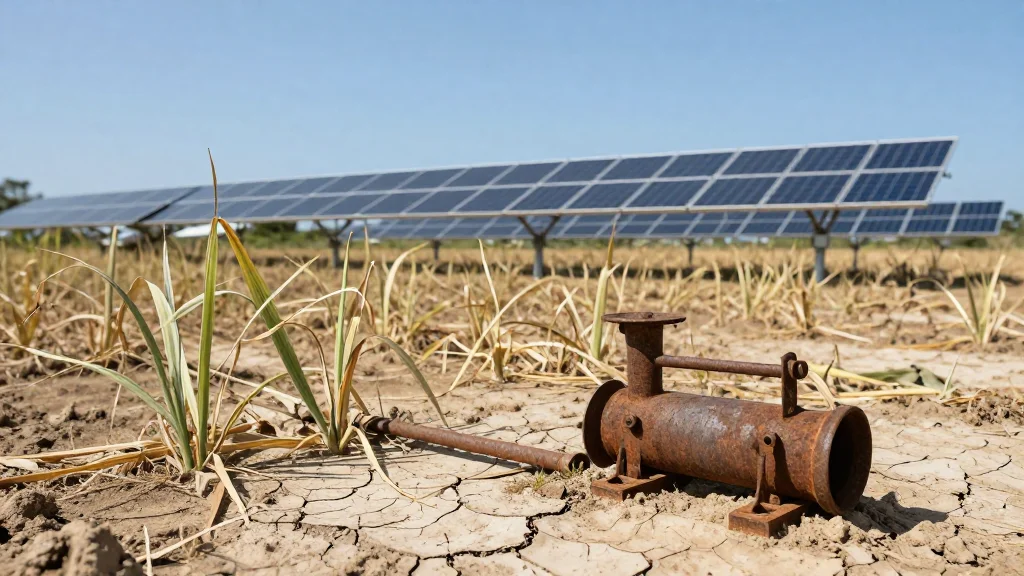
Cuban Farmers Blame U.S. Energy Blockade for Crop Crises as Solar Power Rises

Why It Matters
The energy blockade illustrates how geopolitical tools can directly undermine food security in a vulnerable economy. With agriculture accounting for a sizable share of Cuba’s GDP and a primary source of nutrition for its nearly 10 million residents, the loss of fuel and electricity translates into higher food prices, reduced crop yields and heightened risk of famine. The situation also highlights the strategic importance of energy diversification; China’s solar investments are reshaping Cuba’s power mix, offering a model for other nations facing similar embargoes. If the blockade persists, the humanitarian fallout could spill over into the wider Caribbean, where many countries depend on Cuban medical and agricultural assistance. Conversely, a successful renewable transition could reduce Cuba’s leverage to U.S. pressure, altering the balance of power in the region and setting a precedent for energy‑security‑driven resilience in sanctioned states.
Key Takeaways
- •Cuban farmers report gasoline shortages have turned a 15‑minute tractor run into three days of manual labor.
- •Power outages and water scarcity are forcing farmers to rely on horse‑drawn carts, bruising produce and raising prices.
- •U.S. sanctions halted fuel shipments after an attack on Venezuelan oil supplies, costing Cuba an estimated $5 billion annually.
- •Solar generation rose from 6% to over 20% of Cuba’s electricity in 12 months, driven by 92 Chinese‑financed solar parks.
- •By 2028, Chinese projects aim to deliver 2,000 MW of solar power, roughly matching the island’s current fossil‑fuel output.
Pulse Analysis
The Cuban crisis underscores a classic lesson in energy geopolitics: when a nation’s lifeline is a single external commodity, that commodity becomes a lever of coercion. The Trump administration’s oil embargo is not merely a trade dispute; it is a strategic attempt to force political change by starving the island’s agricultural engine. Historically, similar tactics have backfired, as seen in the 1990s when Cuba’s “Special Period” spurred a home‑grown renewable push that eventually reduced its oil dependence. The current surge in Chinese solar capacity could repeat that pattern, turning a crisis into a catalyst for a structural shift toward renewables.
However, the transition is uneven. Solar farms can supply electricity, but the agricultural sector still needs diesel for irrigation pumps, tractors and transport. Without a coordinated plan to pair solar generation with storage and diesel‑free farm equipment, the renewable gains will only partially alleviate the blockade’s impact. International donors and NGOs could fill the gap by financing battery‑backed irrigation systems, but such projects require stable policy environments that are currently lacking.
In the broader market, Cuba’s plight is a microcosm of the global scramble for energy independence triggered by the Iran‑Israel conflict. As the International Energy Agency labels the war the “worst energy crisis in history,” countries are accelerating renewable investments to hedge against supply shocks. China’s aggressive financing of solar projects positions it as a benefactor to sanctioned states, potentially expanding its geopolitical influence in the Caribbean and Latin America. If Cuba can successfully pivot to solar, it may inspire other embargoed economies to seek similar pathways, reshaping the strategic calculus of energy as a weapon of foreign policy.
Cuban Farmers Blame U.S. Energy Blockade for Crop Crises as Solar Power Rises
Comments
Want to join the conversation?
Loading comments...