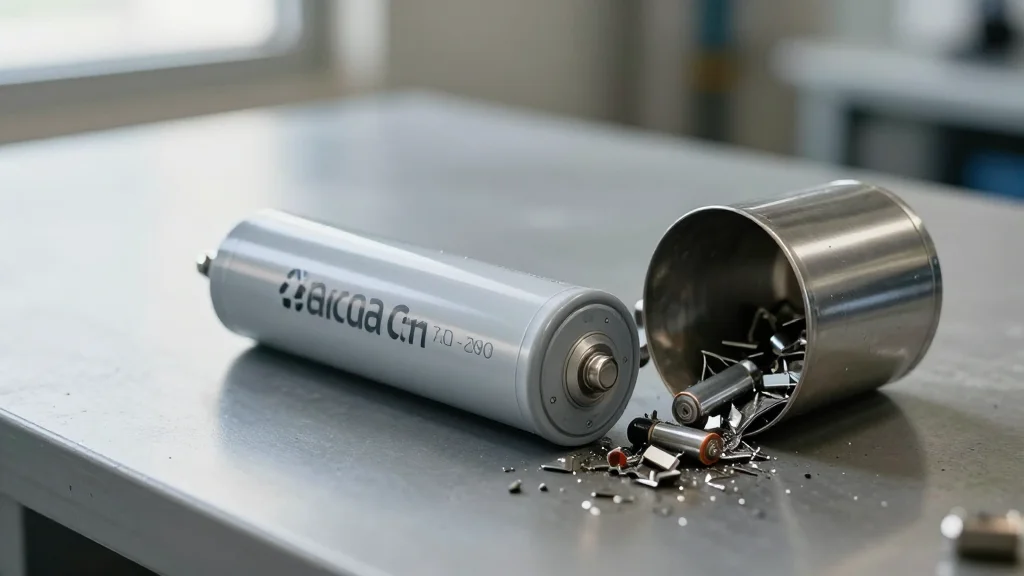
Cylib to Take Part in Sodium-Ion Battery Recycling Project
Companies Mentioned
Why It Matters
Sodium‑ion batteries promise lower material costs and supply security, but scalable recycling is essential for true sustainability; this project builds the circular value chain Europe needs to compete with lithium‑ion technologies.
Key Takeaways
- •Cylib leads recycling work package with TU Braunschweig.
- •Project develops both conventional and direct sodium‑ion battery recycling routes.
- •€14.5 million (~$15.8 million) funding supports three‑year consortium effort.
- •Goal: market‑ready large‑format sodium‑ion cells with circular lifecycle.
- •25 partners include manufacturers, electrolytes, logistics, machinery, and research institutes.
Pulse Analysis
Sodium‑ion batteries are gaining traction as a cost‑effective alternative to lithium‑ion chemistry, thanks to the abundance of sodium and lower geopolitical risk. Europe’s energy transition, especially in mobility and grid storage, demands batteries that can be produced at scale without relying on scarce resources. While the technology offers promising energy density and safety profiles, its commercial success hinges on establishing a robust recycling infrastructure that can reclaim materials efficiently and economically.
The SIB:DE Entwicklung initiative, anchored by Cylib’s expertise, tackles this challenge by pursuing two parallel recycling pathways. The conventional route leverages proven mechanical shredding and hydrometallurgical extraction, ensuring a baseline recovery rate for end‑of‑life cells. More groundbreaking is the direct‑recycling approach, which aims to refurbish active cathode materials without full chemical breakdown, potentially slashing processing costs and preserving material integrity—particularly valuable for production scrap. A pilot plant slated for early 2029 will validate the scalability of this method, positioning Europe at the forefront of circular battery manufacturing.
Backed by roughly $15.8 million in public funding, the consortium unites battery makers, electrolyte developers, logistics firms, machinery manufacturers, and leading research institutions, creating a full‑stack ecosystem. This collaborative model accelerates technology transfer, reduces time‑to‑market, and signals to investors that sodium‑ion solutions can meet both performance and sustainability criteria. As the EU tightens recycling mandates, the project’s outcomes could set new industry standards, fostering a resilient supply chain and reinforcing Europe’s strategic autonomy in next‑generation energy storage.
Cylib to take part in sodium-ion battery recycling project
Comments
Want to join the conversation?
Loading comments...