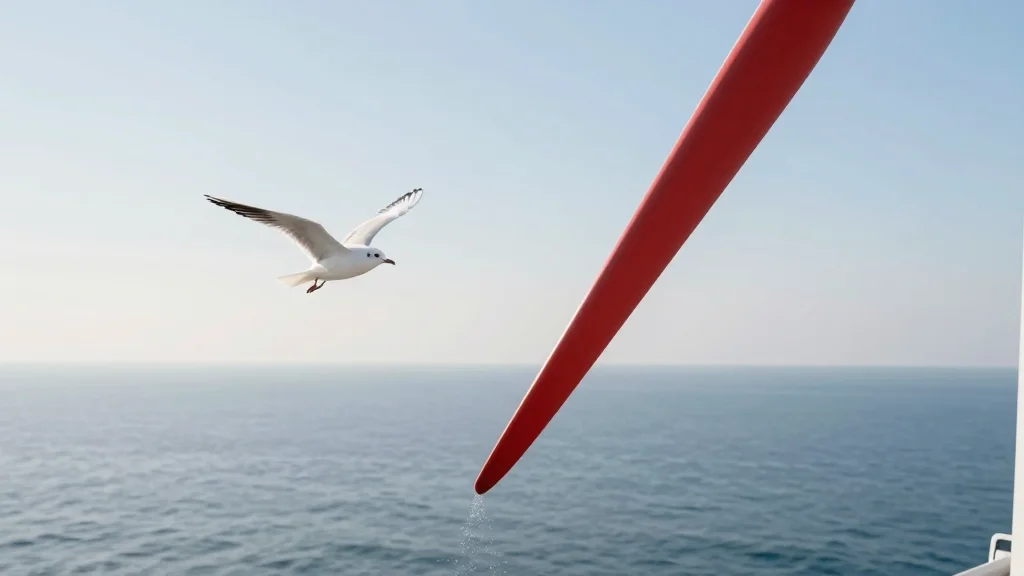
Danish Wind Giant to Trial Red Turbine Blades to Further Reduce Risk of Bird Collisions
Why It Matters
If the red‑blade concept proves effective, it could become a low‑cost, scalable mitigation tool for offshore wind developers, helping the sector meet stricter biodiversity standards while maintaining project economics.
Key Takeaways
- •Vestas tests red blades on seven turbines at Hollandse Kust West VI
- •Red chosen to improve visibility without overheating or durability issues
- •Ecowende study aims to cut bird collisions while boosting renewable output
- •Additional measures include taller turbines, noise‑reduction foundations, and reef creation
- •Early research suggests turbine‑related bird mortality may be lower than thought
Pulse Analysis
Offshore wind farms have faced scrutiny over their impact on avian populations, prompting developers to explore visual cues that make turbines more detectable. Vestas' decision to paint a single blade red taps into a growing body of research suggesting that high‑contrast colours can alter a bird's optic flow, prompting earlier avoidance. By deploying the test on the Hollandse Kust West VI project—a 760 MW installation in the North Sea—Vestas and its partners can gather real‑world data on collision rates, maintenance implications, and blade performance under marine conditions.
The red‑blade trial is just one element of Ecowende's broader biodiversity strategy. The joint venture between Eneco and Shell has already introduced taller turbine hubs to steer migratory routes above flight paths, and it employed low‑noise VibroJet and Vibro Lifting tools during monopile installation to protect marine mammals. Post‑construction plans include artificial reef structures and extra openings in monopiles to shelter fish, as well as re‑introducing the native flat oyster. These layered measures illustrate a shift toward ecosystem‑inclusive design, where renewable energy projects aim to enhance, rather than merely coexist with, local habitats.
Industry analysts see such nature‑inclusive innovations as increasingly vital as European regulators tighten environmental licensing criteria. Demonstrated success with red blades could set a new baseline for visual mitigation, reducing the need for costly turbine shutdowns or retrofits. Moreover, the data generated may inform standards across the Atlantic, where offshore wind capacity is set to triple by 2030. For investors, the ability to meet biodiversity benchmarks without sacrificing output translates into lower compliance risk and smoother permitting pathways, reinforcing offshore wind's role as a cornerstone of the global energy transition.
Danish wind giant to trial red turbine blades to further reduce risk of bird collisions
Comments
Want to join the conversation?
Loading comments...