Deepwater’s Playbook for Delivering Growth
Companies Mentioned
Why It Matters
The shift toward standardisation, integrated contracting and low‑carbon technology determines whether deepwater can remain a growth engine for global oil supply and stay financially viable in a capital‑constrained era.
Key Takeaways
- •Deepwater output could rise to 10 million barrels per day by early 2030s
- •Standardised hulls and subsea trees cut cycle time, delivering ahead of schedule
- •iEPCI model drives contractor collaboration, compressing schedules for deepwater fields
- •Combined‑cycle gas turbines on Bacalhau FPSO halve emissions versus industry average
- •Digital twins and AI cut deepwater OPEX up to 20% and downtime
Pulse Analysis
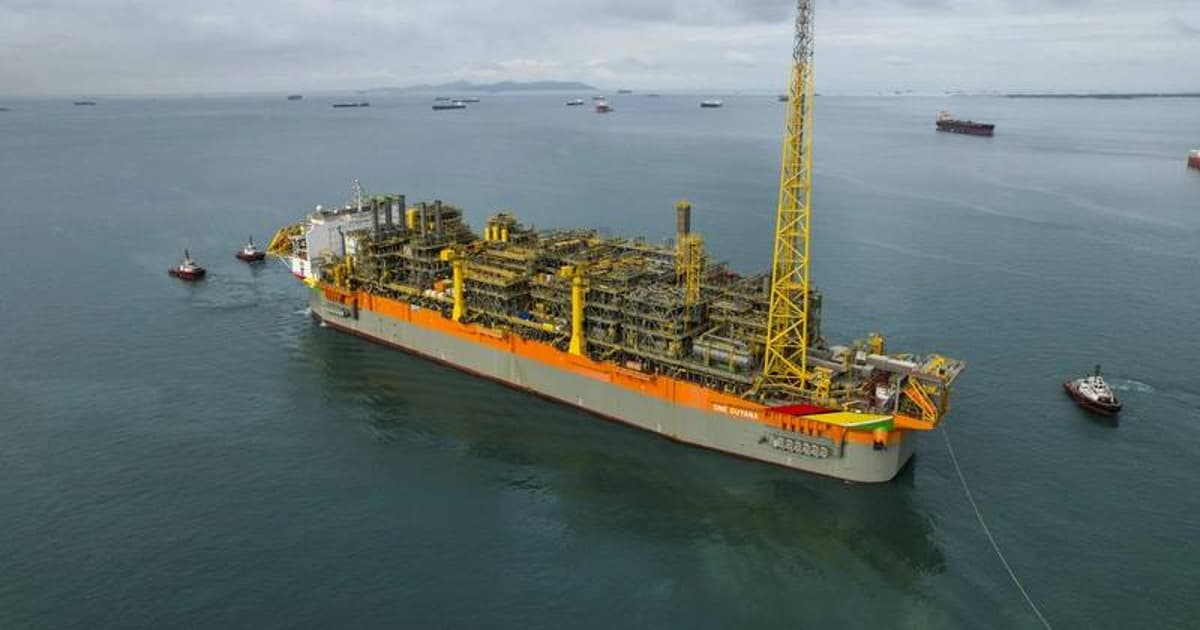
The deepwater segment is poised for modest expansion, with Welligence estimating production to near 10 million barrels per day by the early 2030s. This growth hinges on a pipeline of new projects that must overcome tighter capital discipline across IOCs. Exploration spending will need to rise, but operators are counterbalancing risk by leveraging standardised engineering solutions that streamline design, procurement and construction. The Payara and Yellowtail fields in Guyana, built on SBM Offshore’s Fast4Ward hulls and TechnipFMC’s uniform subsea trees, illustrate how repeatable designs can shave months off the FID‑to‑first‑oil timeline.
Standardisation extends beyond hardware to the contracting framework. The integrated Engineering, Procurement, Construction and Installation (iEPCI) model aligns owners and contractors early, fostering joint risk‑taking and faster decision‑making. Projects such as Shell’s Gato do Mato, TotalEnergies’ Gran Morgu and Equinor’s Bacalhau have all adopted iEPCI to compress schedules. Meanwhile, emissions are becoming a core screening criterion. Equinor’s Bacalhau FPSO employs combined‑cycle gas turbines that generate more power per unit of gas, cutting CO₂ output by more than 50 % compared with the industry average, albeit at a higher topside weight and capital cost.
As the first generation of deepwater assets ages, operators are redesigning for late‑life efficiency. Digital twins and AI‑driven predictive analytics enable real‑time monitoring, early risk detection and proactive maintenance, delivering up to 30 % less downtime and 10‑20 % OPEX savings. Early adopters like BP and Shell in the Gulf of Mexico are already seeing tangible benefits, and the technology is set to become a standard part of the deepwater playbook. With continued innovation in subsea processing, remote operations and integrated contracting, the sector can sustain profitability even as new capital becomes scarcer.
Deepwater’s Playbook for Delivering Growth
Comments
Want to join the conversation?
Loading comments...