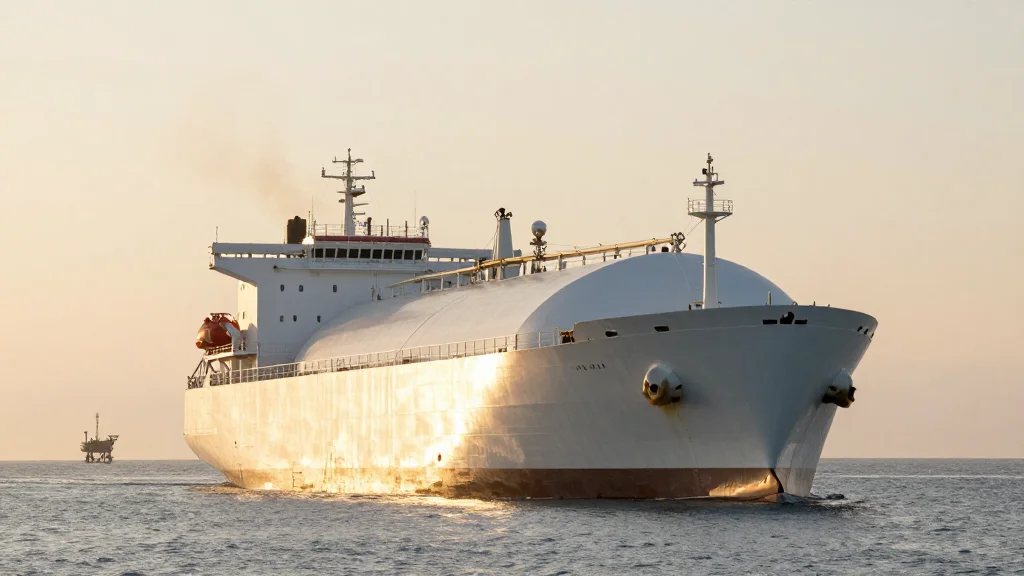
Delfin Sanctions First US FLNG Export Project
Companies Mentioned
Why It Matters
The project expands U.S. LNG export capacity without new onshore terminals, enhancing market flexibility and reinforcing the Gulf Coast’s role in global gas supply.
Key Takeaways
- •Delfin LNG approved first US floating LNG export vessel, 4.4 Mt/yr capacity
- •Samsung Heavy Industries to build FLNG ship for North American client
- •Project adds offshore export capability to Gulf Coast, boosting export growth
- •Final investment decision expected soon, indicating strong investor confidence
- •UTOS pipeline repairs remain critical hurdle for project timeline
Pulse Analysis
The United States is rapidly becoming the world’s leading liquefied natural gas (LNG) exporter, and the approval of Delfin LNG’s first floating LNG (FLNG) project marks a strategic shift toward offshore production. Traditional onshore LNG terminals require extensive land acquisition, permitting, and environmental reviews, which can delay capacity expansion. By contrast, FLNG vessels like the 4.4 Mt/yr unit sanctioned by Delfin can be moored offshore, tapping deep‑water gas fields and feeding existing pipeline networks. This flexibility is especially valuable for the Gulf Coast, where onshore bottlenecks have constrained export growth despite abundant natural gas supplies.
Samsung Heavy Industries’ involvement adds a layer of technical credibility to the venture. The South Korean shipbuilder, renowned for large‑scale LNG carriers, will deliver a purpose‑built FLNG vessel that integrates liquefaction, storage, and offloading capabilities on a single platform. The contract underscores growing confidence among GIP‑led investors, who see FLNG as a cost‑effective way to meet rising demand from Asia and Europe. However, the project’s timeline remains vulnerable to the UTOS pipeline repairs, a critical link that transports gas from onshore facilities to the offshore units. Delays in fixing the pipeline could postpone the vessel’s commissioning and affect the projected export ramp‑up.
If Delfin’s FLNG project proceeds on schedule, it could reshape the competitive dynamics of the global LNG market. Offshore capacity allows U.S. exporters to respond more swiftly to price spikes and geopolitical shifts, while reducing the environmental footprint associated with new onshore infrastructure. Moreover, successful deployment may spur additional FLNG investments, encouraging other developers to explore similar offshore concepts along the Gulf and beyond. Investors are watching closely, as the final investment decision will signal whether the offshore model can deliver the promised economies of scale and speed, potentially unlocking a new era of U.S. LNG dominance.
Delfin Sanctions First US FLNG Export Project
Comments
Want to join the conversation?
Loading comments...