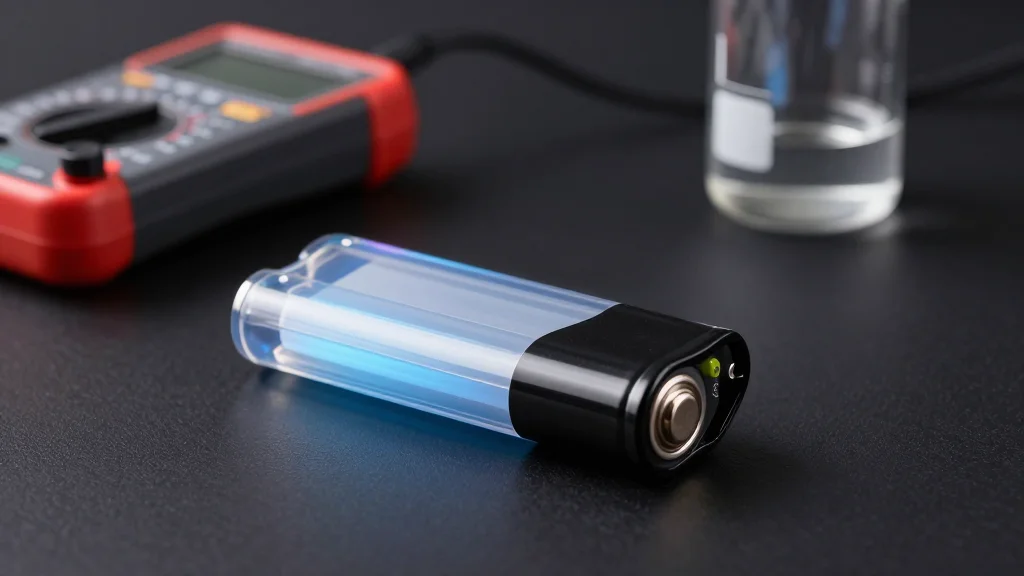
Donut Lab's 'Solid-State' Battery Exposed As Regular Li-Ion

Why It Matters
The revelation undermines investor confidence in hype‑driven battery startups and highlights the need for independent validation before large capital is deployed in emerging energy‑storage claims.
Key Takeaways
- •Donut Lab's "solid-state" cell matches high‑nickel lithium‑ion chemistry
- •Voltage curve sits at 3.7‑3.8 V, typical for Li‑ion, not sodium‑ion
- •Expansion test shows graphite‑anode kink, impossible for sodium ions
- •Measured energy density ~298 Wh/kg, far below claimed 400 Wh/kg
- •Raised ~$25 million from 1,300 investors on unverified battery specs
Pulse Analysis
The solid‑state battery market has become a magnet for venture capital, with startups promising breakthroughs that could reshape electric vehicles and grid storage. Donut Lab entered that arena by touting a sodium‑ion solid‑state cell capable of 400 Wh/kg, ultra‑fast charging, and a century‑plus cycle life. The company’s crowdfunding campaign attracted more than 1,300 backers and secured roughly $25 million, illustrating how compelling performance claims can quickly translate into sizable funding, even when the underlying technology remains unproven.
A consortium of over 20 independent experts, including researchers from Fraunhofer, Justus‑Liebig University and VTT, dissected a Donut Lab prototype. Voltage profiling revealed a flat 3.7‑3.8 V plateau at 50 % state of charge—characteristic of high‑nickel NCM lithium‑ion chemistry, not the lower voltage window of sodium‑ion cells. More damning was the expansion curve: a distinct graphite‑anode kink appeared around 50‑70 % SOC, a signature impossible for larger sodium ions. The measured gravimetric energy density of about 298 Wh/kg aligns with premium lithium‑ion cells, starkly contrasting the advertised 400 Wh/kg.
The fallout extends beyond a single startup. Investors and corporate partners are reminded that extraordinary battery claims demand rigorous, third‑party verification before capital allocation. Regulatory bodies may intensify scrutiny of crowdfunding disclosures for deep‑tech ventures, especially where performance metrics are central to valuation. For the broader industry, the episode underscores the gap between laboratory prototypes and commercially viable solid‑state solutions, reinforcing the importance of transparent data and peer review in accelerating genuine innovation.
Donut Lab's 'Solid-State' Battery Exposed As Regular Li-Ion
Comments
Want to join the conversation?
Loading comments...