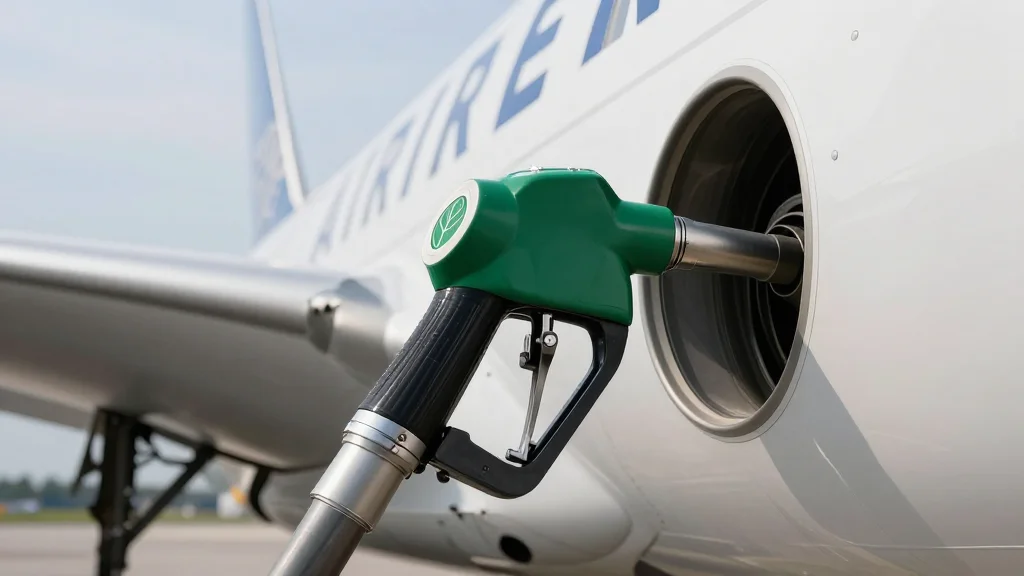
DSV, United Airlines, Microsoft and Phillips 66 Ink Sustainable Aviation Fuel Deal
Why It Matters
The collaboration provides a scalable model for corporate SAF procurement, accelerating emissions reductions across the aviation value chain and demonstrating how tech and logistics firms can drive ESG outcomes.
Key Takeaways
- •Up to 41.6 million liters of SAF secured from Phillips 66
- •Expected lifecycle emissions cut: ~100,000 tonnes CO₂e
- •United will use fuel; DSV and Microsoft use book‑and‑claim
- •ISCC certification ensures sustainable feedstock and audit trail
- •Deal marks largest single‑customer SAF contract for United
Pulse Analysis
Sustainable aviation fuel is rapidly moving from niche projects to mainstream supply, driven by stricter emissions regulations and airline pledges to reach net‑zero. Phillips 66’s ability to produce 41.6 million liters of SAF signals that traditional refiners are scaling renewable feedstocks, while the ISCC certification adds credibility by confirming sustainable sourcing and rigorous auditing. This volume, equivalent to roughly 1.1 billion passenger‑kilometers, gives United Airlines a tangible pathway to meet its 2030 carbon‑neutral targets and strengthens DSV’s position as a logistics partner that can deliver low‑carbon solutions to multinational clients.
The book‑and‑claim mechanism employed by DSV and Microsoft separates fuel consumption from emissions accounting, allowing companies to claim verified reductions without physically handling the fuel. By logging each ton of CO₂ saved in the SAFc Registry, the model prevents double‑counting and offers transparent, auditable data that can be reported to investors and regulators. This approach also enables firms outside the aviation sector, like Microsoft, to support climate goals through indirect procurement, expanding the market for SAF beyond airlines and creating new revenue streams for producers.
For the broader aviation ecosystem, the agreement showcases how cross‑industry coalitions can unlock large‑scale SAF contracts that were previously unattainable for single airlines. The partnership’s scale may encourage other carriers to adopt similar book‑and‑claim structures, accelerating demand and prompting refiners to invest further in renewable feedstocks. As SAF becomes a larger share of jet fuel consumption, the cumulative impact could shave millions of tonnes of CO₂ from global aviation emissions, aligning industry growth with the Paris Agreement’s climate objectives.
DSV, United Airlines, Microsoft and Phillips 66 Ink Sustainable Aviation Fuel Deal
Comments
Want to join the conversation?
Loading comments...