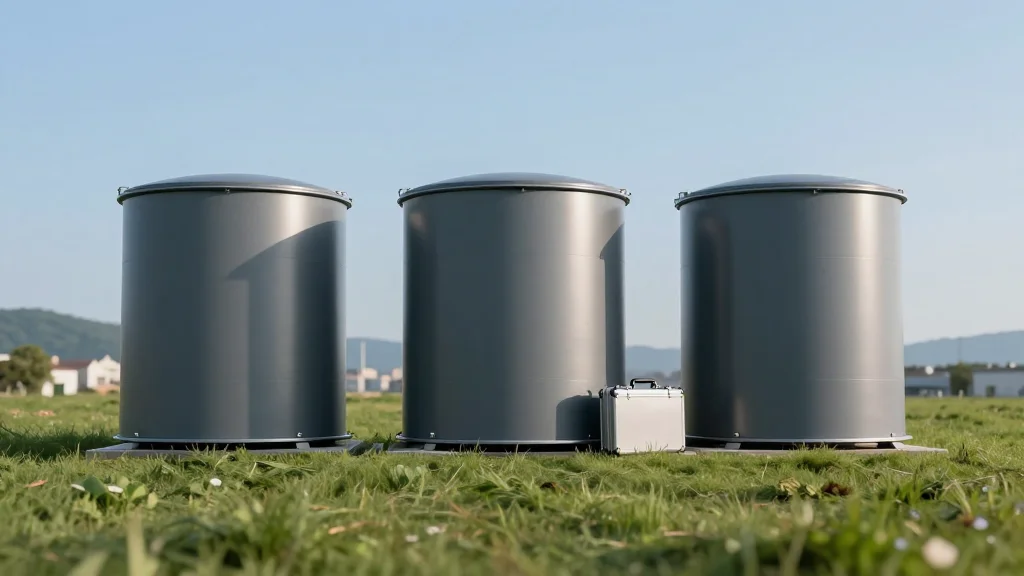
EBRD Lends €70 Million to Slovenian BESS Developer Across Four Countries
Companies Mentioned
Why It Matters
The funding de‑risks one of Central Europe’s first multi‑country merchant BESS portfolios, accelerating private capital into a rapidly growing storage market and enhancing grid flexibility.
Key Takeaways
- •EBRD funds €70M loan for five cross‑border BESS projects.
- •Combined storage capacity reaches 302 MW across Slovenia, Latvia, Poland, Romania.
- •Tesla supplies all batteries, operating under merchant model in wholesale markets.
- •EU InvestEU first‑loss guarantee de‑risks project, encouraging private investment.
- •Technical assistance boosts NGEN’s cybersecurity and operational reliability.
Pulse Analysis
Europe’s power grids are under pressure to integrate more renewable generation, and large‑scale battery storage is emerging as a critical balancing tool. By extending a €70 million loan across four countries, the EBRD is signaling confidence in a merchant‑driven BESS model that relies on market revenues rather than regulated tariffs. This approach aligns with the EU’s broader decarbonisation agenda, where cross‑border projects can smooth intermittent supply and provide ancillary services without the need for extensive state subsidies.
The involvement of Tesla as the sole battery supplier adds a layer of technological credibility, while the merchant structure pushes NGEN to optimise dispatch based on real‑time price signals. The InvestEU first‑loss guarantee further reduces perceived risk for private investors, creating a template for future financing of similar multi‑jurisdictional assets. As wholesale electricity markets in Central and Eastern Europe mature, such de‑risked, market‑oriented storage projects are likely to attract additional capital, catalysing a wave of new capacity that can support higher shares of wind and solar.
Beyond financing, the EBRD’s technical cooperation on cybersecurity addresses a growing concern for digital resilience in critical energy infrastructure. By implementing industry‑aligned standards and advanced penetration testing, NGEN can safeguard its assets against cyber threats, ensuring reliable operation. This holistic support—combining capital, risk mitigation, and cyber‑hardening—illustrates a new development model where multilateral banks play a pivotal role in scaling clean‑energy technologies while maintaining system security. As grid‑scale BESS capacity has multiplied twelve‑fold globally in four years, such integrated initiatives will be essential to sustain momentum and meet Europe’s 2030 climate targets.
EBRD lends €70 million to Slovenian BESS developer across four countries
Comments
Want to join the conversation?
Loading comments...