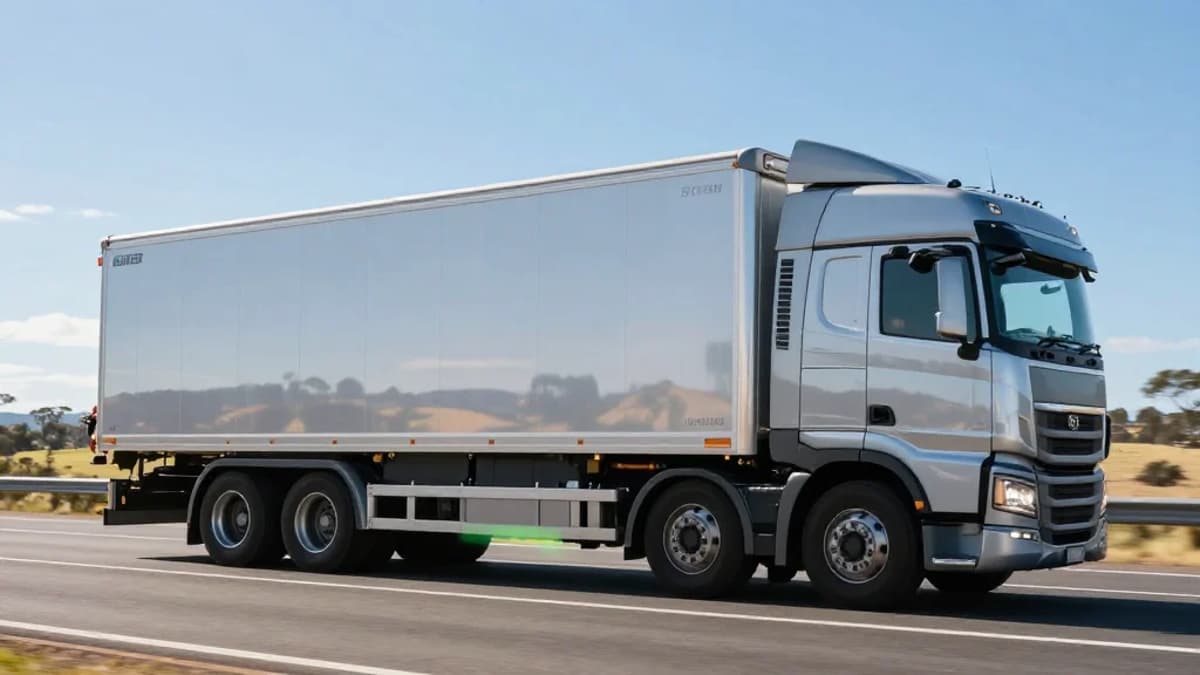
Electrifying All Road Freight Between Sydney and Melbourne Is a No Brainer: The Payback Is Less than 4 Years
•March 6, 2026
0
Why It Matters
The economics and energy security benefits make heavy‑duty electrification a decisive lever for Australia’s logistics competitiveness and emissions reduction.
Key Takeaways
- •Payback 2‑4 years for full electrification
- •Electric trucks cut fuel cost to one‑third
- •Charging stations can serve 2,000 trucks daily
- •Capital cost $2.5‑4 bn, $0.9 bn annual savings
Pulse Analysis
The Sydney‑to‑Melbourne freight lane is poised to become the showcase for heavy‑duty electric trucking. Battery‑electric semi‑tractors capable of hauling 60 tonnes now offer over 450 km of range and can be replenished in roughly an hour using the International Megawatt Charging Standard. Manufacturers such as CATL and Windrose provide warranties exceeding one million kilometres, while megawatt‑scale chargers—already deployed by Huawei in China—can top‑up a 700 kWh pack in a single charging session. These technical milestones remove the performance doubts that once favored hydrogen or diesel.
From a financial perspective the case is equally compelling. Full corridor electrification would require $2.5‑4 billion of upfront investment but would slash fuel expenses by about $0.9 billion each year, delivering a payback window of two to four years depending on fleet turnover. Operating costs drop to roughly $0.30 per kilometre versus $1.03 for diesel, while maintenance savings further improve margins. The shift also reduces Australia’s exposure to volatile oil markets, improves the trade balance, and adds resilience against supply disruptions.
Implementation will hinge on coordinated action between fleet operators and policymakers. Large retailers and logistics firms stand to gain immediate cost advantages, yet capital intensity may prompt government incentives or streamlined permitting for high‑power charging hubs. A modest network of 12‑to‑15 stations, each capable of handling 50‑100 megawatts, can accommodate the projected 2,000 daily truck charges and be paired with on‑site solar and storage. Replicating the model along other east‑coast corridors would multiply emissions cuts, lower congestion, and accelerate Australia’s transition to a low‑carbon transport economy.
Electrifying all road freight between Sydney and Melbourne is a no brainer: The payback is less than 4 years
0
Comments
Want to join the conversation?
Loading comments...