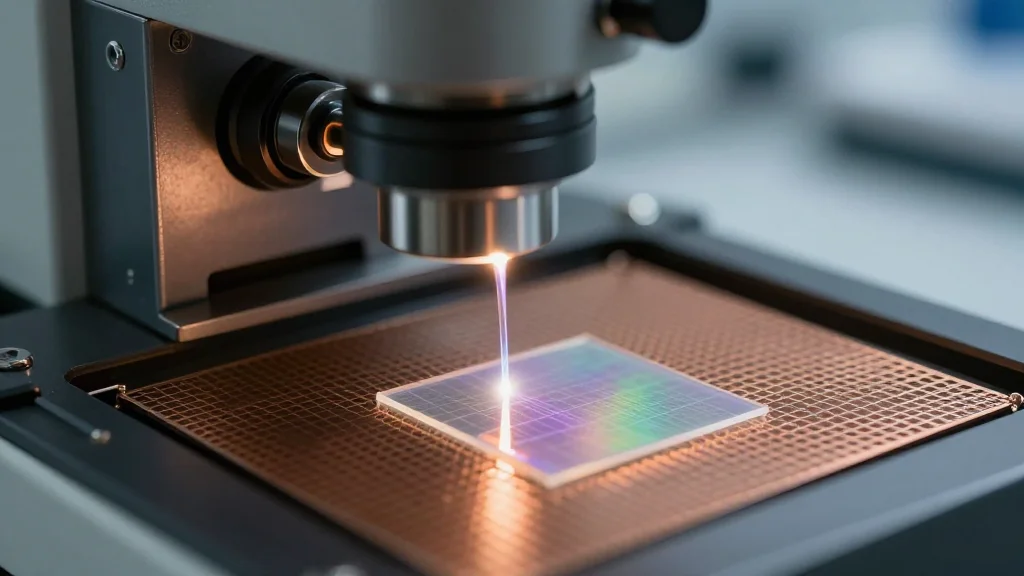
Electrons Crack Open Organic Solar Cells, Exposing Their Hidden 3D Molecular Architecture in a Single Microscope
Why It Matters
The breakthrough consolidates structural, imaging, and chemical analysis into one instrument, accelerating the design of higher‑efficiency organic photovoltaics and reducing reliance on multiple, time‑consuming techniques.
Key Takeaways
- •3D electron diffraction matches X‑ray data for organic solar cells
- •Electron dose control enables nanoscale structural analysis without damage
- •Single TEM now provides averaged structure, imaging, and chemistry
- •Multimodal microscopy bridges local order and bulk texture insights
- •Technique speeds development of higher‑efficiency organic photovoltaics
Pulse Analysis
Understanding the internal architecture of organic solar cells is essential for boosting their power conversion efficiency. Historically, researchers have depended on X‑ray diffraction to map average molecular ordering, but this method offers only a bulk view and requires separate instruments for imaging or compositional analysis. The advent of three‑dimensional electron diffraction (3D ED) changes that paradigm, allowing scientists to probe the same sample with electrons that interact more strongly with matter, thereby delivering high‑resolution structural data alongside local chemical information.
The FAU team tackled the notorious beam‑sensitivity of organic photovoltaic materials by optimizing electron dose and employing stepwise tilting to reconstruct three‑dimensional diffraction patterns. Their comparative experiments showed near‑identical diffraction rings and spots between electron and X‑ray measurements, confirming that 3D ED can faithfully reproduce averaged molecular order. Crucially, the same transmission electron microscope also captured real‑space images and performed elemental analysis, embodying a true multimodal approach. This unified workflow reduces sample preparation time, minimizes handling errors, and opens the door to rapid, iterative material testing.
For the solar industry, the ability to obtain comprehensive structural insight from a single instrument accelerates the feedback loop between synthesis, processing, and performance testing. Researchers can now screen new donor‑acceptor polymers, adjust annealing protocols, and directly observe how nanoscale ordering translates into device efficiency. As organic photovoltaics aim for commercial viability, such streamlined characterization tools are poised to lower development costs and shorten time‑to‑market, ultimately supporting broader adoption of flexible, lightweight solar technologies.
Electrons crack open organic solar cells, exposing their hidden 3D molecular architecture in a single microscope
Comments
Want to join the conversation?
Loading comments...