Enbridge to Build $1.2 B Solar‑Storage Project for Meta Data Centers

Companies Mentioned

Why It Matters
The Cowboy Project illustrates how utility‑scale renewable plus storage can meet the stringent reliability demands of data‑center operators, a sector that accounts for a growing share of electricity consumption. By marrying solar generation with a sizable BESS, the deal provides a blueprint for delivering firm, carbon‑free power without relying on fossil‑fuel peakers, thereby accelerating grid decarbonization. For the broader energy market, the use of Wyoming’s LPCS tariff and a battery tolling agreement demonstrates a regulatory pathway that can unlock large corporate demand while preserving retail rate stability. If replicated, such structures could catalyze a wave of similar contracts, expanding the market for utility‑scale storage and reinforcing the business case for renewable integration across traditionally low‑renewable regions.
Key Takeaways
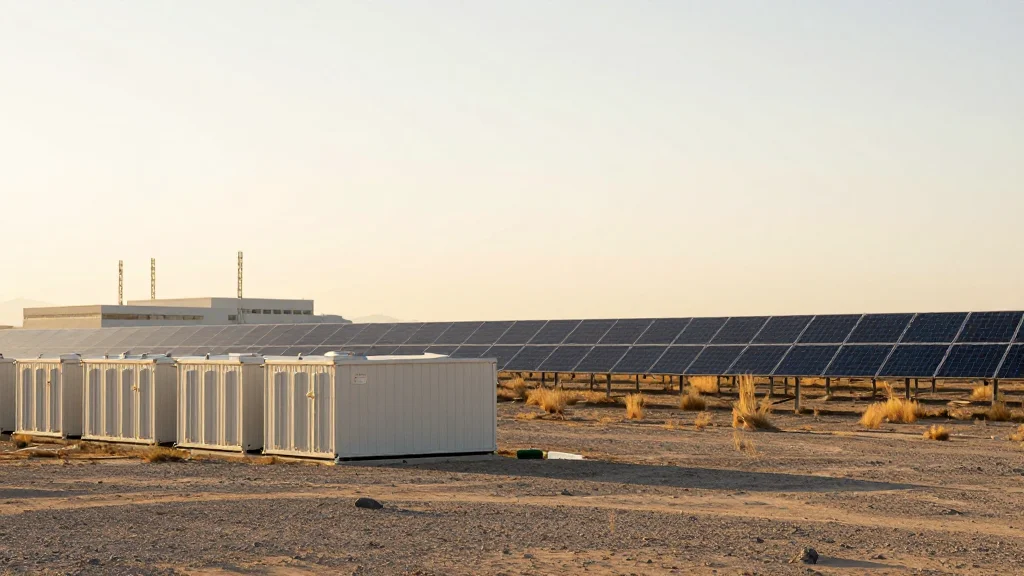
- •Enbridge commits $1.2 billion to the Cowboy Project – 365 MW solar + 200 MW/1,600 MWh battery.
- •Meta will receive power via Wyoming’s LPCS tariff, avoiding impacts on residential rates.
- •Tesla selected to supply and service the BESS, marking its first major corporate storage contract.
- •The partnership expands Enbridge‑Meta clean‑energy contracts to roughly 1.6 GW across North America.
- •Project slated for commercial operation by end‑2027, with construction starting later 2024.
Pulse Analysis
Enbridge’s move into solar‑plus‑storage for a high‑profile tech client reflects a strategic pivot from its traditional oil‑and‑gas pipeline legacy toward a diversified, low‑carbon power portfolio. The $1.2 billion outlay is sizable for a single utility, but it is justified by the long‑term revenue certainty embedded in the LPCS tariff and the battery tolling agreement. By locking in a corporate offtaker with deep pockets and a clear sustainability mandate, Enbridge mitigates market risk while positioning itself as a preferred partner for other data‑center operators.
Historically, data‑center power procurement has leaned on long‑term renewable PPAs that deliver only intermittent energy. The inclusion of a 1,600 MWh battery changes the economics: it provides firm capacity, reduces reliance on grid imports during peak periods, and can monetize ancillary services. This hybrid model could reshape corporate renewable procurement, pushing more firms to demand integrated storage to meet reliability clauses and ESG targets.
Regulatory innovation is equally critical. Wyoming’s LPCS tariff, originally designed for large industrial loads, now serves as a conduit for clean‑energy contracts that do not disturb residential pricing structures. If other states adopt similar mechanisms, the barrier to scaling renewable‑plus‑storage projects for corporate customers could fall dramatically, unlocking billions in new investment and accelerating the transition to a carbon‑free grid.
Enbridge to Build $1.2 B Solar‑Storage Project for Meta Data Centers
Comments
Want to join the conversation?
Loading comments...