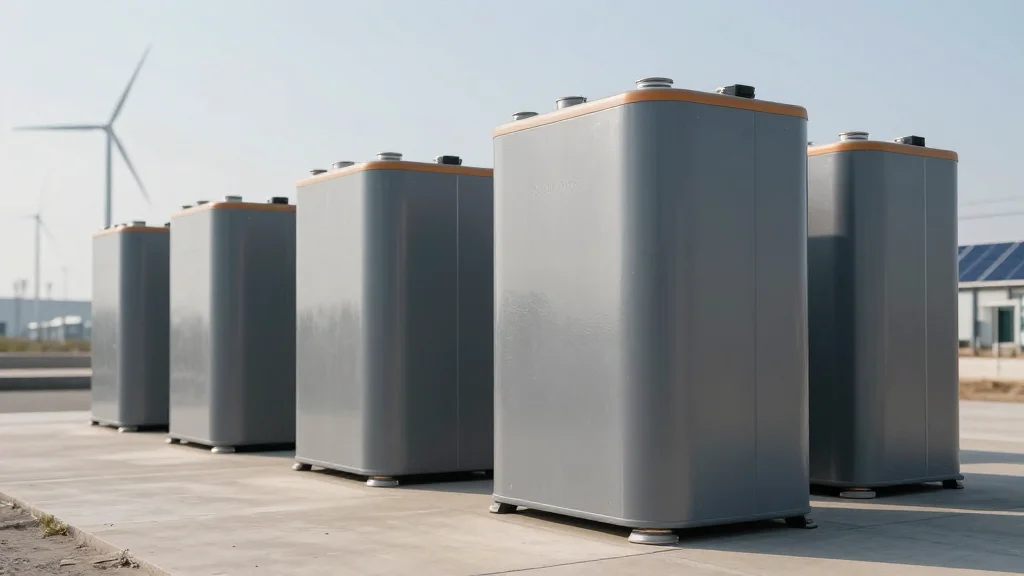
EnBW Advances Storage Strategy: Construction Begins on 100 MWh Large-Scale Battery in Marbach to Strengthen Grid Stability
Why It Matters
The Marbach battery strengthens grid stability in southern Germany, enabling higher renewable penetration while reducing reliance on fossil‑fuel peaker plants. It signals a broader industry move toward large‑scale, safe battery storage as a cornerstone of decarbonized power systems.
Key Takeaways
- •100 MWh LFP battery slated for 2026 operation in Marbach.
- •EnBW will have over 1,900 MW storage capacity under development.
- •Facility will balance short‑term wind and solar variability.
- •Uses cobalt‑free lithium‑iron‑phosphate cells for safety.
- •Complements hydrogen‑ready gas plants for longer‑term balancing.
Pulse Analysis
Europe’s power grids are confronting unprecedented volatility as wind and solar installations surge, and Germany is at the forefront of deploying large‑scale battery storage to mitigate those swings. EnBW’s new Marbach project exemplifies how utilities are turning to lithium‑iron‑phosphate (LFP) technology, prized for its safety, longevity, and cobalt‑free composition, to provide rapid response services. By situating the 100 MWh system directly at an existing generation site and linking it to TransnetBW’s high‑voltage network, EnBW can inject or withdraw power within seconds, a capability essential for maintaining frequency and preventing outages during sudden renewable output changes.
The technical design of the Marbach battery reflects a pragmatic approach to grid integration. Around 264 modular cabinets will house roughly 110,000 LFP cells, supported by vibro‑compacted foundations and a dedicated medium‑voltage switchgear building. This infrastructure not only ensures robust mechanical stability but also facilitates seamless two‑way power flow, allowing the storage to act as both a sink for excess solar or wind energy and a source during demand spikes. The choice of LFP over nickel‑cobalt‑manganese chemistries reduces supply chain risk and aligns with the EU’s push for greener, less hazardous battery materials.
Strategically, the Marbach installation is a keystone in EnBW’s ambitious storage roadmap, which already includes 20 operational batteries and projects totaling about 1,800 MW in various stages. Coupled with new solar parks that co‑locate storage, the company is building a hybrid portfolio that can deliver firm capacity without relying on carbon‑intensive gas turbines. This expansion not only bolsters EnBW’s competitive edge in the German energy market but also provides a template for other European utilities seeking to balance renewable growth with reliable supply, accelerating the continent’s transition to a low‑carbon grid.
EnBW Advances Storage Strategy: Construction Begins on 100 MWh Large-Scale Battery in Marbach to Strengthen Grid Stability
Comments
Want to join the conversation?
Loading comments...