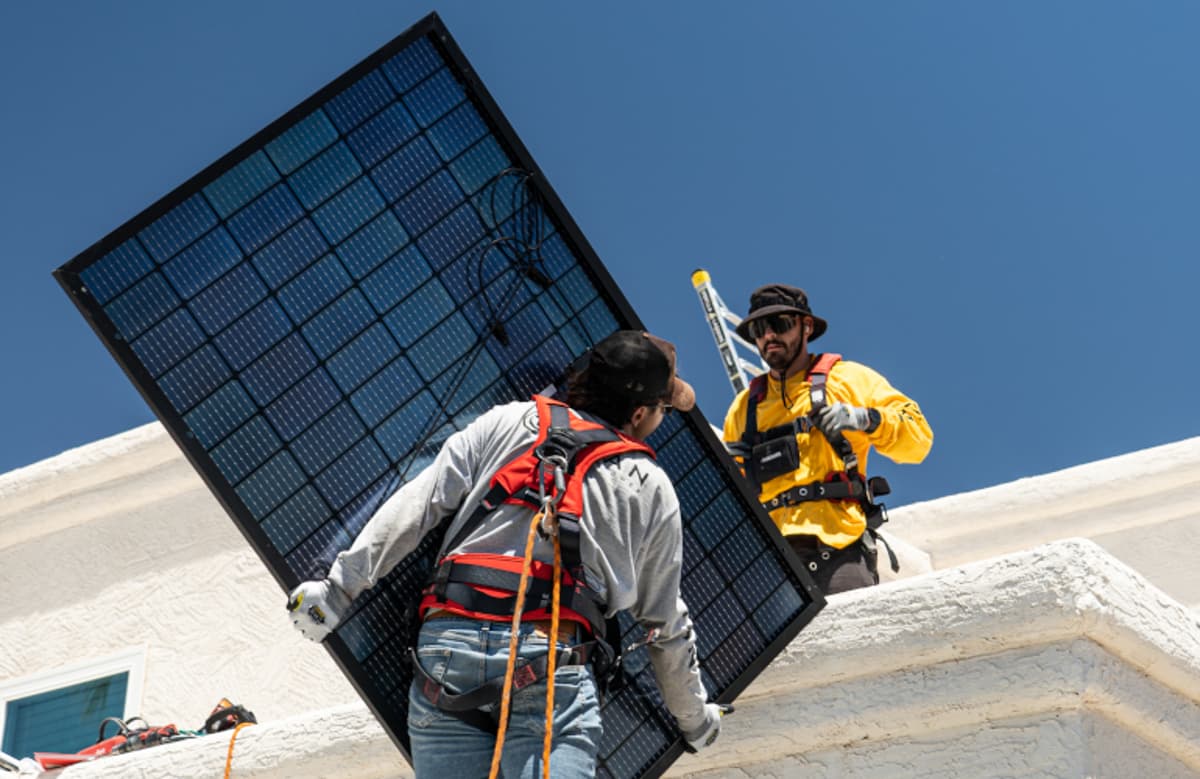
The expiration removes a key cost barrier for U.S. installers while exposing domestic manufacturers to renewed import competition, accelerating the need for alternative trade remedies. Upcoming Sec. 232 polysilicon duties could further influence supply chains and pricing across the solar industry.
The Section 201 investigation that launched in 2017 was a direct response to a surge of crystalline‑silicon solar cells flooding the U.S. market. Intended to shield fledgling manufacturers, the tariff regime began at a steep 30 % duty, with a modest 2.5 GW exemption for domestically assembled modules, and was tapered each year to 14 % by 2025. Over eight years the policy created a predictable cost structure for importers, but its gradual decline and eventual expiry on February 6, 2026 signal a shift toward a more open trade environment for solar equipment.
Industry analysts quickly identified loopholes that eroded the tariffs’ potency. A 2018 exemption for bifacial panels—high‑efficiency modules increasingly favored by large‑scale projects—prompted a sharp rise in those imports, and subsequent reversals only provided temporary relief. As a result, manufacturers turned to antidumping and countervailing‑duty (AD/CVD) petitions, successfully securing duties on products from Cambodia, Malaysia, Thailand and Vietnam. The Alliance for American Solar Manufacturing now seeks similar measures against India, Indonesia and Laos, reflecting a broader strategy to combat what they describe as a ‘whack‑a‑mole’ pattern of trade circumvention.
Looking ahead, the pending Section 232 review of polysilicon imports could redefine the competitive landscape. Unlike Section 201, which focused on market injury, Section 232 invokes national‑security considerations, allowing the Department of Commerce to impose duties on any foreign source deemed a threat. If applied to polysilicon—a critical feedstock for cells, wafers and modules—the ruling could raise prices across the entire supply chain, incentivizing domestic production and reshaping project economics. Stakeholders are therefore monitoring both the timing of the Sec. 232 decision and potential legislative adjustments, as the next wave of trade policy will likely dictate the pace of U.S. solar manufacturing revitalization.
For the first time in eight years, imported solar panels to the United States are no longer met with Sec. 201 tariffs. Initiated in President Donald Trump’s first term and extended by his successor Joe Biden, the tariffs expired on Feb. 6, 2026.
Tariffs under Sec. 201 of the Trade Act of 1974 are designed to protect U.S. industries from harm caused by increased imports. In 2017 U.S. solar‑cell manufacturer Suniva and module maker SolarWorld asked for the investigation, and the U.S. International Trade Commission (ITC) determined that an increase in crystalline‑silicon cell and panel imports was harming American solar manufacturers. The 2018 tariffs were 30 % with the first 2.5 GW of imported cells for U.S. panel assemblers allowed exemption. The tariff amount decreased each year, ultimately landing at 14 % for 2025 imports.
There was a constant back‑and‑forth as to whether bifacial solar panels should be exempt from the tariffs. The Trump administration first excluded the specialty solar panel from the tariffs in 2018, and an increase of bifacial imports was immediately seen. The government removed the exemption for bifacial modules in 2020, but then the Court of International Trade reinstated the exemption in 2021. The Biden administration kept the bifacial exemption when it extended the tariffs in 2022.
The ITC released its mid‑term review of the Sec. 201 solar‑panel tariffs in February 2024 and commented on the evolving U.S. solar‑manufacturing market. The ITC acknowledged that the domestic manufacturing industry was still suffering injury because of imports, but there was increased investment in the domestic market due to favorable incentives in the Inflation Reduction Act.
Timothy Brightbill, partner at Wiley Rein LLP and trade counsel to the Alliance for American Solar Manufacturing and Trade, said the Sec. 201 tariffs lost their effectiveness after companies found workarounds.
“While the Sec. 201 investigation and tariffs were an important effort, the actual remedies were largely ineffective, due to the lengthy exemption for bifacial products, which greatly weakened relief, and the carve‑out of many countries, such as Cambodia,” he said in a statement to Solar Power World. “Ultimately, the American solar manufacturing industry still needs comprehensive relief, as Chinese companies continue to engage in unfair trade practices and to hop from country to country. The recent massive import surges from Indonesia, Laos and now Ethiopia just demonstrate the lengths these companies will go to try and evade legitimate U.S. trade laws and remedies.”
American manufacturers have found more success with antidumping/countervailing‑duty (AD/CVD) investigation requests into imported solar products. The Alliance successfully petitioned for tariffs on imports from Cambodia, Malaysia, Thailand and Vietnam after an influx of imported cells and panels was seen from Southeast Asia. The group is now asking for help against imports from India, Indonesia and Laos. A decision should be reached later this year.
Also related to the solar market, a Sec. 232 investigation into the polysilicon industry was initiated in July 2025. An affirmative Sec. 232 ruling would let the federal government impose tariffs on imported products if they are deemed a threat to national security. These potential polysilicon tariffs would affect every product that contains polysilicon, including solar wafers, cells and panels. A decision in that case could come any day, although no direct timeline has been given by the government.
“The polysilicon Sec. 232 proceeding could be more successful in addressing this ongoing ‘whack‑a‑mole’ behavior, if it covers solar cells and modules and provides comprehensive relief focused on foreign entities of concern,” Brightbill said.
Kelly Pickerel
Kelly Pickerel has more than 15 years of experience reporting on the U.S. solar industry and is currently editor in chief of Solar Power World. Email: [email protected]
Comments
Want to join the conversation?
Loading comments...