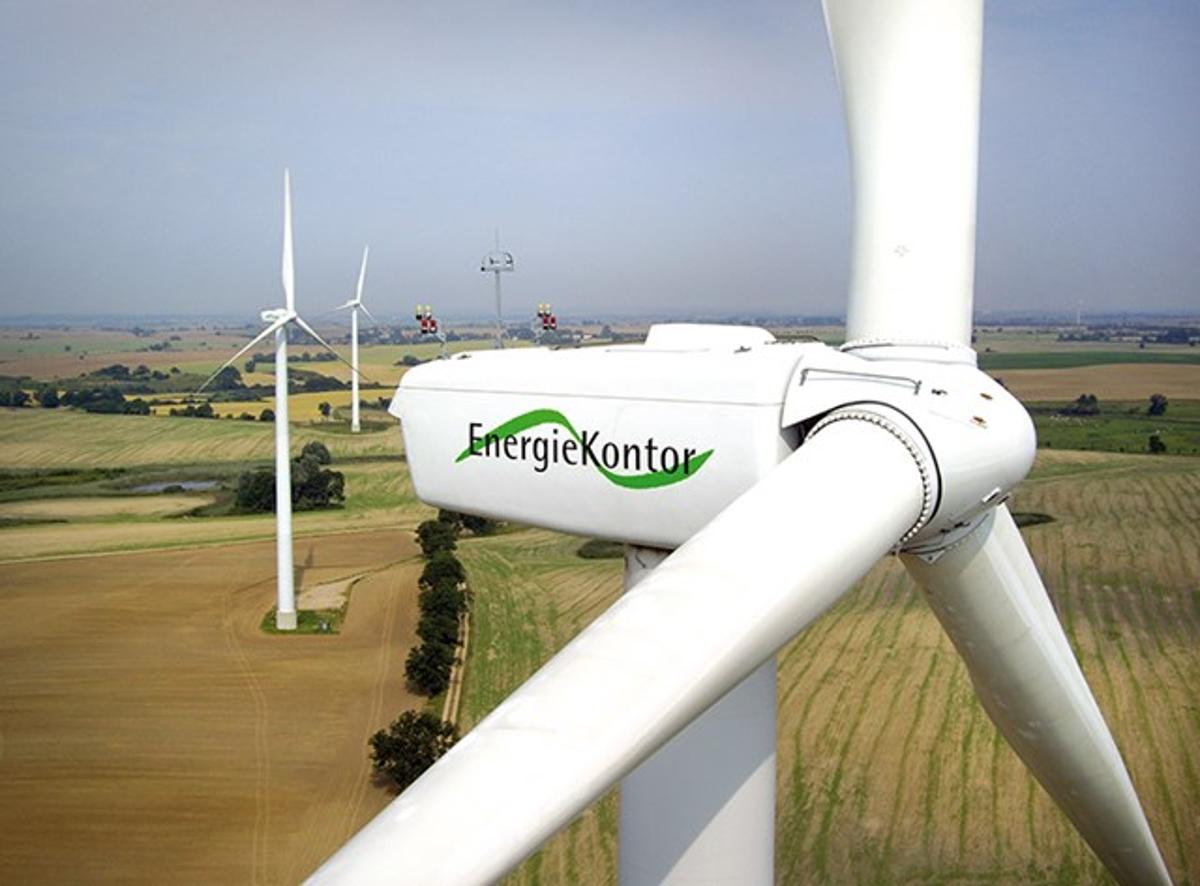
Energiekontor Unleashes Revamped Oederquart Park
•February 16, 2026
0
Why It Matters
The project demonstrates how repowering legacy assets accelerates Germany’s renewable expansion while delivering stable, long‑term returns for developers.
Key Takeaways
- •Repowered Oederquart adds 17 MW, total portfolio 450 MW.
- •Six Enercon E‑160 EP‑5 turbines deliver 33 MW capacity.
- •Annual generation ~80 GWh powers 24,000 homes, cuts 60k t CO₂.
- •Half output retained; other half sold in 2024.
- •Additional 200 MW under construction, 120 MW joining 2026.
Pulse Analysis
Germany’s renewable roadmap increasingly relies on repowering existing wind farms, and Energiekontor’s Oederquart upgrade exemplifies this shift. By swapping ten aging turbines for six high‑efficiency Enercon E‑160 EP‑5 units, the site’s capacity more than doubled, unlocking higher capacity factors and smoother integration with the national grid. This approach reduces the need for new land acquisition, shortens permitting timelines, and leverages existing transmission infrastructure, making it a cost‑effective pathway to meet the country’s 2030 wind targets.
Financially, the project strengthens Energiekontor’s balance sheet. The added 17 MW lifts the group‑owned portfolio to roughly 450 MW, while a pipeline of over 200 MW under construction signals robust growth. Retaining half of Oederquart’s output ensures a steady stream of generation revenue, complemented by the 2024 sale of the remaining share, which likely provided upfront capital for further expansion. The anticipated 80 GWh annual production translates into predictable cash flows, supporting the company’s strategy of stable, long‑term returns from modernized assets.
Industry‑wide, the Oederquart repowering underscores a broader trend: mature wind sites are being modernized to extract more energy without expanding the physical footprint. This not only accelerates decarbonisation—saving about 60,000 tonnes of CO₂ annually—but also enhances grid reliability by delivering more predictable output. As Germany pushes for higher renewable penetration, developers that master efficient upgrades will capture a competitive edge, while policymakers can count on upgraded farms to meet emissions goals without the complexities of new site development.
Energiekontor unleashes revamped Oederquart park
0
Comments
Want to join the conversation?
Loading comments...