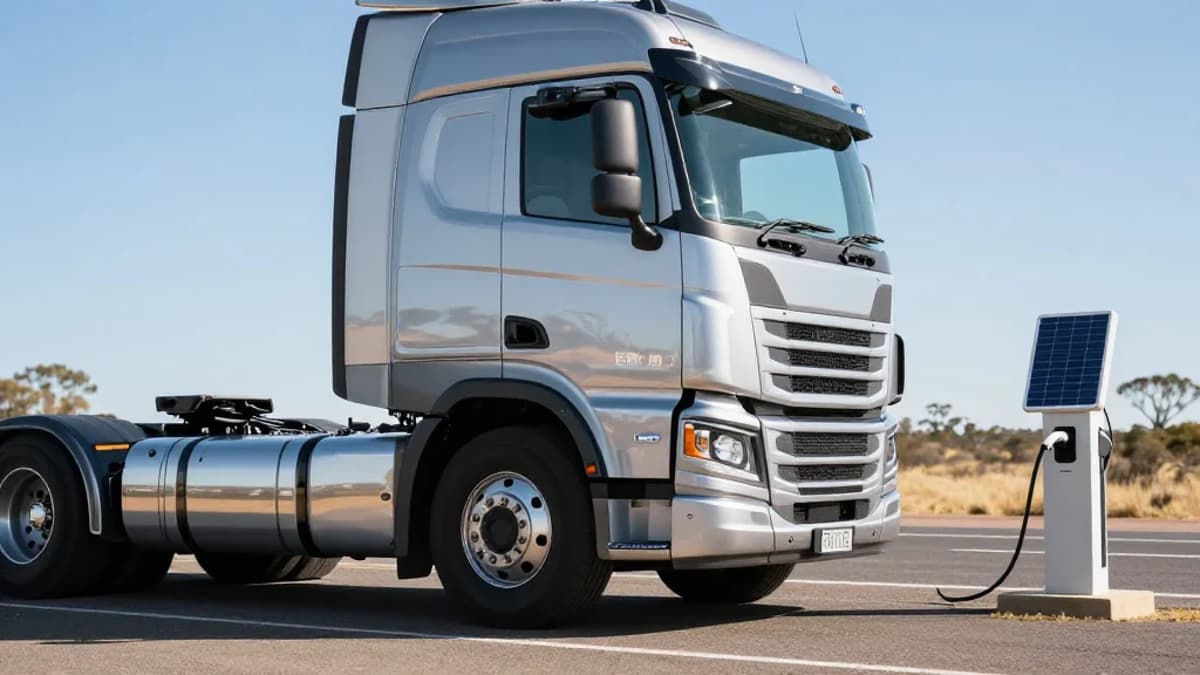
Energy Insiders Podcast: The Revolution in Electric Trucking
•March 6, 2026
0
Why It Matters
Falling battery costs unlock profitability for electric haulage, accelerating decarbonisation and reshaping logistics economics across the region.
Key Takeaways
- •Battery costs dropping dramatically for heavy-duty trucks
- •Electric trucks become cost‑competitive with diesel
- •New Energy Transport leads Australian EV truck adoption
- •Infrastructure and policy support accelerating rollout
- •Industry faces supply chain and charging challenges
Pulse Analysis
Battery technology has entered a price‑compression phase that is reshaping heavy‑duty transport. Over the past two years, lithium‑ion cell costs have fallen by more than 40%, driven by scale in consumer electronics and utility‑grade storage. This decline translates directly into lower upfront capital for electric trucks, narrowing the total‑cost‑of‑ownership gap with traditional diesel rigs. Analysts now model break‑even points within three to five years, a timeline that aligns with typical fleet replacement cycles.
In Australia, the convergence of affordable batteries and supportive policy creates a fertile environment for electric trucking. New Energy Transport, highlighted in the podcast, is piloting a fleet of zero‑emission trucks on key freight corridors, leveraging government incentives and state‑level emissions targets. Concurrently, firms like Pylon and Evergen are investing in fast‑charging infrastructure, ensuring that long‑haul routes can be serviced without significant downtime. These developments are prompting logistics firms to re‑evaluate route planning, driver training, and maintenance strategies to accommodate the new technology.
The broader market impact extends beyond cost savings. Investors are eyeing the electric trucking niche as a growth engine, with venture capital flowing into battery‑swap stations, telematics platforms, and renewable‑powered depots. As fleets transition, ancillary sectors—such as tire manufacturers and parts suppliers—must adapt to different wear patterns and service requirements. Ultimately, the electric trucking revolution promises reduced greenhouse‑gas emissions, quieter highways, and a more resilient supply chain, positioning Australia as a potential benchmark for other regions pursuing sustainable freight solutions.
Energy Insiders Podcast: The revolution in electric trucking
0
Comments
Want to join the conversation?
Loading comments...