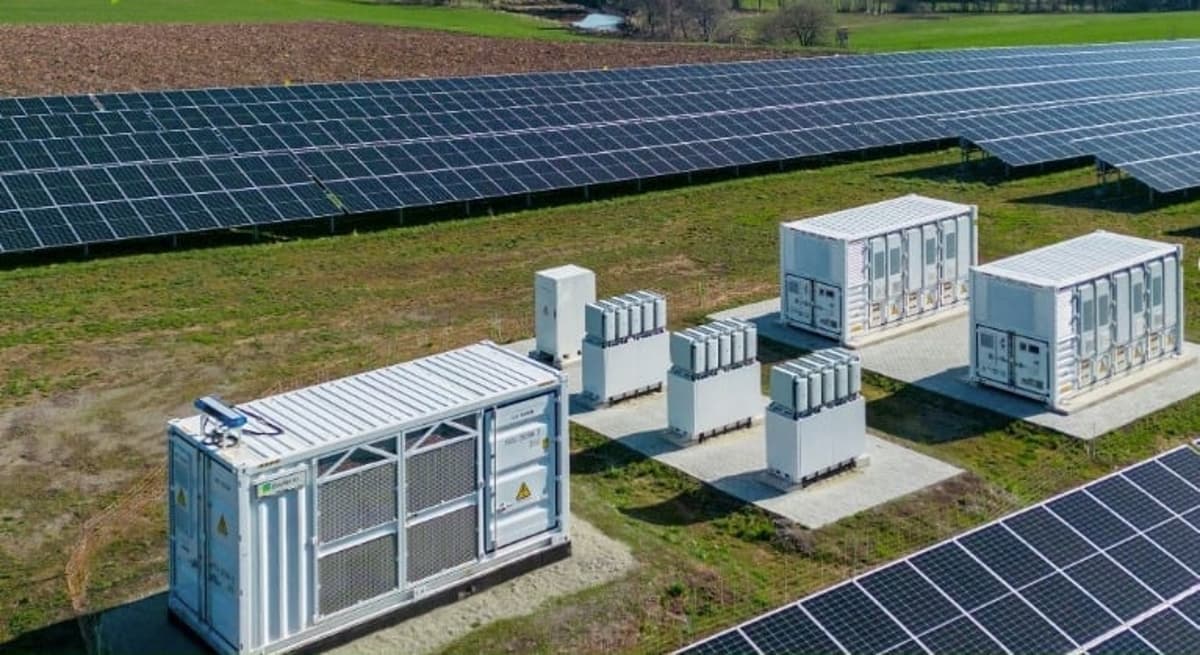
Energy Storage Co-Location with Solar PV Not a ‘Silver Bullet’
•February 25, 2026
0
Why It Matters
Investors and developers must reassess portfolio strategies, avoiding stranded assets and aligning storage choices with grid needs and regulatory realities.
Key Takeaways
- •Standalone batteries provide superior frequency regulation
- •Co-location can create stranded battery risk
- •Grid saturation drives co-location in Southern Europe
- •Contracting complexity hampers hybrid project economics
- •Hybrid projects need robust metering and revenue models
Pulse Analysis
The hype around solar‑plus‑storage hybrids stems from a desire to extract every ounce of value from existing photovoltaic sites. In markets where land is scarce and interconnection queues are long, attaching a battery appears to be a low‑cost way to boost returns. However, recent commentary from the Energy Storage Summit underscores that this narrative overlooks the nuanced economics of storage. Standalone batteries, free from the performance constraints of a solar host, can participate in ancillary markets, provide up‑and‑down regulation, and capture price spikes without being tethered to a single generation profile.
From a financial perspective, co‑located projects introduce a layer of contractual complexity that can erode projected margins. Metering, revenue stacking, and power purchase agreement (PPA) alignment often require bespoke arrangements, turning what looks like a spreadsheet‑friendly deal into a logistical nightmare. Moreover, when solar output is volatile or consistently negative-priced, a battery tied to that asset may become a stranded resource, unable to monetize its full capacity. Standalone storage, by contrast, can be positioned strategically across a portfolio to hedge against market volatility, offering a more resilient hedge against revenue shortfalls.
Regional grid conditions further differentiate the viability of hybrid solutions. In southern Europe, where transmission networks are saturated and new connection points are scarce, co‑location may be the only practical pathway to introduce storage capacity. Policymakers in these jurisdictions are beginning to recognize the need for flexible regulatory frameworks that accommodate hybrid assets without compromising grid stability. For investors, the takeaway is clear: prioritize proven standalone deployments, but remain open to co‑location where grid constraints make it the most efficient option, ensuring that any hybrid project is underpinned by robust metering and revenue structures.
Energy storage co-location with solar PV not a ‘silver bullet’
0
Comments
Want to join the conversation?
Loading comments...