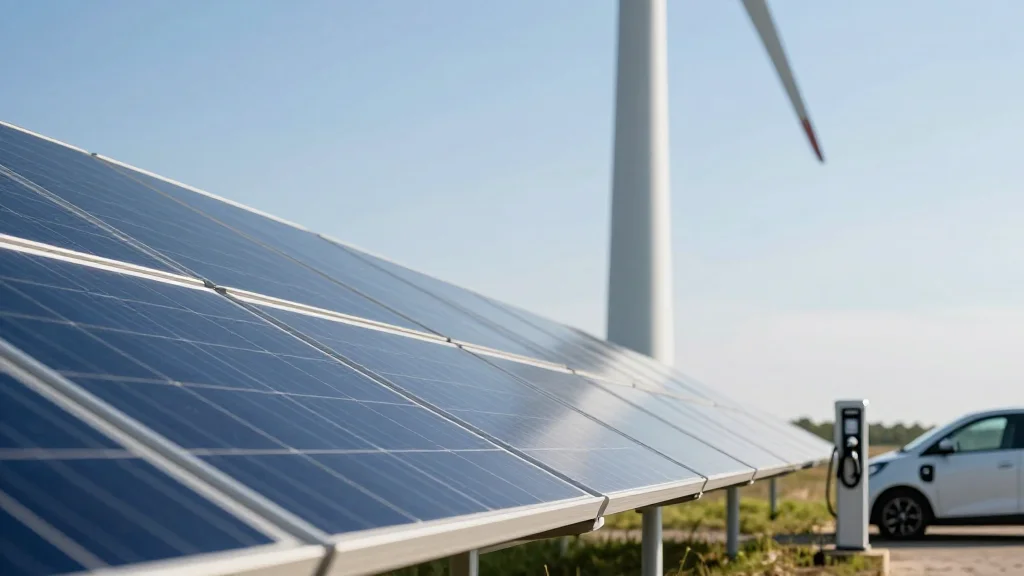
Energy Transition Progress Monitor 2026 by BDEW and EY: Photovoltaics and Electrification Drive Momentum – Energy Transition Needs to Accelerate
Companies Mentioned
Why It Matters
The findings highlight that Germany is on track in renewable generation but faces critical bottlenecks in grid, hydrogen and heating sectors, jeopardizing its climate commitments and energy‑security agenda.
Key Takeaways
- •Renewable electricity share hit 56% in 2025, PV added 17.6 GW
- •Heat pumps sold 299k units, surpassing gas boiler sales
- •Wind capacity growth remains below needed pace
- •Hydrogen electrolysis capacity far from 10 GW 2030 goal
- •Grid and EV charging investments rise, permitting still slows rollout
Pulse Analysis
Germany’s renewable surge is anchored by an unprecedented photovoltaic build‑out, adding 17.6 GW in 2025 and pushing the renewable share of electricity to 56%. The surge outpaces the Renewable Energy Sources Act’s pathway, yet wind power—still essential for deep decarbonisation—has not kept pace, leaving a capacity gap that could constrain future targets. Meanwhile, emissions fell 48% from 1990 levels, but the widening gap to the 2030 climate goal signals that additional measures are required beyond generation alone.
Electrification is reshaping both heating and mobility. Heat pumps became the top‑selling heating technology, with 299,000 units sold, overtaking traditional gas boilers for the first time. However, total heating‑system sales dropped to 627,000, the lowest since 2010, indicating a slowdown in overall market turnover. On the transport side, Germany installed roughly 10 GW of EV charging capacity—well above the EU’s 4 GW target—yet utilization rates lag, and permitting delays threaten to bottleneck further roll‑out. Grid digitalisation and storage are increasingly critical to balance the intermittent renewable influx.
Hydrogen and grid policy emerge as the next frontier. Electrolysis capacity remains far short of the 10 GW target for 2030, with most production still tied to fossil‑based sources, limiting the sector’s decarbonisation potential. Early conversion of gas pipelines for hydrogen transport marks progress, but regulatory certainty and long‑term investment frameworks are still needed to unlock the billions of euros (≈$2 bn) required for large‑scale infrastructure. Accelerating these investments will not only close the emissions gap but also bolster Germany’s industrial competitiveness and reduce reliance on imported energy.
Energy Transition Progress Monitor 2026 by BDEW and EY: Photovoltaics and Electrification Drive Momentum – Energy Transition Needs to Accelerate
Comments
Want to join the conversation?
Loading comments...